在英语复试口语中,谈论兴趣爱好是展示个人魅力、语言能力和综合素质的重要环节,兴趣爱好不仅能体现你的性格特点,还能反映你的价值观、生活态度以及跨文化交流能力,以下将从兴趣爱好在复试中的重要性、常见兴趣爱好的分类与表达、如何生动描述兴趣爱好的技巧,以及注意事项四个方面展开详细说明,帮助你更好地准备这部分内容。

兴趣爱好在复试中的重要性
复试中,面试官通过询问兴趣爱好,并非单纯想了解你“喜欢做什么”,而是希望通过这一侧面考察多个维度:语言运用能力,包括词汇丰富度(如描述爱好时是否使用精准动词、形容词)、语法准确性(时态、句式多样性)以及逻辑连贯性(能否清晰阐述爱好的起源、发展或感悟);个性与软实力,例如团队类爱好(如篮球、社团活动)体现合作精神,创造性爱好(如绘画、写作)展现创新思维,坚持类爱好(如长跑、乐器练习)反映毅力与自律;跨文化意识,若提到与英语文化相关的爱好(如阅读英文小说、看美剧学英语),能体现你对语言文化的兴趣,为后续学术交流铺垫,兴趣爱好还能缓解面试紧张氛围,让对话更自然,展现真实的你。
常见兴趣爱好的分类与表达
兴趣爱好可分为多种类型,结合复试场景,建议选择积极健康、有故事性或能体现个人成长的爱好,避免过于简单(如“上网”)或可能引起争议的爱好(如“打游戏”),以下是常见分类及实用表达:
运动健身类
运动类爱好能体现活力、毅力或团队意识,适合搭配具体事例或感悟。
- 表达示例:
- “I’m a big fan of badminton. I started playing it with my dad when I was 12, and now it’s become my weekly ritual. Not only does it help me stay energetic, but it also teaches me teamwork—like when we adjust strategies mid-game to cover each other’s weaknesses.”
- “Yoga is my go-to hobby for relaxation. I practice it every morning for 30 minutes, which helps me clear my mind and focus better on study. I even learned some English yoga terms from online tutorials, like ‘downward dog’ and ‘warrior pose’!”
文化艺术类
这类爱好能展现审美情趣、创造力或文化积累,适合结合具体作品或学习经历。
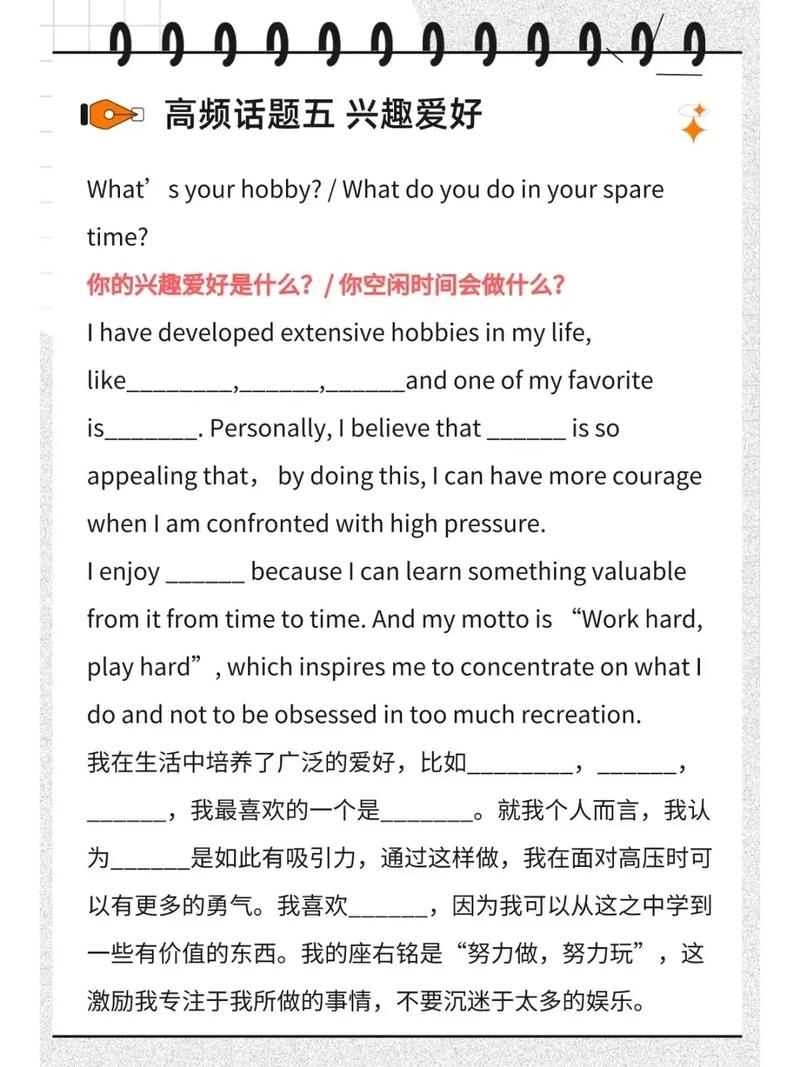
- 表达示例:
- “I’m passionate about classic literature, especially Jane Austen’s novels. I’ve read ‘Pride and Prejudice’ three times—each time I discover new details about her satire of 19th-century society. To improve my English, I also tried reading the original version, which was challenging but really expanded my vocabulary.”
- “Photography allows me to capture beautiful moments in life. I often take photos of old buildings in my city, researching their history before shooting. Last month, I joined an online photography community where I share my work and get feedback from international enthusiasts, which helps me learn different cultural perspectives.”
学习技能类
体现主动学习、追求进步的态度,适合关联专业或未来规划。
- 表达示例:
- “Learning to play the guitar has been a rewarding journey. I started self-studying two years ago using YouTube tutorials, and now I can play basic songs. It’s not just about music; it taught me patience—like when I spent a week mastering a single chord transition.”
- “I enjoy cooking, especially trying foreign recipes. Last month, I made Italian pasta from scratch, following an English recipe blog. It was fun to learn terms like ‘al dente’ and ‘simmer,’ and I even invited my classmates to taste it—we discussed Western and Eastern cooking styles, which was a great cultural exchange.”
社交公益类
展现社会责任感、沟通能力或领导力,适合结合具体活动或成果。
- 表达示例:
- “I volunteer at a local animal shelter every weekend. My main job is walking dogs and cleaning their cages, but I also help with adoption events. Talking to potential adopters has improved my communication skills, and hearing success stories—like a blind dog finding a home—makes me feel fulfilled.”
- “As a member of our school’s English debate club, I participate in weekly discussions on topics like environmental protection. Debating teaches me to structure arguments logically and respect different opinions, which I believe is crucial for academic research.”
生动描述兴趣爱好的技巧
仅仅罗列爱好名称不够,需通过细节让描述更生动、有感染力,以下是三个核心技巧:
讲述“故事线”:用时间或因果串联爱好
将爱好与个人经历结合,体现“为什么开始”“如何坚持”“带来了什么改变”。
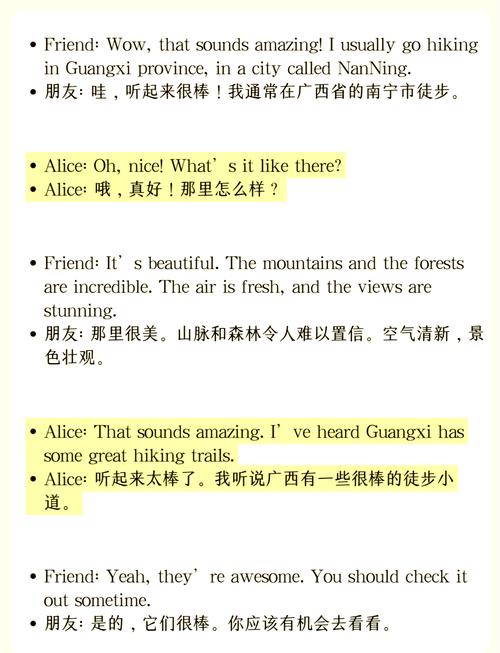
“My love for hiking started five years ago when I felt stressed from exams. A classmate suggested I join a weekend hiking group, and at first, I could barely climb the small hill near campus. But gradually, I fell in love with the fresh air and the sense of achievement when reaching the summit. Now, I’ve hiked over 20 trails, and each time I learn to push through fatigue—this mindset really helps me handle academic pressure too.”
加入“感官细节”:让场景更具体
通过视觉、听觉、触觉等描述,让面试官“身临其境”。
“When I bake cookies, I love the smell of vanilla filling the kitchen, and the sound of the dough cracking as it bakes. Last Christmas, I made gingerbread cookies with my host family in the UK, and we decorated them with royal icing—they looked like little works of art! It was a sweet way to experience their holiday traditions.”
关联“个人成长”:体现爱好的深层价值
说明爱好如何塑造你的性格、能力或价值观,与未来学习/职业规划挂钩。
“Collecting stamps has taught me to pay attention to details. Each stamp tells a story—whether it’s about a country’s history, culture, or wildlife. When I organize my collection by region, I research information in English, which improves my reading skills and cultural awareness. I think this habit of being detail-oriented and curious will help me in graduate studies, where precision and research are key.”
注意事项
- 真实性优先:不要编造“高大上”的爱好,面试官可能追问细节,编造内容容易露馅,选择自己真正了解且有话可说的爱好。
- 避免负面表达:即使爱好是“独处”,也要强调积极面(如“reading helps me recharge and think deeply”),而非“I don’t like socializing”。
- 控制时长:每个爱好描述建议1-2分钟,避免冗长,若面试官追问,再展开细节。
- 提前准备“连接点”:思考爱好与专业的关联(如“学经济的喜欢关注财经新闻”“学设计的喜欢逛美术馆”),自然过渡到学习动机。
相关问答FAQs
Q1: 如果我的爱好比较小众,担心面试官不了解,该怎么描述?
A: 小众爱好反而是展示个性的机会!关键是“用通俗语言解释核心价值”,并关联普遍体验,若喜欢“模型制作”,可以说:“I enjoy building model airplanes—it’s like solving a 3D puzzle with tiny parts. It requires patience and precision, and I love seeing a pile of materials turn into a detailed plane. Even if someone isn’t into models, they can relate to the satisfaction of creating something with their own hands.” 这样既解释了爱好,又突出了可迁移能力。
Q2: 如何在描述爱好时自然展示英语能力,而不显得刻意?
A: 避免堆砌高级词汇,而是通过“具体场景+地道表达”自然流露,提到“看美剧学英语”时,与其说“I learn English by watching American TV shows to improve my vocabulary”,不如说:“I’m hooked on the TV show ‘Friends’—it’s not only hilarious but also helps me learn daily expressions. Like when Joey says ‘How you doin’?’, I realized it’s a casual way to greet friends, which I now use with my classmates. The show’s dialogues are so natural that I’ve picked up slang and intonation patterns too.” 这样既真实,又体现了语言应用能力。