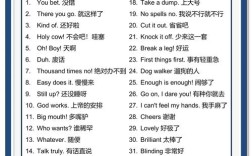
英语常用对话口语交际是日常交流中不可或缺的部分,它不仅涉及词汇和语法的正确使用,更注重语境、语气和非语言信号的配合,掌握常用对话能够帮助人们在社交、工作、旅行等场景中顺畅沟通,避免误解,建立良好的人际关系,以下从不同生活场景出发,详细解析英语常用对话的交际技巧、核心句型及注意事项,并通过表格形式总结实用表达,最后附相关问答。
日常社交场景
日常社交是口语交际的基础,包括问候、介绍、闲聊等,在问候时,根据时间和关系选择不同表达:早晨用“Good morning!”,朋友间可用“Hey! How's it going?”;初次见面时,“Nice to meet you.”是必备句,回应时用“Nice to meet you too.”,介绍他人时,遵循“先年轻后年长、先女士后男士”的礼仪,“This is my friend Tom, and this is Professor Li.”,闲聊时避免涉及隐私(如收入、年龄),可从天气(“What's the weather like today?”)、兴趣爱好(“Do you enjoy watching movies?”)等中性话题切入,回应时用“Yes, I do./No, I don't.”并适当反问,如“What about you?”。
购物场景
购物时,礼貌用语和清晰表达是关键,进店时,店员常问“Can I help you?”,回应可用“Just looking, thanks.”或“I'm looking for a...”,询问商品信息时,可以说“How much is this?”(单件价格)、“What's the price of these?”(多件价格),或“Do you have this in blue?”(询问颜色/尺寸),讨价还价时,在非固定价格场所可尝试“Could you give me a discount?”,店员若同意会回复“We can offer 10% off.”,付款时,需说明支付方式:“By cash/card, please.”,收到找零后礼貌道谢:“Thank you!”
餐厅用餐
餐厅对话涉及点餐、询问特色菜、结账等环节,入座后,服务员会问“May I take your order?”,点餐时可说“I'd like to order...”或“What's your specialty today?”,对食物有特殊要求时,需明确表达:“Could I have this dish without onions?”(去洋葱)、“Is this dish spicy?”(是否辣),用餐过程中需要服务时,举手示意并说“Excuse me.”,需求如“Could I have more water?”,结账时,可以说“Can I pay the bill, please?”,确认金额后支付:“Here you are.”
交通出行
出行场景包括问路、打车、乘坐公共交通等,问路时需清晰说明目的地:“Excuse me, how can I get to the nearest subway station?”,回应常用“Go straight ahead and turn left at the first corner.”,打车时,告诉司机目的地:“To the airport, please.”,并确认路线:“Is this the fastest way?”,乘坐公交/地铁时,需询问票价:“How much is the fare?”,或确认下车地点:“Does this bus go to the museum?”
职场沟通
职场对话注重正式与效率,同事间打招呼用“Good morning, [Name]. How was your weekend?”;汇报工作时,可用“I've finished the report. Here it is.”;请求帮助时,礼貌表达:“Could you help me with this task? I'm a bit stuck.”;会议中提问或发表意见:“I have a question about the budget.”或“In my opinion, we should...”,结束对话时,用“Thank you for your time.”表示尊重。
旅行场景
旅行时需应对住宿、景点咨询等突发情况,酒店入住时,告知预订信息:“I have a reservation under [Name].”;退房时,可说“I'd like to check out now.”;景点问询:“What time does the museum open?”;遇到困难时求助:“I'm lost. Could you show me on the map?”。
核心对话句型总结表
| 场景 | 常用句型 | 示例 |
|---|---|---|
| 问候 | How are you? / What's up? | A: Hi, Tom! How are you? B: I'm good, thanks. And you? |
| 介绍 | This is... / Let me introduce... | This is my colleague, Lucy. |
| 购物 | How much is it? / Do you have... in size M? | How much is this dress? Do you have it in size M? |
| 餐厅 | I'd like to order... / Could I have the bill, please? | I'd like to order a salad, please. Can I have the bill now? |
| 问路 | Excuse me, where is...? / Is it far from here? | Excuse me, where is the library? Is it far from here? |
| 职场 | Could you help me...? / I think we should... | Could you help me review this email? I think we should discuss it. |
| 旅行 | I need a room for... / What time does the tour start? | I need a room for two nights. What time does the tour start? |
注意事项
- 语气与肢体语言:口语交际中,语调(如升表疑问、降表肯定)和微笑、点头等肢体语言能增强表达效果,避免误解。
- 文化差异:西方人直接拒绝(“No, thanks.”)并不失礼,而委婉拒绝(“Maybe next time.”)可能暗示拒绝,需结合语境判断。
- 简洁明了:避免复杂从句,多用短句,如“Can you repeat that?”比“Would you mind repeating what you just said?”更自然。
相关问答FAQs
Q1: 如何避免英语口语交际中的“冷场”?
A1: 提前准备通用话题(如爱好、近期电影、旅行经历),使用开放式问题(如“What do you like to do in your free time?”代替“Do you like movies?”),并积极倾听对方回答,通过点头、“Really?”等反馈词引导对话延续;若冷场,可自然过渡到新话题,如“By the way, have you tried the new café nearby?”。
Q2: 英语口语中如何委婉表达拒绝?
A2: 委婉拒绝需结合“感谢+原因+替代方案”结构,拒绝邀请时,“Thank you for asking, but I have to work that day. Maybe next time!”;拒绝请求时,“I'd love to help, but I'm really busy with this project. Could you ask Lucy instead?”,既表达歉意,又提供解决方案,避免生硬。