雅思图表作文作为学术类(A类)写作任务一的重要组成部分,考察考生对数据信息的提取、分析、归纳及规范表达能力,要获得高分(7分及以上),需在任务完成、连贯与衔接、词汇资源及语法范围与准确性四个维度均达到较高水准,以下从审题、结构、数据描述、语言表达及常见误区五个方面展开详细解析,辅以表格对比不同分数段特征,帮助考生系统掌握高分技巧。
精准审题:抓住核心信息与图表类型
雅思图表作文的核心是“客观呈现数据特征”,而非主观推测或发表观点,审题需明确三点:
- 图表类型:常见包括静态图(如饼图、柱状图、表格、流程图、地图)和动态图(如线图、柱状图变化),静态图侧重“描述数据分布与对比”,动态图侧重“描述趋势与变化”。
- 时间维度:若图表含时间轴(如年份、月份),需判断是过去时、将来时还是一般现在时,动态图通常用过去时,流程图/地图用一般现在时。
- 核心数据:快速定位最大值、最小值、最显著对比(如倍数、占比)、异常值(如骤升/骤降)及整体趋势,避免陷入细节数据堆砌。
示例:若柱状图显示“某国2010-2025可再生能源与化石燃料占比变化”,核心信息为“可再生能源占比从15%升至45%,化石燃料从75%降至50%”,需突出“替代趋势加速”这一主线,而非罗列每年数据。
结构清晰:遵循“总-分-总”逻辑框架
高分作文需结构严谨,段落分工明确,建议采用三段式结构:
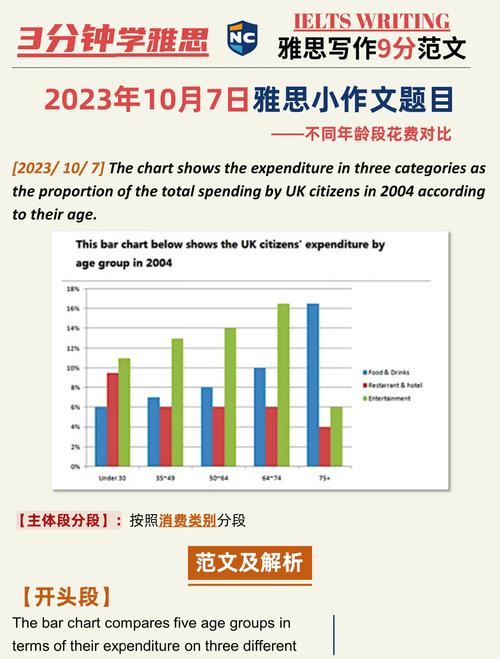
开头段(约60-80词):概述图表核心信息
- 公式:“图表类型+主题+时间+总体特征/最显著趋势”。
- 技巧:改写题目中的核心词汇(如“renewable energy”可替换为“clean energy sources”),避免直接抄题。
- 示例(以动态柱状图为例):“The bar chart illustrates the proportion of two energy types—renewable and fossil fuels—in Country X from 2010 to 2025. Overall, renewable energy witnessed a significant surge, while fossil fuels experienced a gradual decline, with the former overtaking the latter around 2025.”
主体段(约150-200词/段,分2段):分维度详述数据
主体段需根据数据逻辑分段,避免“一段到底”,常见分段逻辑:
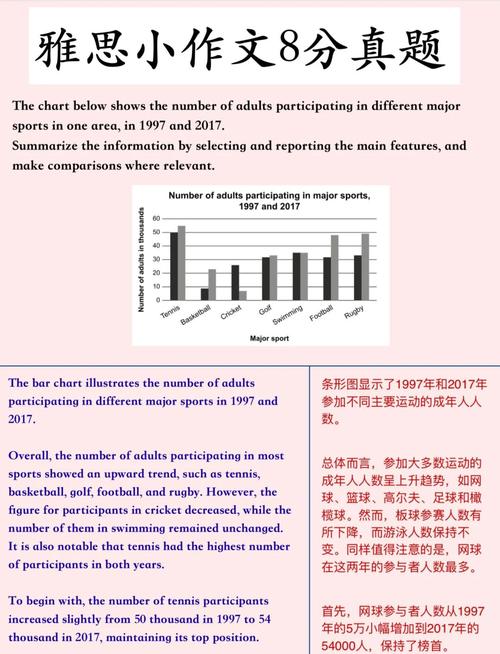
- 对比逻辑:静态图按“同类数据对比”(如A国vs B国)或“不同类别对比”(如能源类型A vs 能源类型B)分段。
- 时间逻辑:动态图按“时间段”(如2010-2025、2025-2025)或“趋势类型”(如上升、下降、波动)分段。
- 数据重要性:先描述核心数据(最大值、最小值、交叉点),再补充次要数据。
数据描述技巧:
- 数据具体化:避免笼统表述(如“increased”),需结合数据(如“increased from 20% to 35%”)。
- 数据关联化:通过“while”“whereas”“in contrast”等连接词对比数据,如“Coal consumption accounted for 60% in 2010, whereas natural gas stood at only 20%.”
- 趋势概括化:动态图用“surge”“plummet”“fluctuate”“stabilize”等词概括趋势,再举例支撑,如“Oil prices fluctuated wildly between 2025 and 2025, with a peak of $120 per barrel in 2025 and a drop to $40 in 2025.”
结尾段(约30-40词):总结核心趋势,无新信息
结尾段需呼应开头,重申最核心结论,避免重复数据或添加主观观点。
- 示例:“In conclusion, the period 2010-2025 saw a remarkable shift in Country X’s energy structure, reflecting a global trend towards sustainable development.”
语言表达:精准用词与多样句式
词汇和语法是高分的关键,需避免重复与单一,体现语言能力。
词汇资源:动态化、具体化、学术化
-
替换基础动词:
| 基础词 | 高替换单词 |
|--------|------------|
| increase | rise, grow, surge, climb, soar, escalate |
| decrease | decline, drop, fall, plummet, diminish, shrink |
| stable | remain stable, stay constant, level off, plateau |
| change | fluctuate, vary, shift, transform |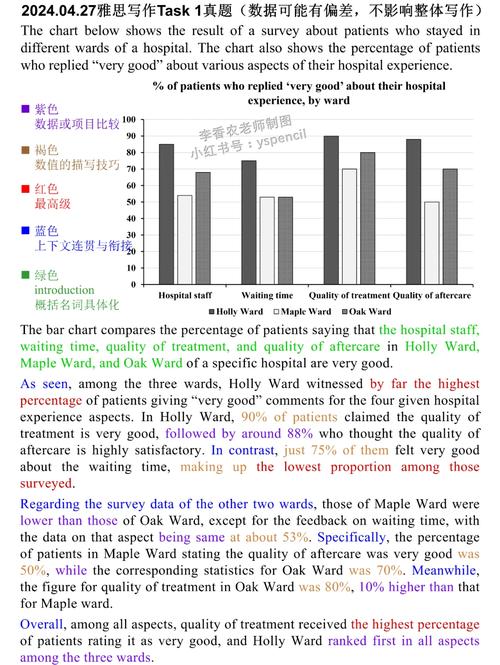 (图片来源网络,侵删)
 -
数据描述词汇:
- 占比:account for, constitute, make up, occupy, represent
- 倍数:double, triple, quadruple, twice/three times as much as
- 程度:slight/modest/minor(轻微),significant/dramatic/substantial(显著)
-
避免口语化:用“approximately”替代“about”,“the majority of”替代“most”,“a considerable number of”替代“many”。
句式结构:长短句结合,避免单调
-
简单句+复合句:通过从句(定语从句、状语从句)、非谓语动词(分词短语、不定式)丰富句式。
- 示例(简单句):“The number of international students rose to 10,000 in 2025.”
- 升级(复合句):“The number of international students, which had remained stable at 5,000 between 2025 and 2025, surged to 10,000 in 2025.”
-
数据呈现多样化:避免连续使用“A accounted for X%, B accounted for Y%”,可改为:
- “A constituted X%, while B made up Y%.”
- “X% was attributed to A, with B accounting for Y%.”
- “The proportion of A reached X%, outnumbering B’s Y%.”
高分范文与分数段对比(以静态柱状图为例) The chart below shows the percentage of water used in different sectors in Australia and Canada in 2004.
低分段(5-6分)特征
- 结构混乱,段落不分或分段不合理。
- 数据描述笼统,仅罗列数据,缺乏对比与概括(如“A used 20%, B used 30%”)。
- 词汇重复,语法错误多(如时态混乱、主谓不一致)。
中分段(6-5分)特征
- 结构基本清晰,但开头/结尾段信息不全。
- 能描述主要数据,但趋势分析不足,关联词使用单一。
- 词汇有一定替换,但句式简单,偶有语法错误。
高分段(7分及以上)特征
- 结构严谨,三段式逻辑清晰,主体段按“农业vs工业vs家庭”或“澳大利亚vs加拿大”分段。
- 数据描述具体,突出核心对比(如“Agriculture was the largest consumer in Australia (70%), while in Canada, industry dominated with 45%”),并用“whereas”“in contrast”连接。
- 词汇精准多样,句式复杂且准确,无语法错误。
高分范文片段(主体段):
“Agriculture accounted for the vast majority of water usage in Australia, consuming approximately 70% of the total, far exceeding the 35% recorded in Canada. In contrast, industrial water demand was significantly higher in Canada, at 45%, compared to just 10% in Australia. Domestic water use constituted a relatively smaller proportion in both nations, standing at 20% in Australia and 25% in Canada, respectively. These disparities reflect the varying economic structures: Australia’s reliance on agriculture versus Canada’s more industrialized economy.”
常见误区与避坑指南
-
添加主观观点
雅思图表作文要求客观描述,避免使用“I think”“in my opinion”或推测原因(如“The increase may be due to government policies”),除非题目明确要求(如“Why do you think this change occurred?”)。 -
忽略数据单位与时间
图表中常含单位(如“million tons”“%”)和时间(如“2025”),描述时需准确体现,如“Coal production was 50 million tons in 2025”,而非“Coal production was 50”。 -
过度细节数据
动态图若数据连续变化(如每月数据),需概括趋势(如“gradually increased”)而非逐月描述;静态图优先对比最大值、最小值及显著差异,避免罗列所有数据。 -
词汇与句式单一
反复使用“increase”“account for”,或全篇简单句堆砌,会导致语言分数偏低,需提前积累同义替换和复杂句式模板,并在练习中灵活运用。
相关问答FAQs
Q1: 雅思图表作文中,流程图和地图题如何与数据题区分写作重点?
A1: 流程图和地图题属于静态图,重点在于“描述步骤/顺序”而非数据,流程图需用“Firstly, secondly, finally”或“initially, subsequently, eventually”等连接词按步骤说明,并突出关键动作(如“is heated”“is mixed with”);地图题需对比“变化”(如“new buildings were constructed”“the forest was replaced by”)和“方位”(如“to the north of”“adjacent to”),无需数据支撑,但需用“eastward expansion”“northward shift”等词汇体现空间变化。
Q2: 写作时间紧张时,如何快速确定主体段分段逻辑?
A2: 可通过“数据分组法”快速分段:若图表含3个以上类别(如5种能源类型),按“同类合并”原则分组(如“可再生能源:太阳能、风能;化石燃料:煤炭、石油、天然气”);若含多个国家/地区,按“国家分段”对比;动态图按“时间段”或“趋势类型”分段(如“上升期:2010-2025;波动期:2025-2025”),优先保证“一段一个核心逻辑”,避免信息混杂。