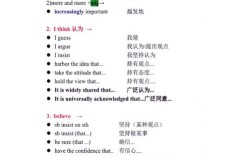
在六级作文写作中,连接词的恰当运用是提升文章逻辑性、连贯性和语言得分的关键,连接词如同文章的“脉络”,能够帮助读者清晰理解观点之间的递进、转折、因果、并列等关系,使文章结构更严谨,表达更流畅,本文将从不同功能类别出发,详细解析六级作文中常用的高质量连接词,并结合实例说明其具体用法,助力考生写出逻辑清晰、语言地道的优秀作文。
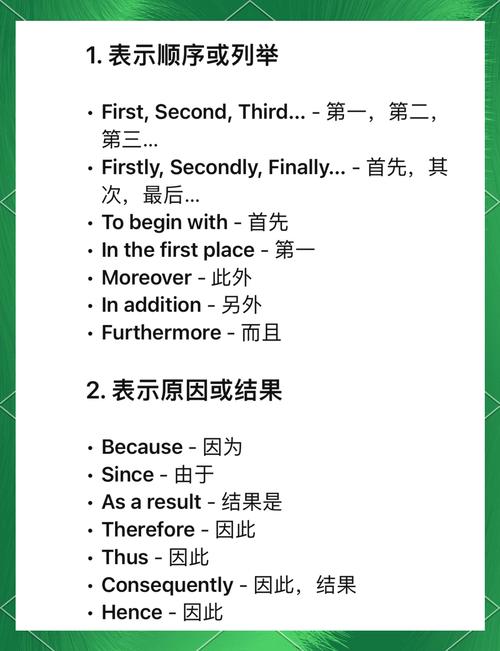
表示并列或递进关系的连接词
并列关系用于连接同等重要的观点或信息,递进关系则是在并列基础上进一步深化或补充,这类连接词能让文章层次分明,避免内容单薄。
常用连接词及用法:
- and:最基础的并列连接词,连接单词、短语或句子,表示“和,。Students should focus on theoretical knowledge and practical skills.
- also/too:用于补充信息,意为“也,同样”。Online learning offers flexibility; it also helps develop self-discipline.
- as well as:相当于“along with”,连接两个并列成分,强调前后两者的并列性。We should care about our own health as well as that of our families.
- moreover/furthermore/besides:表示递进,意为“而且”,语气比also更强,引出更深入的观点。The project is cost-effective. Furthermore, it will create more job opportunities.
- in addition/what’s more:用于添加新信息,in addition后常接名词短语,what’s more后可接完整句子。Regular exercise strengthens the body. What’s more, it improves mental well-being.
实例应用:
在讨论“大学生应参与社会实践”时,可写道:University students should actively participate in social practice. It helps them apply theoretical knowledge to real life, and moreover, it enhances their communication and problem-solving skills.(此处“and”连接两个并列分句,“moreover”引出更深层次的益处,逻辑清晰。)
表示转折或对比关系的连接词
转折或对比关系用于展示观点之间的差异或相反情况,这类连接词能让论证更全面,体现辩证思维。
常用连接词及用法:
- but/however:最常用的转折词,but连接简单句,however后接逗号加完整句子,语气更正式。The plan is feasible, however, it requires more funding.
- yet/still:表示“却”,强调与预期相反的结果。He studied hard, yet he failed the exam.
- while/whereas:连接两个对比性较强的分句,意为“而,。Some people prefer urban life for convenience, whereas others value the peace of rural areas.
- on the contrary/in contrast:用于引出完全相反的观点,on the contrary多针对前者的否定,in contrast侧重对比。Many think online learning is isolating. On the contrary, it provides opportunities for global communication.
- despite/in spite of:后接名词或动名词,表示“尽管,虽然”。Despite the heavy rain, they arrived on time.
实例应用:
在论述“传统阅读与数字阅读”时,可写道:Traditional reading allows for deep focus and reduces eye strain, while digital reading offers convenience and instant access to a vast amount of information.(此处“while”清晰对比两者的特点,体现辩证视角。)
表示因果关系的连接词
因果关系是论证的核心,连接词能明确展示原因与结果之间的逻辑链条,增强说服力。
常用连接词及用法:
- because/since/as:引导原因状语从句,because语气最强,since/as常表示已知或显然的原因。He was late because he missed the bus.
- due to/owing to:后接名词或名词短语,表示“由于”。The game was canceled due to the bad weather.
- therefore/thus/hence:引导结果,意为“所以”,therefore和thus后接完整句子,hence多用于正式书面语。The data is unreliable; therefore, we cannot draw a conclusion.
- consequently/as a result:表示“结果,后果”,as a result后常接“of+名词”。He didn’t prepare for the exam; as a result, he failed.
- thanks to:表示“幸亏,由于”,常含积极意味。Thanks to their help, we completed the project ahead of schedule.
实例应用:
分析“环境问题”时,可写道:Industrial pollution has severely damaged the ecosystem; consequently, many species are facing extinction.(此处“consequently”明确连接污染与物种灭绝的因果关系,逻辑严密。)
表示举例或说明关系的连接词
举例能让抽象观点具体化,说明关系则是对观点进行解释或补充,这类连接词能增强文章的可读性和说服力。
常用连接词及用法:
- for example/for instance:引出具体例子,for example后可接句子或短语,for instance更正式。Many countries promote green energy; for example, Denmark uses wind power extensively.
- such as:用于列举同类事物,后接名词或名词短语。Renewable energy sources include solar energy, such as solar panels, and wind energy.
- take...as an example:以……为例,结构为“take+名词+as an example”。Take Germany as an example; its renewable energy accounts for over 40% of the total consumption.
- in other words:换种方式表达,意为“换句话说”,用于解释或简化复杂观点。He is very frugal; in other words, he rarely spends money on unnecessary things.
- to be specific:用于进一步详细说明,意为“。The company has taken measures to improve efficiency; to be specific, they have introduced automated systems.
实例应用:
讨论“团队合作重要性”时,可写道:Teamwork plays a vital role in project completion. For instance, the Apollo program succeeded through the collaboration of thousands of scientists and engineers.(此处“For instance”通过具体案例支撑观点,使论证更生动。)
表示时间或顺序关系的连接词
时间或顺序关系能清晰展示事件的发展过程或观点的排列次序,尤其适用于记叙文或过程说明类文章。
常用连接词及用法:
- first/second/finally:列举顺序,first后接“点”,second后接“点”,finally引出最后一项。To learn a language, first master the basic vocabulary, then practice grammar, and finally communicate fluently.
- initially/at the beginning:表示“起初,一开始”,描述初始状态。Initially, he opposed the idea, but later he changed his mind.
- meanwhile/subsequently:meanwhile意为“,subsequent意为“随后,。The first team finished the task ahead of schedule; meanwhile, the second team was still halfway through.
- eventually/in the end:表示“结果”,强调事情的最后发展。After many attempts, he eventually achieved his goal.
- prior to/before:prior to后接名词或动名词,意为“在……之前”,比before更正式。Prior to the interview, he thoroughly researched the company.
实例应用:
描述“个人成长经历”时,可写道:Initially, I was afraid of public speaking. Gradually, I practiced regularly, and eventually, I became confident enough to give a speech to a large audience.(此处“Initially, Gradually, Eventually”清晰展示时间递进,逻辑连贯。)
表示总结或强调关系的连接词
总结类连接词用于概括全文观点,强调类连接词则突出重点信息,能有效提升文章的收尾效果和核心观点的突出度。
常用连接词及用法:
- in conclusion/to sum up/in a nutshell:用于结尾总结,意为“总而言之”。In conclusion, environmental protection requires joint efforts from all sectors of society.
- all in all/overall:概括总体情况,语气较轻松。All in all, the trip was both enjoyable and educational.
- above all/above all else:强调最重要的观点,意为“最重要的是”。Success requires hard work, perseverance, and above all, a clear goal.
- especially/particularly:表示“尤其,特别”,用于强调重点。Regular exercise is beneficial for health, especially for the elderly.
- indeed/certainly:加强语气,意为“确实,。This is indeed a challenging task, but we must overcome it.
实例应用:
在结尾段总结“终身学习”的重要性时,可写道:In a rapidly changing world, lifelong learning is no longer an option but a necessity. It enables us to adapt to new challenges and achieve continuous growth.(此处“no longer...but...”强调终身学习的必要性,结尾有力。)
连接词使用注意事项
- 避免重复:同一篇文章中尽量避免过多使用同一连接词,可通过替换近义词(如用moreover代替furthermore,用whereas代替while)丰富表达。
- 位置恰当:根据句子结构正确放置连接词,例如however通常位于句首,后接逗号;but连接两个并列分句时,位于分句之间。
- 逻辑准确:确保连接词所表达的关系与实际内容一致,避免因果错位或转折滥用,观点之间是并列关系却使用therefore,会导致逻辑混乱。
- 适度使用:连接词是辅助逻辑的工具,过度堆砌反而显得冗余,应根据文章需要合理使用,重点在于自然流畅而非数量。
相关问答FAQs
Q1:六级作文中是否需要使用复杂连接词?简单连接词会影响得分吗?
A1:六级作文并非“越复杂越好”,连接词的选择应服务于逻辑表达和语言自然度,简单连接词(如and, but, because)如果使用恰当,同样能清晰传达逻辑关系;而复杂连接词(如notwithstanding, whereas)若使用错误,反而会扣分,评分标准更关注连接词的“恰当性”而非“复杂性”,因此考生应在确保准确的基础上,根据上下文选择合适的连接词,避免为追求“高级感”而误用。
Q2:如何避免连接词使用单调?有哪些替换技巧?
A2:避免连接词单调可通过以下方法:(1)同义替换:如用in addition moreover/furthermore,用but/however/yet,用because/since/as;(2)功能替换:如表达递进时,可用“not only...but also...”替代also;表达转折时,可用“while”对比两个分句;(3)句式变换:避免每个观点都用连接词开头,可通过分句、从句或独立成句调整结构,例如将“However, this method has drawbacks.”改为“This method, however, has drawbacks.”,使表达更灵活,关键是在多练习中积累同义表达,根据语境灵活选择。