雅思口语考试中的List话题是Part 1和Part 2中常见的一种题型,通常要求考生围绕一个特定主题下的多个子话题展开描述或论述,考察考生的词汇丰富度、逻辑连贯性、语法准确性以及口语表达的流利度,这类话题的特点是结构清晰,每个子话题相对独立又相互关联,考生需要通过细节填充和观点延伸,让内容更具说服力和个人色彩,以下从List话题的类型、解题策略、内容构建技巧及范例分析等方面展开详细说明。
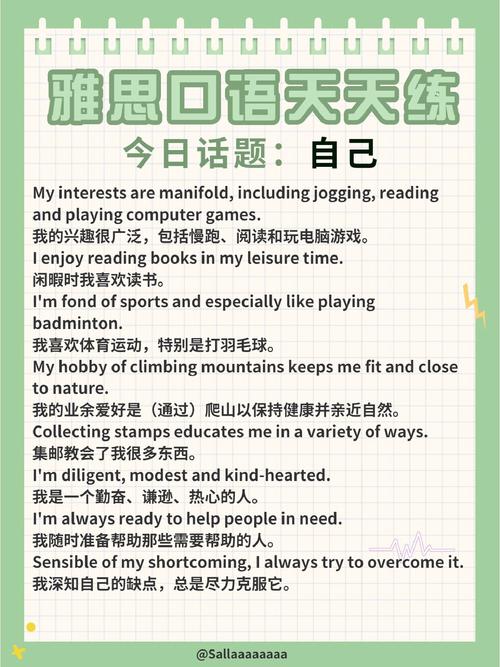
List话题的类型与特点
雅思口语List话题主要分为两类:描述型List和论述型List,描述型List常见于Part 2,如“Describe a book you enjoyed reading”“Describe a gift you gave to someone”,考生需围绕题目中的提示词(如人物、物品、事件等)展开细节描述;论述型List多见于Part 1和Part 3,如“Describe a subject you enjoyed studying in school”“Describe a type of music you like”,考生需从多个角度(如原因、影响、个人经历等)阐述观点。
List话题的核心特点是“多维度信息输出”,要求考生在有限时间内组织多个要点,每个要点需有具体的支撑内容(如例子、原因、感受等),在“Describe a hobby you have”中,考生可从“爱好是什么”“如何开始”“为什么喜欢”“对生活的影响”等子话题切入,每个子话题下再用1-2句话展开细节,避免内容空洞。
List话题的解题策略
审题与关键词提取 中的核心词(如人物、物品、事件)和限定词(如“important”“favorite”“recent”),确保回答不偏离主题。“Describe a time you helped someone”中,“helped someone”是核心,“time”暗示需要具体事件,“someone”可具体化为朋友、家人或陌生人,避免泛泛而谈。
搭建框架:确定子话题顺序 逻辑梳理子话题顺序,常见的结构有:
- 时间顺序:适用于描述事件(如“how you started”“what happened next”);
- 逻辑顺序:适用于论述观点(如“reasons→examples→results”);
- 空间/分类顺序:适用于描述物品或地点(如“appearance→function→personal connection”)。
“Describe a park you like”可按“location→appearance→activities there→reasons for liking”展开,逻辑清晰且易于展开。
填充细节:用具体例子支撑观点
List话题忌讳抽象概括,每个子话题需搭配具体细节,在“Describe a book you liked”中,若说“it was interesting”,可补充“the protagonist’s struggle with loneliness reminded me of my own experience when I first moved to a new city”,通过个人经历让内容更真实生动。
连接词与过渡句的使用
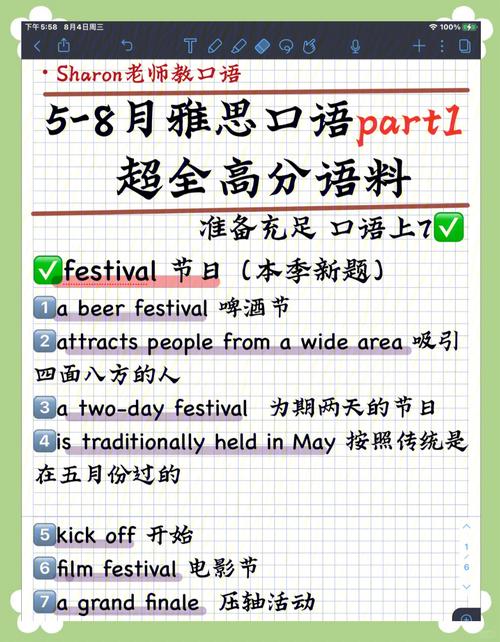
为增强连贯性,需使用连接词串联子话题,如:
- 并列:also, besides, in addition;
- 转折:however, but, on the other hand;
- 因果:because of, as a result, therefore;
- 举例:for example, such as, like。
“I really enjoy cooking because it allows me to be creative. For instance, last week I tried making pasta with homemade sauce, even though it turned out a bit salty!”
List话题的内容构建技巧
词汇多样化:避免重复与简单化
针对同一主题,替换高频词汇,例如描述“喜欢”,可用“be fond of”“be into”“have a passion for”“find…fascinating”等;描述“重要”,可用“significantessentialvitalcrucial”,积累与话题相关的场景词汇,如“hobby”话题可关联“dIY(手工)”“gardening(园艺)”“painting(绘画)”等。
语法结构:混合使用简单句与复杂句
避免全程简单句堆砌,适当使用从句(定语从句、状语从句)、非谓语动词(分词、不定式)等复杂结构。“The book I read last month, which was recommended by my teacher, completely changed my perspective on life.”(定语从句+非限制性定语从句)
情感与观点注入:体现个人色彩
在描述中加入个人感受和观点,让回答更具个性。“I love watching old movies not just because of the story, but because they make me feel connected to the past, like I’m traveling through time.”(结合情感与原因)
控制时间:Part 2需覆盖所有提示点
Part 2的List话题通常有3-4个提示点(如“Who gave it to you? Why did you like it? What happened after that?”),需在1分钟准备时间内快速记录关键词,确保回答时长控制在1.5-2分钟,每个提示点分配30-40秒。
范例分析:以“Describe a hobby you have”为例
子话题框架与内容填充
| 子话题 | 内容细节 |
|---|---|
| Hobby是什么 | My hobby is bird-watching. I started it about three years ago. |
| 如何开始 | I was feeling stressed from work and a friend suggested going to the park on weekends. That’s when I noticed how many different bird species there were. |
| 为什么喜欢 | First, it helps me relax—there’s something peaceful about watching them fly. Second, I’ve learned to identify over 50 birds, which makes me feel like I’m constantly learning. |
| 对生活的影响 | It’s made me more patient, and I’ve even joined a local bird-watching club where I’ve met some great friends. |
完整回答示例
“My hobby is bird-watching, which I got into about three years ago. At the time, I was under a lot of pressure from my job, and a friend suggested I spend more time outdoors to unwind. So, every weekend, I started going to a park near my house, and that’s where I discovered how fascinating birds are. I remember the first time I saw a kingfisher diving into the water—it was so quick and graceful that I was completely hooked.
What I love most about bird-watching is how it combines relaxation with learning. When I’m out there, watching the birds hop around or sing, it feels like all my worries just disappear. Plus, I’ve become really interested in their habits, like how some birds migrate thousands of miles every year. I’ve even bought a field guide to help me identify different species, and now I can recognize over 50 birds just by their appearance or call!
This hobby has also changed my daily life in small but meaningful ways. I wake up earlier now to listen to the birds outside my window, and I’ve become more observant of nature in general. Last month, I joined a local bird-watching club, and it’s been amazing to meet people who share the same passion. We go on trips together to nature reserves, and it’s not just about birds anymore—we’ve become good friends. Overall, bird-watching has given me a new way to connect with the world and myself.”
相关问答FAQs
Q1: 雅思口语List话题中,如果某个子话题没有内容可说怎么办?
A: 若某个子话题暂时缺乏素材,可采用“具体化+关联法”扩展,题目要求“Describe a gift you received”,若“礼物如何使用”无话可说,可关联“礼物背后的故事”(如“It was a handmade scarf from my grandma, and she taught me how to knit it, so even though I’m not good at it, I still keep it as a reminder of her”)或“礼物的象征意义”(如“Every time I see it, I think of how much she cares about me”),可通过反问或假设补充内容,如“I don’t use it every day, but when I do, it always makes me smile. I guess that’s the best part of a gift, right?”
Q2: 如何避免List话题回答时内容重复或逻辑混乱?
A: 在准备阶段用思维导图梳理子话题,确保每个要点有明确的区分度(如“原因1→例子1”“原因2→例子2”),使用不同的连接词标记逻辑关系,避免“and”重复使用,例如用“moreover”表递进,“conversely”表对比,回答时可通过“First of all…/Another thing is…/What’s more…”等短语引导听众,并在结尾处总结核心观点(如“All in all, this hobby has brought me both joy and growth”),强化逻辑结构。