在英语写作中,承接词是连接句子、段落,确保文章逻辑连贯、层次清晰的重要工具,恰当使用承接词能够使文章从开头到结尾过渡自然,读者能够轻松把握作者的思路和论证脉络,根据其在文章中的不同功能,承接词可分为多种类型,每种类型都有其特定的使用场景和表达效果。
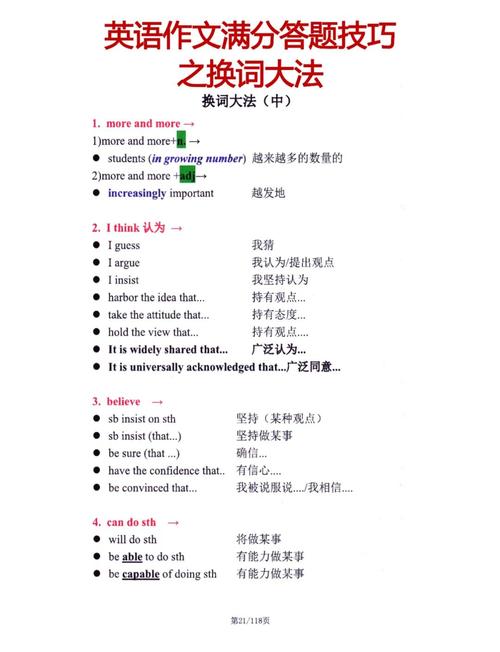
表示 addition(补充)的承接词常用于在已有观点的基础上增加相关信息或论据,使内容更充实,常见的此类承接词包括 "and", "also", "besides", "furthermore", "moreover", "in addition", "what's more" 等,在论述“运动对健康的好处”时,可以先说“运动能增强心肺功能”,然后用 "furthermore" 补充“运动还能改善睡眠质量”。"and" 是最基础的并列连词,适用于简单的句子连接;而 "moreover" 和 "furthermore" 语气更强,常用于正式写作,表示递进关系。"in addition" 和 "besides" 则常用于引出另一个重要事实,语气较为客观。
表示 contrast(对比)的承接词用于展示不同观点或事物之间的差异,是议论文中常用的类型,这类承接词包括 "but", "however", "on the other hand", "in contrast", "while", "whereas", "yet" 等,在讨论“线上教育与线下教育”时,可以说“线上教育灵活便捷,however,线下教育能提供更直接的师生互动”。"but" 是最简单的转折词,常用于连接两个意思相反的简单句;"however" 语气较强,可置于句首、句中或句末,后面通常用逗号隔开;"while" 和 "whereas" 则常用于两个分句之间的对比,强调两者的差异,如 "Some people prefer working alone, whereas others enjoy teamwork."
表示 cause and effect(因果)的承接词用于阐明事物之间的因果关系,使论证更具说服力,常用词有 "because", "because of", "since", "as", "therefore", "thus", "consequently", "as a result", "due to" 等。“由于天气恶劣,因此航班被取消了”可表达为 "The flight was canceled due to the bad weather." 或 "Because of the bad weather, the flight was canceled." "because" 和 "because of" 都表示原因,但 "because of" 后接名词或名词短语,而 "because" 后接从句;"therefore" 和 "thus" 表示结果,常用于正式写作,可置于句首,后接逗号,如 "The policy was unpopular; therefore, the government decided to revise it."
表示 sequence(顺序)的承接词用于按照时间、步骤或逻辑顺序组织内容,常见于记叙文或说明文,这类承接词包括 "first", "second", "third", "next", "then", "finally", "after that", "subsequently", "meanwhile" 等,在描述“如何制作蛋糕”时,可以说 "First, mix the flour and eggs. Then, add sugar and stir slowly." "first", "second", "third" 用于列举步骤;"next" 和 "then" 表示接下来的动作;"finally" 强调最后一环节;"meanwhile" 则用于表示同时发生的动作,如 "I was cooking dinner, meanwhile, my son was doing his homework."
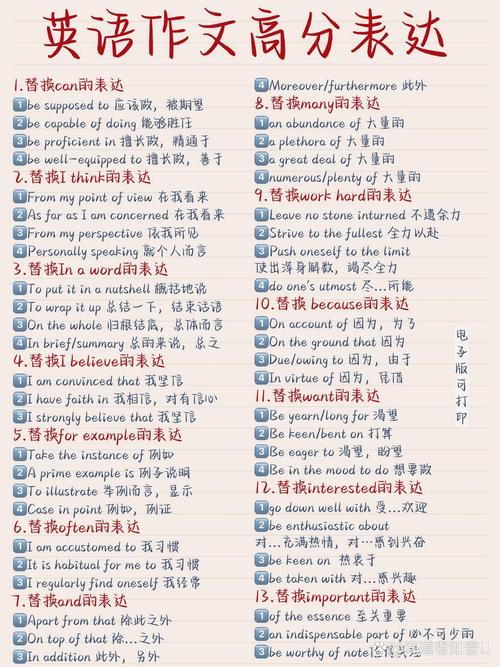
表示 example(举例)的承接词用于通过具体例子支撑观点,使内容更具体、更有说服力,常用词有 "for example", "for instance", "such as", "like", "to illustrate" 等。“许多水果富含维生素C,such as oranges and strawberries.” "for example" 和 "for instance" 意思相近,可互换使用,后接具体例子;"such as" 和 "like" 用于列举同类事物中的例子,如 "She enjoys outdoor activities like hiking and camping."
表示 emphasis(强调)的承接词用于突出某一观点或信息,增强语气,常用词包括 "indeed", "certainly", "above all", "especially", "in particular" 等。“安全问题尤其重要,in particular, for children.” "indeed" 表示“确实”,用于加强肯定语气;"above all" 用于强调最重要的一点;"especially" 和 "in particular" 则用于强调特定的人或事物。
表示 conclusion(的承接词用于总结上文观点,得出结论,常见于文章的结尾段落,常用词有 "in conclusion", "to sum up", "in short", "in a word", "overall", "all in all" 等。“in conclusion, we should take measures to protect the environment.” "in conclusion" 和 "to sum up" 较为正式,常用于学术写作;"in short" 和 "in a word" 简洁明了,适用于简短总结;"overall" 则用于对整体情况进行概括。
在使用承接词时,需要注意以下几点:一是避免过度使用,过多的承接词会使文章显得冗余,应根据实际需要选择最恰当的词;二是注意位置,部分承接词(如 "however", "therefore")置于句首时需用逗号隔开,置于句中时则用逗号将其与前后内容分开;三是区分近义词的细微差别,"because of" 和 "due to" 都表示原因,但 "due to" 后接名词,且常与 "be" 动词连用,如 "The delay was due to bad weather."
为了更直观地展示不同类型承接词的用法,以下通过表格进行总结:
| 功能类型 | 常用承接词 | 例句 |
|---|---|---|
| 补充 (Addition) | and, also, besides, furthermore, moreover, in addition, what's more | Regular exercise can improve physical health; moreover, it boosts mental well-being. |
| 对比 (Contrast) | but, however, on the other hand, in contrast, while, whereas, yet | Some people prefer city life; however, others find it too stressful. |
| 因果 (Cause & Effect) | because, because of, since, as, therefore, thus, consequently, as a result | He was late because of the traffic jam. |
| 顺序 (Sequence) | first, second, third, next, then, finally, after that, meanwhile | First, heat the oven to 180°C. Then, mix the ingredients. |
| 举例 (Example) | for example, for instance, such as, like, to illustrate | Many animals, such as pandas and tigers, are endangered. |
| 强调 (Emphasis) | indeed, certainly, above all, especially, in particular | Safety is above all when driving. |
| (Conclusion) | in conclusion, to sum up, in short, in a word, overall, all in all | In conclusion, teamwork is essential for achieving complex goals. |
掌握不同类型承接词的用法并灵活运用于英语写作中,能够显著提升文章的逻辑性和连贯性,在写作时,应根据表达需求选择合适的承接词,避免重复和滥用,使文章层次分明、条理清晰,从而更好地传达思想和观点。
FAQs
-
问:在英语写作中,是否可以连续使用多个承接词?
答:不建议连续使用多个承接词,否则会使文章显得冗余且逻辑混乱,避免使用 "and and" 或 "but however" 这样的结构,如果需要表达复杂的逻辑关系,可以选择一个更精准的承接词,或者通过调整句子结构来清晰表达,与其说 "He is tired, but however, he still works hard",不如说 "Despite being tired, he still works hard"。 -
问:如何区分 "because of" 和 "due to" 的用法?
答:"Because of" 和 "due to" 都表示原因,但用法有所不同。"Because of" 后接名词、名词短语或动名词,通常用于句首或句中,且前面不需要 be 动词,"The game was canceled because of the rain.";而 "due to" 后也接名词或名词短语,但常与 be 动词连用,表语位置,"The delay was due to bad weather.",需要注意的是,在某些非正式语境中,"due to" 也可用于句首,但传统语法中更推荐 "because of" 用于句首表原因。