雅思剑7小作文作为备考雅思写作的重要素材,其图表类型和题目设置具有典型的代表性,值得考生深入分析和练习,以下将从题型特点、解题步骤、范文解析及常见误区等方面展开详细说明,帮助考生掌握小作文的写作技巧。
雅思小作文核心题型与剑7特点
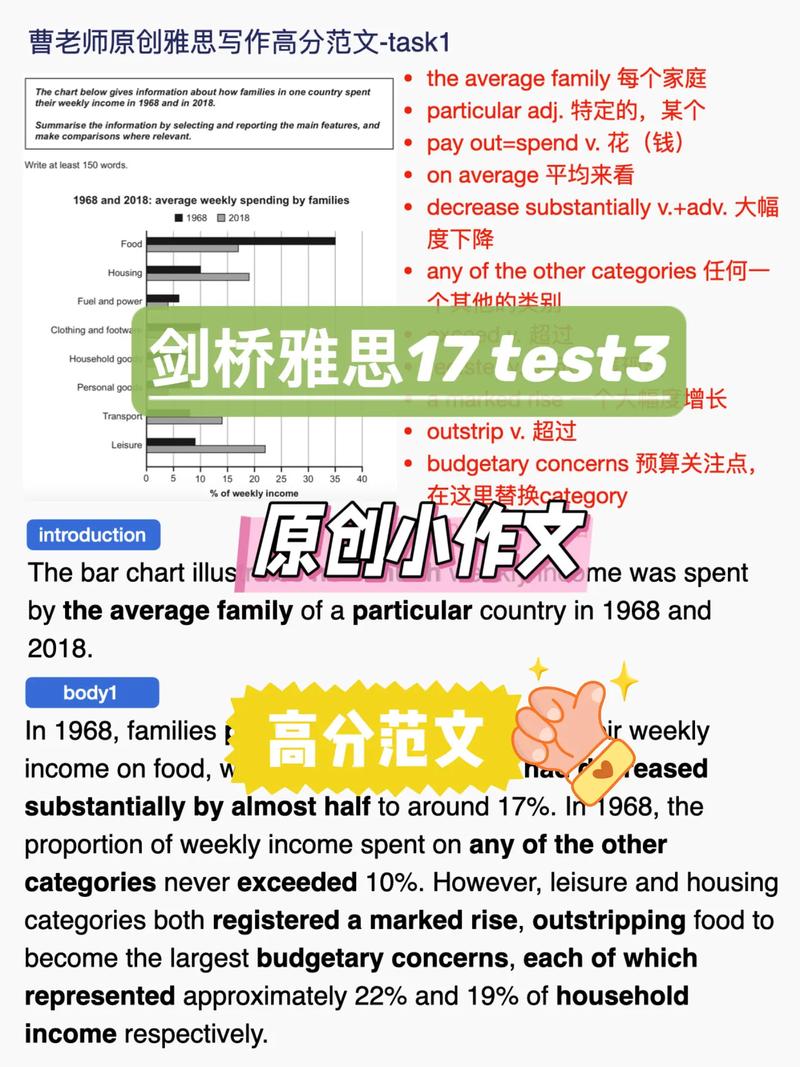
雅思小作文主要分为四大图表类型:动态图(线图、柱状图、表格、饼图)、静态图(柱状图、饼图、表格、流程图、地图),剑7 Test 3的小作文题目为动态柱状图,描述了五个国家在2001年和2002年的可再生能源消耗比例变化,这是典型的动态数据对比类题目,重点在于“变化趋势”和“数据对比”的呈现。
动态图的核心要求是“描述变化”,考生需要关注数据随时间推移的增减、波动、峰值等特征,同时不同国家或项目间的横向对比也必不可少,剑7这道题涉及五个国家(澳大利亚、土耳其、瑞典、冰岛、印度)和两年数据,信息量适中,但需要合理组织结构,避免信息遗漏或混乱。
动态图解题步骤与技巧
审题:明确核心信息
需快速提取图表中的核心要素:
- 主体:五个国家(Australia, Turkey, Sweden, Iceland, India);
- 时间:2001年和2002年;
- 数据:可再生能源消耗比例(百分比);
- 核心任务:描述两年间各国比例的变化趋势,并对比不同国家的差异。
审题时需注意题目中的“compare and contrast”提示,说明不仅要单独描述每个国家的变化,还要进行横向比较(如最高/最低值、变化最快/慢的国家等)。
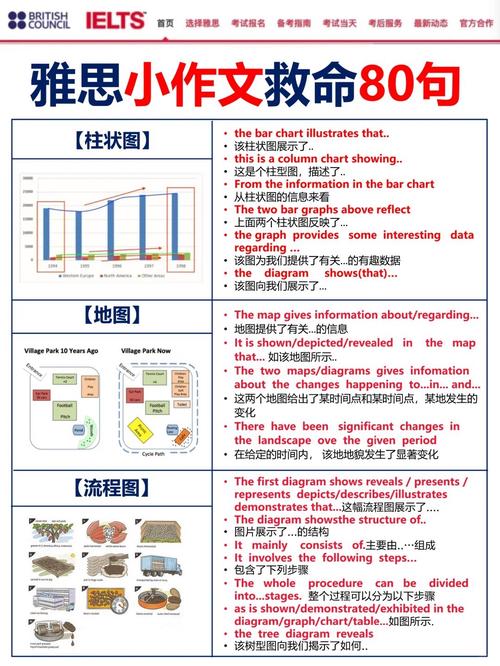
结构规划:三段式布局
小作文建议采用“总-分-总”三段式结构,确保逻辑清晰:
- 第一段(引言):简要介绍图表内容,包括图表类型、描述对象和时间范围,无需添加个人观点,只需客观转述题目信息。
- 第二段(主体):分段描述数据变化,可按“整体趋势+国家分组”或“国家逐一对比”的方式展开,对于本题,建议先概括整体变化(如多数国家比例上升,个别国家下降),再分国家或分组详细描述具体数据。
- 第三段(:总结核心趋势和最显著的特征,如“冰岛始终比例最高,印度最低,且瑞典增长最快”等,避免重复主体段细节,需提炼关键结论。
数据描述:动态词汇与对比句式
动态图需使用丰富的“变化类”词汇,避免重复“increase”或“decrease”:
- 上升:rise, grow, increase, surge, climb, go up, jump...
- 下降:fall, drop, decrease, decline, reduce, dip, go down...
- 波动:fluctuate, vary, oscillate...
- 平稳:remain stable, stay constant, level off...
对比句式同样重要,
- “Turkey experienced a slight increase from 4% to 5%, while India saw a marginal rise of 1%.”
- “In contrast to Australia’s stable figure, Sweden’s proportion surged by 10%.”
数据呈现需精确,避免模糊表述。“Sweden’s renewable energy consumption rose significantly from 30% in 2001 to 40% in 2002”比“Sweden’s proportion increased a lot”更符合学术写作要求。
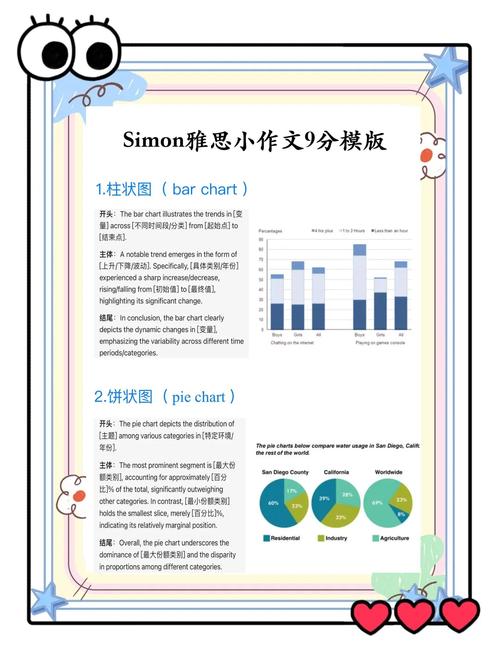
高分语法:多样性与准确性
为提升语法得分,需注意:
- 时态:动态图描述过去数据,统一使用一般过去时。
- 句式多样性:结合简单句、复合句(如定语从句、状语从句)和复杂句(如分词结构、插入语)。“Over the two-year period, Iceland maintained the highest proportion, which stood at 50% in 2001 and 55% in 2002.”
- 数据范围表达:使用“accounted for approximately 20%”“made up just over 10%”等短语,避免单一使用“was”。
剑7 Test 3 小作文范文解析
以下为根据上述步骤撰写的范文(约180词,符合考试字数要求):
The bar chart illustrates the proportion of renewable energy consumption in five countries—Australia, Turkey, Sweden, Iceland, and India—in 2001 and 2002. Overall, most nations witnessed an upward trend, with Iceland consistently recording the highest figures and India the lowest.
In 2001, Iceland led the group with 50%, followed by Sweden at 30%, while Australia, Turkey, and India had relatively low proportions, ranging from 4% to 20%. Over the next year, significant changes occurred. Sweden experienced the most dramatic surge, increasing by 10% to reach 40%. Iceland also rose steadily to 55%, maintaining its top position. In contrast, Australia remained stable at 20%, and Turkey showed slight growth from 4% to 5%. Notably, India, despite the lowest proportion, still managed a marginal increase of 1%, from 2% to 3%.
In conclusion, the period saw a general rise in renewable energy use across the surveyed countries, with Iceland and Sweden outperforming others, while India and Turkey lagged behind but showed modest progress.
常见误区与避坑指南
- 忽略整体趋势:部分考生只罗列单个国家数据,未概括整体变化(如“多数国家上升”),导致结论段缺乏高度。
- 数据堆砌:过度描述所有数据,甚至精确到每个1%的变化,反而显得冗余,应优先突出“显著变化”“极值”“对比强烈”的数据。
- 语法错误:时态混乱(如用一般现在时描述过去数据)、主谓不一致、介词误用(如“increase from... to...”误用为“increase... to...”)等低级错误需避免。
- 缺乏逻辑连接:段落间或句子间缺少过渡词(如“However”, “Similarly”, “In addition”),影响文章连贯性。
相关问答FAQs
Q1: 动态图中数据变化不大时,如何避免描述重复?
A: 若数据波动较小(如仅1%-2%的变化),可使用“marginal/modest/slight”等形容词修饰,并合并描述。“Australia and Turkey showed minimal changes, with their proportions remaining around 20% and 5% respectively.” 可强调“稳定性”而非具体数值,如“The figures for Australia stayed constant over the two years.”
Q2: 小作文是否需要添加个人观点或预测?
A: 不需要,雅思小作文要求“客观描述”,严禁添加主观评价(如“我认为应该增加可再生能源使用”)或未来预测(如“未来比例将继续上升”),所有内容必须基于图表数据,若需推测,需用“may/might”等情态动词,且仅限题目明确要求时(如流程图的结果描述)。
通过系统分析剑7小作文的题型特点、掌握科学的解题步骤,并辅以针对性练习,考生可有效提升图表描述的准确性和逻辑性,为雅思写作高分打下坚实基础。