在雅思口语考试中,“coffee”是一个高频且贴近生活的话题,它既可以是日常饮品习惯的切入点,也能延伸到文化、社交、个人经历等多个维度,考生若能围绕“coffee”构建有细节、有逻辑、有个人色彩的回答,往往能给考官留下深刻印象,以下从多个角度展开,帮助考生全面掌握这一话题的应对策略。
个人与咖啡的日常关联
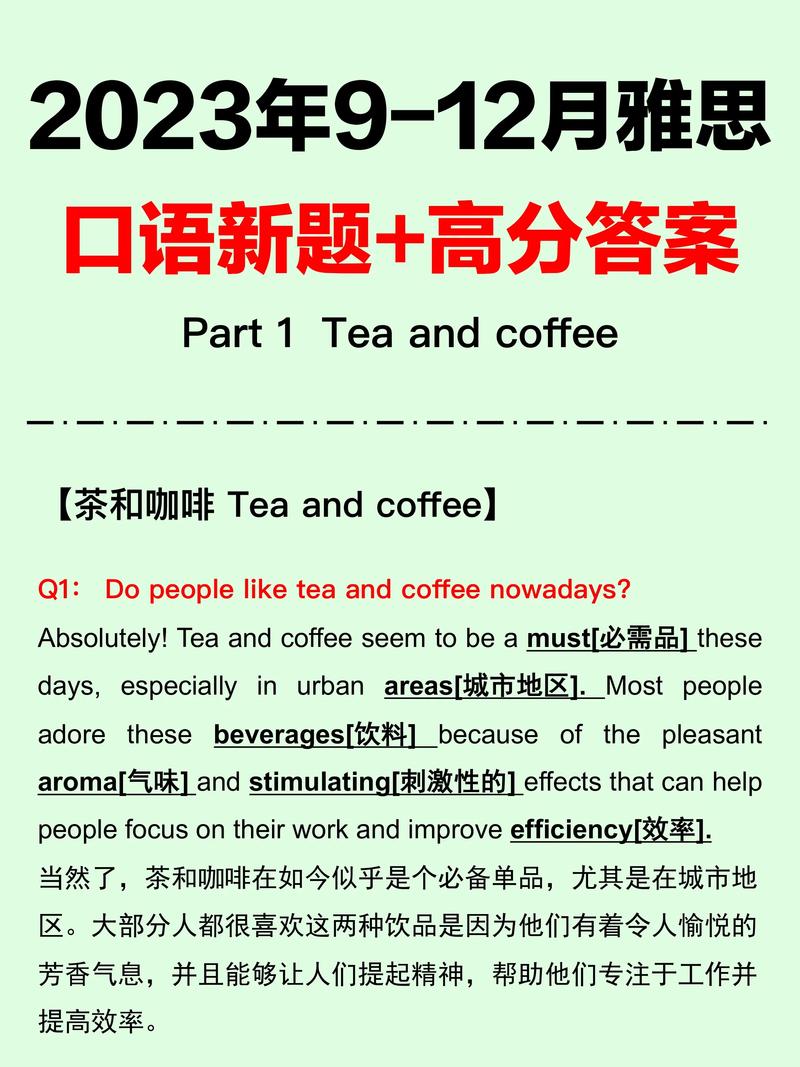
对于大多数考生而言,coffee是生活中常见的元素,回答时可从“何时喝”“为何喝”“喝什么”三个基础问题切入,加入具体场景和感受,避免空泛,许多学生和上班族习惯早上喝咖啡提神,这背后可能是学业或工作的压力;也有人将下午茶时间的咖啡视为放松的仪式,搭配甜点或与朋友聊天。
在描述具体咖啡类型时,可以细化差异:美式咖啡(Americano)因口感清爽、低热量成为健康人群的首选;拿铁(Latte)牛奶比例高,口感顺滑,适合偏好柔和风味的人;而意式浓缩(Espresso)则因浓郁醇厚的风味,常被用来制作其他咖啡基底,或作为“快速提神剂”在忙碌时饮用,若考生有更独特的体验,如手冲咖啡(Pour-over)的仪式感、冷萃咖啡(Cold Brew)的清爽夏日感,都可以作为细节补充,让回答更具个性。
咖啡背后的文化与社会意义
咖啡不仅是饮品,更是一种文化符号,在不同国家,咖啡的饮用方式和社交功能各有特色,在意大利,人们习惯站在吧台前快速喝完一杯浓缩咖啡,将其视为日常生活的“加油站”;而在土耳其,咖啡制作过程讲究仪式感,甚至发展出占卜咖啡渣的传统文化;北欧国家则将“咖啡派对”(Fika)视为重要的社交方式,人们通过共享咖啡拉近彼此距离。
咖啡文化也随着全球化发展逐渐普及,从早期外企办公室里的速溶咖啡,到如今遍布城市的精品咖啡馆(specialty coffee shop),咖啡已从“小资符号”转变为大众化的社交媒介,许多年轻人会在咖啡馆学习、工作或约会,咖啡馆的空间设计、背景音乐甚至咖啡豆的产地故事,都成为他们关注的细节,这些文化差异和本土化趋势,若能结合个人观察,能让回答更有深度。
咖啡相关的个人经历与故事
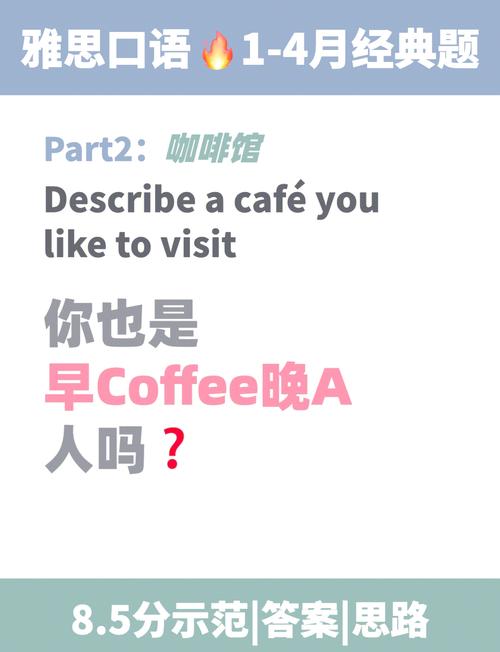
雅思口语注重“交流感”,考生通过讲述与咖啡相关的真实经历,能有效展现语言表达能力和情感共鸣,可以描述一次难忘的咖啡馆体验:或许是独自在雨天走进街角咖啡馆,被手冲咖啡的香气和爵士乐治愈;或许是和朋友在咖啡馆讨论未来,一杯咖啡见证了彼此的成长;又或是第一次尝试制作咖啡时的手忙脚乱,最终因成功冲出一杯满意的拿铁而获得成就感。
这些故事不需要情节曲折,但需包含具体细节(如环境、动作、对话、感受)。“Last winter, I got stuck in a sudden snowstorm on my way home. I ducked into a tiny café near the subway, where the owner was grinding coffee beans by hand. The aroma filled the room, and he offered me a free cup of pour-over while I waited. We chatted about how different coffee beans taste in cold weather—that moment made me realize coffee isn’t just a drink, but a way to connect with people.” 这样的回答既有画面感,又体现了情感和思考,符合雅思口语对“fluency and coherence”及“lexical resource”的要求。
咖啡话题的延伸与拓展
在雅思口语Part 3的抽象讨论中,咖啡可以延伸至更广泛的话题,如“健康饮食”“传统与现代生活方式”“商业与消费文化”等,考官可能会问:“Do you think coffee shops are important for a city?” 考生可从社交空间、文化载体、经济贡献等角度回答:咖啡馆为市民提供了除家庭和办公室外的“第三空间”,促进人际互动;独立咖啡馆往往融合本地文化,成为城市特色的一部分;连锁咖啡品牌则通过创造就业机会和带动周边消费,推动经济发展。
又如讨论“年轻人是否应该喝咖啡”,可辩证分析:适量饮用咖啡能提高专注力,但过量可能导致失眠或焦虑,关键在于根据自身情况控制摄入量,这种多角度思考的能力,是雅思口语高分的重要考察点。
常见表达与词汇积累
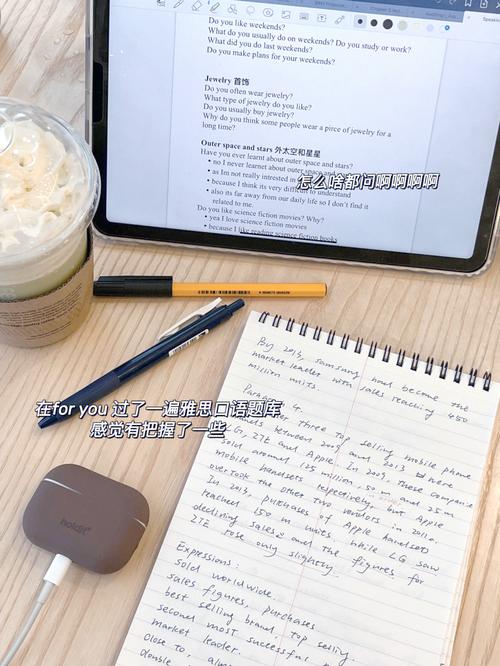
围绕“coffee”话题,掌握多样化的表达能提升语言丰富度,以下分类整理了实用词汇和短语:
| 类别 | 表达示例 |
|---|---|
| 咖啡类型 | espresso, latte, cappuccino, americano, mocha, macchiato, cold brew, decaf |
| 咖啡相关动作 | brew, grind, roast, steam (milk), sip, sip slowly, grab a coffee to go |
| 感受与体验 | refreshing, energizing, aromatic, bitter, smooth, strong, weak, comforting |
| 场景与社交 | coffee shop, café culture, chat over coffee, a cup of coffee to start the day |
| 文化与传统 | coffee ceremony, coffee ritual, third place, specialty coffee |
描述早晨喝咖啡的习惯可以说:“I usually grab a cup of americano on my way to work. It’s quick and strong enough to wake me up, but not as bitter as espresso.” 描述咖啡馆氛围则可以说:“I love studying in that café—their jazz playlist and the sound of coffee beans being grinding create such a cozy vibe.”
FAQs
Q1: What should I do if I don’t like coffee but the examiner asks about it?
A1: It’s completely fine to dislike coffee—honesty makes your answer more natural. You can start by saying, “Actually, I’m not a big fan of coffee, but I’ve had some interesting experiences with it…” and then share a story about trying coffee (e.g., a friend’s recommendation, a café visit), focusing on the process or social context rather than the taste. For example, “Once, my roommate made me try her homemade latte with lots of caramel syrup. It was still too bitter for me, but I enjoyed the process of adding whipped cream and sprinkles together—it felt like a fun activity rather than just drinking coffee.” This way, you still engage with the topic while staying authentic.
Q2: How can I extend my answer when talking about coffee to avoid short responses?
A2: Use the “PEEL” structure (Point, Explanation, Example, Link) to expand your ideas. For instance, if asked “Do you often drink coffee?”, you can:
- Point: “Yes, I drink coffee almost every day, but mostly in the afternoon.”
- Explanation: “I find it helps me stay focused when I’m studying or working on assignments, and it’s a nice way to take a short break from screen time.”
- Example: “Last semester, I used to feel sleepy around 3 PM, but after starting to have a small cappuccino at that time, I noticed I could concentrate better for the next two hours.”
- Link: “So now, it’s become a kind of ritual for me to recharge and boost my productivity.” This structure adds depth and ensures your answer is coherent and detailed.