雅思比较作文是学术类写作Task 2中常见的题型,主要要求考生对两个或多个事物、观点、现象等进行对比分析,阐述其异同点,并最终给出自己的观点或评价,这类作文不仅考察考生的语言表达能力,更考验其逻辑思维、信息筛选和论证能力,要写好雅思比较作文,需从审题、结构、论证和语言等多个维度进行系统准备。
审题:明确比较对象与核心要求
动笔前,必须仔细审题,确保准确理解题目要求,雅思比较作文通常分为两类:对比型(Compare and Contrast)和利弊型(Advantages and Disadvantages),部分题目也可能结合两者,要求先比较差异,再分析利弊或给出观点。
- "Some people believe that online learning is more effective than traditional classroom learning. Compare and contrast these two methods."
- "Compare the advantages and disadvantages of using public transport and private cars in urban areas."
审题时需重点关注三个要素:
- 比较对象:明确题目要求对比的主体(如两种学习方法、两种交通方式);
- 比较维度:确定对比的角度(如成本、效率、环境影响、社会影响等);
- 任务指令:判断是否需要给出个人观点(如"Discuss both views and give your own opinion")。
未明确比较维度,需根据常识和逻辑自行选择合理角度,例如比较两种教育模式时,可从灵活性、互动性、学习效果、成本等方面展开。
结构搭建:逻辑清晰的框架
雅思比较作文通常采用四段式结构(引言-主体段1-主体段2-,也可根据比较内容的复杂度调整为五段式(增加一个让步段或总结段),以下以四段式为例,详细说明各部分写作要点:
引言段(Introduction):背景引入+题目转述+ thesis statement
引言段需简洁明了,包含三个核心部分:
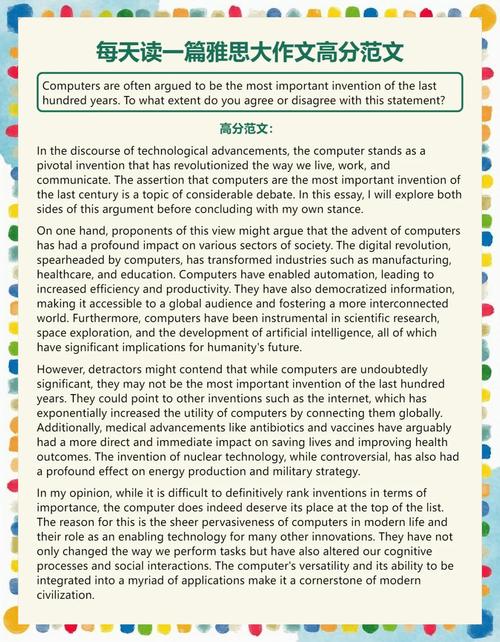
- 背景句:用1-2句话介绍比较对象所属的领域或背景,引出话题,比较线上与线下学习时,可提及" technological advancement has revolutionized education, making online learning a prevalent alternative to traditional classroom settings." 转述**:用同义替换改写题目核心词,避免直接复制原题,将"online learning vs traditional learning"转述为"the dichotomy between digital and in-person educational approaches"。
- Thesis statement:明确文章的对比方向和核心观点,简要概括主要异同点。"While both online and traditional learning offer distinct advantages in terms of flexibility and interaction, their effectiveness varies significantly depending on learners' self-discipline and accessibility to resources."
主体段(Body Paragraphs):分维度对比论证
主体段是作文的核心,需通过分论点+主题句+解释+例子+结论的结构展开,每个主体段聚焦一个比较维度,确保逻辑清晰、论据充分。
(1)对比型作文主体段结构
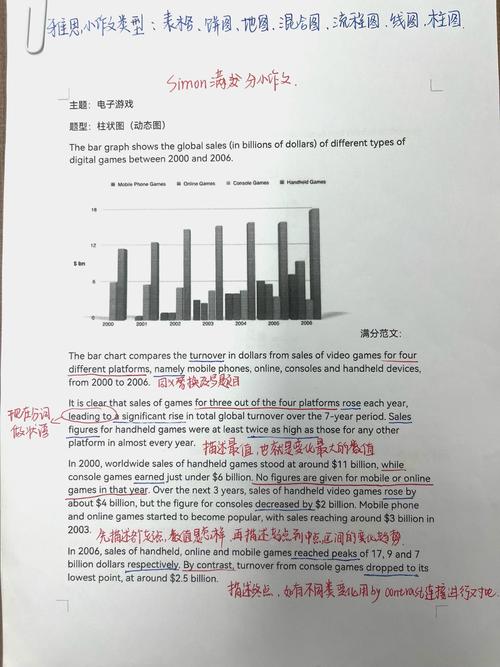
可采用"先A后B"(分别阐述A和B在某一维度的特点)或"交替对比"(在同一维度上交替对比A和B)的写法,前者更适合差异较大的对象,后者适合细节较多的精细对比。
示例:对比线上与线下学习的灵活性
- 主题句:One of the most striking differences between online and traditional learning lies in their flexibility.
- 解释+例子(线上):Online learning allows learners to access course materials and lectures at any time and from any location with internet access, which is particularly beneficial for working professionals or students with family commitments. For instance, a part-time employee can watch recorded lectures at midnight after finishing work, without being constrained by fixed class schedules.
- 解释+例子(线下):In contrast, traditional classroom learning follows a rigid timetable, requiring students to attend physical classes at specific times. This structure, while less flexible, fosters a routine that helps learners maintain focus and avoid procrastination, as seen in the higher attendance rates of in-person seminars compared to online live sessions.
- 小结句:Thus, the flexibility of online learning caters to non-traditional learners, whereas traditional learning's structured schedule suits those who require external discipline.
(2)利弊型作文主体段结构
利弊型作文通常分两段:一段阐述优势,一段阐述劣势,或按主体分别分析其利弊。
示例:分析私家车的利弊
- 主题句(优势):The primary advantage of using private cars is the unparalleled convenience and time efficiency they offer.
- 解释+例子:Private cars enable individuals to travel directly from their origin to destination without stops, saving time compared to public transport which may involve waiting, transfers, or detours. For example, a commuter traveling from a suburban area to the city center by car can reach their workplace in 30 minutes, while the same journey via bus and train might take over an hour. Additionally, cars provide flexibility for spontaneous trips, such as emergency situations or leisure outings, which are less feasible with reliance on public transport schedules.
- 主题句(劣势):However, the widespread use of private cars gives rise to significant drawbacks, including traffic congestion and environmental pollution.
- 解释+例子:In urban areas, a high number of private cars on the road during peak hours leads to severe traffic jams, increasing travel time and fuel consumption. According to a 2025 study by the Urban Transport Institute, cities with over 50% of private car usage experience 40% longer average commute times than those with efficient public transport systems. Moreover, cars emit large amounts of carbon dioxide and other pollutants, contributing to air quality deterioration and health issues such as respiratory diseases.
结论段(Conclusion):总结核心观点+重申立场+建议/展望
结论段需简洁总结主体段的对比结果,避免引入新信息,并可适当提出建议或未来展望。
- 总结对比:用1-2句话概括主要异同点。"In conclusion, while online learning excels in flexibility and accessibility, traditional learning provides irreplaceable interactive experiences and structured learning environments."
- 重申立场:呼应引言的thesis statement,明确个人观点(若题目要求)。"Therefore, the choice between the two methods should depend on individual learning preferences and circumstances rather than a one-size-fits-all approach."
- 建议/展望:可提出解决方案或未来趋势。"Educational institutions could integrate both methods to offer hybrid learning models, combining the convenience of online resources with the engagement of in-person activities."
论证与语言表达:提升作文质量的关键
对比词汇与句式的多样性
使用丰富的对比词汇和句式避免重复,
- 对比连词:while, whereas, on the other hand, however, in contrast, conversely
- 表示相似:similarly, likewise, equally, in the same way
- 表示差异:differ from, unlike, distinguish A from B, A has an advantage over B in...
句式示例:
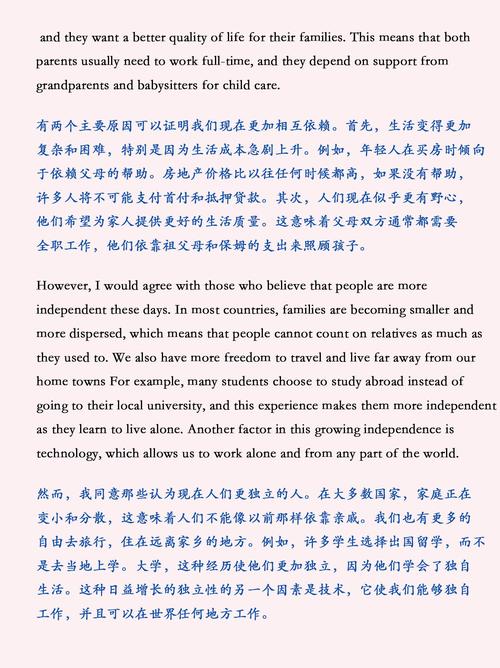
- "Unlike traditional learning, which relies on face-to-face interaction, online learning primarily depends on digital communication tools."
- "While the cost of online courses is generally lower, traditional learning offers access to physical resources such as libraries and laboratories."
例子与数据的支撑
抽象的对比需要具体例子或数据增强说服力,
- 个人经历:"In my experience, participating in online discussion forums was less engaging than in-class debates, where immediate feedback from peers and instructors fostered deeper understanding."
- 研究数据:"A 2025 survey by Education Week revealed that 78% of students reported higher motivation in traditional classrooms due to direct teacher supervision, compared to 45% in online settings."
- 案例:"For example, during the COVID-19 pandemic, schools that adopted hybrid models combining live online sessions with occasional in-person meetings reported a 20% lower dropout rate than fully online schools."
逻辑衔接与段落过渡
使用过渡词确保段落间衔接自然,
- 引出对比:"When it comes to cost, another key difference emerges..."
- 转折:"Despite these advantages, a significant drawback of... is..."
- "To sum up, the comparison suggests that..."
常见误区与注意事项
- 避免泛泛而谈:对比需具体到某一维度,避免仅说"A is good, B is bad"而没有细节支撑。
- 保持客观中立:除非题目要求给出个人观点,否则应平衡呈现双方优缺点,避免过度偏向一方。
- 注意时态与语态:描述客观事实时多用一般现在时,举例时可根据语境使用过去时。
- 控制字数分配:引言和结论各占10%-15%,主体段占70%-80%,确保重点突出。
相关问答FAQs
Q1: 雅思比较作文中,如果题目没有明确要求给出个人观点,是否需要加入自己的立场?
A1: 即使题目未明确要求(如仅要求"Compare and Contrast"),也建议在结论段简要给出倾向性观点或平衡评价,这能体现批判性思维,但主体段需保持客观,先充分对比双方观点,再在结论中总结,可写:"Overall, both methods have merits, but traditional learning is more suitable for most learners due to its effectiveness in building foundational knowledge."
Q2: 如何在比较作文中避免内容重复?
A2: 可通过以下方式避免重复:①从不同维度展开对比(如成本、效率、影响等),每个维度只讨论一次;②使用同义替换(如用"advantage"替代"benefit",用"disadvantage"替代"drawback");③调整句式结构(如将主动句改为被动句,或使用从句合并信息),对比线上学习的优势时,第一段提灵活性,第二段可提成本效益,避免重复"convenience"等词汇。