
在英语口语中,"nothing"是一个看似简单却用途极其广泛的词汇,它既可以作为名词、代词使用,也能在固定短语中表达丰富的含义,掌握"nothing"在不同语境下的用法,对于提升英语口语的自然度和准确性至关重要。
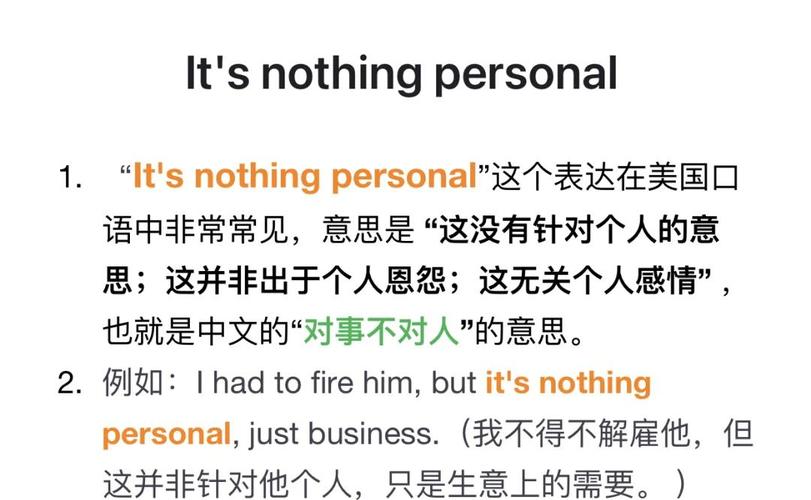
"Nothing"的基本用法
作为名词,"nothing"意为"没有什么东西"或"没有什么事情",在日常对话中,它经常用来回答关于是否存在某物或某事的提问。
- A: "What are you eating?"(你在吃什么?)
- B: "Nothing. I'm not hungry."(没什么,我不饿。)
作为代词,"nothing"可以指代不存在的事物或情况,这种用法通常带有否定或强调的意味:
- "There's nothing in the fridge."(冰箱里什么都没有。)
- "Nothing could stop him from achieving his goal."(没有什么能阻止他实现目标。)
固定短语中的"Nothing"
"Nothing"经常出现在各种固定短语中,这些短语在口语中非常常见,需要特别记忆:
-
for nothing:免费地或徒劳地
 (图片来源网络,侵删)
- "I waited for two hours for nothing."(我白白等了两个小时。)
- "The concert tickets were free, so I got them for nothing."(音乐会是免费的,所以我没花一分钱就拿到了票。)
-
nothing but:只有,只不过
- "The room was nothing but a bed and a table."(房间里只有一张床和一张桌子。)
- "He is nothing but a troublemaker."(他只不过是个麻烦制造者。)
-
have nothing to do with:与...无关
- "This problem has nothing to do with you."(这个问题与你无关。)
- "I want nothing to do with their argument."(我不想参与他们的争论。)
-
nothing like:一点也不像
- "The movie was nothing like the book."(这部电影和原著一点也不像。)
- "There's nothing like a cup of hot coffee on a cold day."(寒冷的日子里,没有什么比一杯热咖啡更好的了。)
-
to say nothing of:更不用说
 (图片来源网络,侵删)
- "The traffic was terrible, to say nothing of the rain."(交通很糟糕,更别提下雨了。)
- "She's smart, hardworking, and beautiful—to say nothing of her talent for music."(她聪明、勤奋、漂亮——更不用说她的音乐天赋了。)
"Nothing"的强调用法
在口语中,"nothing"常常与某些结构搭配,用来加强语气:
-
nothing + 比较级:表示"从来没有如此..."
- "I've never seen nothing like this before!"(我从未见过这样的东西!)
- (注意:在标准英语中,这里应该用"never anything",但在口语中这种双重否定很常见)
-
nothing if not:极其,非常
- "He was nothing if not persistent."(他极其坚持不懈。)
- "The party was nothing if not lively."(这个派对非常热闹。)
-
all or nothing:要么全部,要么全不
- "I'm an all-or-nothing person. I don't do things halfway."(我是个要么不做,要么就做彻底的人。)
- "It's all or nothing—we either win the whole contract or walk away."(要么全赢,要么全输——要么我们拿下整个合同,要么就放弃。)
"Nothing"在口语中的省略形式
在日常对话中,"nothing"经常以简化的形式出现:
-
"Nah":作为"nothing"的缩略形式,常用于回答邀请或提议
- A: "Want to go to the movies?"(想去看电影吗?)
- B: "Nah, I'm tired."(不了,我累了。)
-
"Nope":同样表示"no"或"nothing"
- A: "Did you find your keys?"(你找到钥匙了吗?)
- B: "Nope, they're gone."(没找到,不见了。)
"Nothing"的常见错误及纠正
在使用"nothing"时,学习者常犯以下错误:
| 错误用法 | 正确用法 | 解释 |
|---|---|---|
| "I have nothing to eat it." | "I have nothing to eat." | "nothing"后面不需要代词"it" |
| "Nothing is matter." | "Nothing is the matter." | 固定搭配"the matter"表示"有问题" |
| "I did nothing for it." | "I did nothing about it." | 表示"对某事采取行动"用"about" |
| "Nothing especial." | "Nothing special." | 形容词前应使用"special"而非"especial" |
实用对话示例
以下是一段包含多个"nothing"用法的对话:
A: "Hey, what's wrong? You look upset." (嘿,怎么了?你看起来很难过。)
B: "Oh, nothing. Just a bad day." (哦,没什么,只是过得很糟糕。)
A: "Want to talk about it? Sometimes talking helps." (想聊聊吗?有时候说出来会有帮助。)
B: "It's nothing serious. Just had a fight with my roommate." (没什么严重的,只是和室友吵了一架。)
A: "Want to grab something to eat? My treat." (想去吃点东西吗?我请客。)
B: "No, thanks. I'm not hungry. But I appreciate it." 不了,谢谢,我不饿,不过还是谢谢你。)
A: "Alright, if you change your mind, let me know. Nothing beats good food when you're feeling down." (好吧,如果你改变主意了告诉我,没有什么比心情不好时吃点好东西更好的了。)
相关问答FAQs
Q1: 在口语中,"nothing"和"anything"有什么区别? A1: "Nothing"表示"没有任何东西",强调完全的否定;而"anything"在疑问句和否定句中表示"任何东西",范围更广。"Do you want anything?"(你想要什么东西吗?)和"I don't want anything."(我什么都不想要。)而"I want nothing."则更强调"我什么都不想要"的坚决态度。
Q2: 为什么在口语中有时会听到"don't got nothing"这样的双重否定结构? A2: 这种双重否定结构(如"I don't got nothing")在标准英语中是不正确的,但在某些方言和非正式口语中很常见,它实际上是通过双重否定来加强否定的语气,在标准英语中,正确的表达应该是"I don't have anything"或"I have nothing",了解这种结构有助于理解非正式口语,但在正式场合或写作中应避免使用。