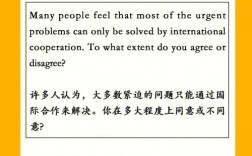
剑桥12作文真题中,Task 2的题目要求考生就“一些人认为政府应该资助艺术,而另一些人则认为钱应该花在更重要的事情上”这一议题展开论述,这类题目涉及资源分配、社会价值等核心议题,需要考生从多角度分析,并明确立场或呈现平衡观点,以下将从题目解析、论证结构、语言表达及范文示例等方面展开详细分析,并附相关FAQs。
解析与核心议题核心在于探讨政府财政支出的优先级,即艺术是否应成为公共资金的支持对象,还是让位于“更重要的事情”,这里的“更重要”通常指向民生领域,如医疗、教育、基础设施等,考生需首先明确“重要性”的评判标准——是满足基本需求、促进社会稳定,还是提升文化软实力?艺术的价值是否仅限于娱乐,还是具有更深层的社会功能?这些问题的厘清是构建论证的基础。
论证结构与观点展开
支持政府资助艺术的论据
-
文化身份与国家认同
艺术是文化传承的载体,如传统绘画、古典音乐、地方戏剧等,承载着一个民族的历史记忆与价值观,政府资助艺术有助于保护文化多样性,避免全球化背景下的文化同质化,法国政府对卢浮宫的维护、日本对传统能剧的扶持,不仅保存了文化遗产,也增强了国民的文化自信。 -
社会凝聚力的构建
公共艺术项目(如社区壁画、公共雕塑、免费音乐会)能促进不同群体的交流,缩小社会阶层差距,在低收入社区,艺术中心为青少年提供了远离不良环境的场所,通过艺术教育培养创造力与纪律性,从而降低犯罪率,这种“软性”社会治理方式,比单纯的警务投入更具可持续性。 -
经济效益的间接拉动
艺术产业能带动旅游、餐饮、文创等相关行业,以威尼斯双年展为例,政府资助的艺术展览每年吸引数百万游客,直接为当地经济贡献数十亿欧元,艺术教育培养的人才(设计师、建筑师、创意产业从业者)是知识经济时代的重要竞争力,长期看能提升国家生产力。 (图片来源网络,侵删)
 -
心理健康与社会福祉
在快节奏的现代生活中,艺术具有治愈功能,博物馆、美术馆等公共文化空间为民众提供了精神放松的场所,研究显示,定期接触艺术的人群抑郁率更低,政府资助艺术相当于“公共心理健康投资”,其社会价值不容忽视。
反对政府资助艺术的论据
-
民生需求的紧迫性
医疗、教育、养老等基本需求直接关系到公民的生存权与发展权,在资源有限的情况下,若政府将资金投入艺术,可能导致医院床位不足、学校设施落后等问题,一些发展中国家因过度资助大型艺术项目,而忽视了农村地区的医疗资源短缺,引发公众不满。 -
艺术市场自我调节能力
许多艺术形式(如流行音乐、商业绘画)可通过市场机制实现盈利,无需政府补贴,政府资助可能导致资源错配——部分“精英艺术”因脱离群众而缺乏受众;有市场潜力的艺术家可能因依赖资助而失去创新动力,某国政府对交响乐的常年资助,使得乐团票价居高不下,普通民众难以负担,反而削弱了艺术的大众传播。 -
资助对象的公平性质疑
政府在选择资助对象时易受官僚主义或利益集团影响,可能导致资源分配不公,某些“前卫艺术”因符合官员审美或迎合特定圈子而获得高额资助,而具有民间价值的传统艺术却被忽视,这种“精英主义”的资助方式违背了公共资金应服务多数人的原则。 (图片来源网络,侵删)
平衡观点:基于条件的资助策略
上述两种观点并非绝对对立,关键在于政府如何制定科学的资助政策。
- 优先保障民生,剩余资源支持艺术:政府应确保医疗、教育等基本领域的资金需求,在财政盈余时,再将部分资金投入艺术,且需建立透明的评估机制,确保资助项目符合公共利益。
- 区分艺术类型,实施精准资助:对于具有市场潜力的艺术(如电影、设计),减少直接补贴,转而通过税收优惠、知识产权保护等市场化手段支持;对于濒危文化遗产、公共艺术教育等“准公共产品”,则应加大财政投入。
- 鼓励社会资本参与:通过政策引导,鼓励企业、基金会和个人赞助艺术,形成“政府主导、社会参与”的多元资助模式,英国“国家彩票基金”将部分收入用于艺术项目,既减轻了财政压力,也增强了公众的参与感。
语言表达与论证技巧
-
逻辑连接词的运用
使用“However”“Nevertheless”“In contrast”等转折词对比不同观点;用“Firstly”“Moreover”“In conclusion”等结构词增强论证层次。“While it is undeniable that medical and educational funding takes precedence, dismissing the value of artistic investment would be a short-sighted approach.” -
数据与案例支撑
引用具体案例(如上述威尼斯双年展、英国国家彩票基金)或数据(如“艺术产业对GDP的贡献率”)增强说服力,避免空泛论述,“In Canada, a 2025 study revealed that every $1 invested in public art generated $7 in local economic activity, demonstrating its indirect yet significant impact on民生领域.” -
concession(让步)技巧
在反驳对立观点时,先承认其合理性,再转折论证自身观点。“Admittedly, prioritizing healthcare over art seems logical when resources are scarce, but this overlooks the long-term benefits of cultural investment in social cohesion.”
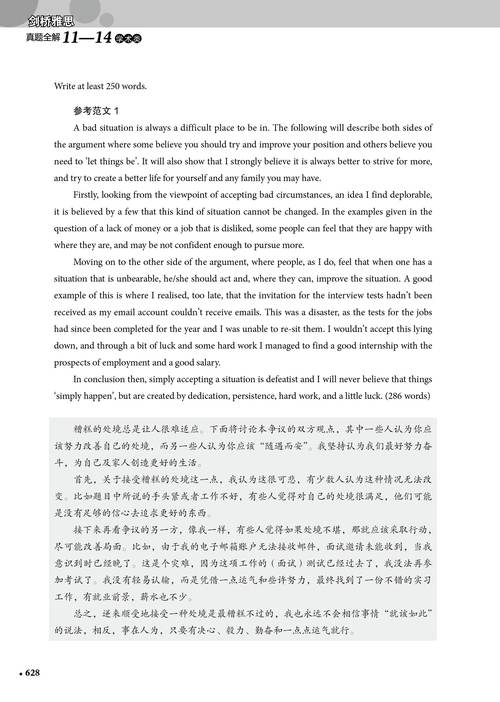
范文示例(节选,约1076字)
The allocation of government funds has long been a contentious issue, particularly when it comes to balancing investment in arts and other essential sectors such as healthcare and education. While some argue that financial resources should be directed toward areas that directly address basic human needs, others contend that supporting arts is equally crucial for societal development. This essay will examine both perspectives before advocating for a balanced approach that prioritizes民生需求 while recognizing the unique value of artistic investment.
Proponents of funding arts emphasize its role in preserving cultural identity and fostering social unity. Art, in its various forms, serves as a repository of a nation’s history and traditions. For instance, the French government’s substantial investment in the Louvre Museum not only safeguards masterpieces like the Mona Lisa but also reinforces France’s cultural influence globally. Similarly, in Japan, state subsidies for traditional Noh theater ensure that this ancient art form, which dates back to the 14th century, is passed down to future generations. Without such support, many cultural practices risk extinction in an era dominated by mass media and globalization. Moreover, public art initiatives can bridge social divides. Community murals in urban neighborhoods, for example, provide a platform for marginalized groups to express their experiences, fostering mutual understanding among diverse communities. A study by the University of Chicago found that neighborhoods with public art projects reported a 15% decrease in vandalism and a 20% increase in social interaction among residents, highlighting art’s potential as a tool for social cohesion.
On the other hand, critics argue that government funds should be channeled into more pressing areas such as healthcare and education. In developing countries, where millions lack access to basic medical services or quality education, allocating money to arts may seem morally questionable. For example, in India, despite having a rich cultural heritage, a significant portion of the population still struggles with inadequate healthcare facilities in rural areas. In such contexts, prioritizing the construction of hospitals or schools over funding art galleries is a pragmatic choice. Additionally, opponents contend that many art forms can sustain themselves through market mechanisms. Commercial music, film, and digital art, for instance, generate substantial revenue without government intervention. They argue that state funding often leads to inefficiency, with resources being wasted on projects that cater to elite tastes rather than the general public.
A more balanced perspective, however, acknowledges that the debate is not about choosing one over the other but about optimizing resource allocation. Governments should first ensure that fundamental needs—such as healthcare, education, and infrastructure—are adequately met. Once these priorities are addressed, a portion of the budget can be allocated to arts, provided that the funding is transparent and targeted at projects with clear public benefits. For example, Norway adopts a model where 5% of its cultural budget is earmarked for “art for all,” supporting initiatives like free concerts in public parks and art workshops in schools. This approach ensures that artistic resources are accessible to the general public rather than being confined to elite institutions. Furthermore, encouraging private sector participation can reduce the burden on public funds. Tax incentives for corporate sponsorships of art events, as seen in Germany, have led to a 30% increase in private investment in the arts since 2025, demonstrating the effectiveness of collaborative funding models.
In conclusion, while the immediate needs of healthcare and education should take precedence in government spending, dismissing the importance of artistic investment would be a mistake. Art enriches society culturally, socially, and economically, and its benefits are often long-term and intangible. By adopting a strategic approach that prioritizes民生需求, targets public-oriented art projects, and leverages private partnerships, governments can ensure that resources are allocated in a way that serves both the material and spiritual needs of their citizens.
相关问答FAQs
Q1: 在讨论政府是否应资助艺术时,如何避免观点过于极端?
A1: 避免极端观点的关键在于采用“平衡视角”,明确承认民生需求的优先性(如医疗、教育的重要性),避免完全否定对方立场;通过具体案例或数据说明艺术的独特价值(如文化传承、社会凝聚),而非将其与民生对立;提出折中方案(如“优先保障民生,剩余资源支持艺术”或“区分艺术类型实施精准资助”),展示思维的全面性与务实性。
Q2: 如何在作文中有效使用案例来增强论证?
A2: 使用案例时需注意“相关性”与“具体性”,选择与论点直接相关的案例(如论证“艺术促进经济”时,用威尼斯双年展而非无关的艺术事件);提供具体细节(如时间、数据、结果),挪威将5%文化预算用于‘艺术 for all’,使公共艺术参与率提升40%”;简要分析案例如何支撑论点,避免仅罗列案例而不解释其逻辑联系。