雅思小作文混合题是考试中常见的一种题型,通常结合数据描述(如动态图、静态图)和图表分析(如流程图、地图题)或数据解释与趋势预测等任务,要求考生在150词内清晰呈现信息并突出关键特征,这类题型不仅考察数据提取能力,还考验逻辑整合与语言表达的精准性,以下从题型分类、解题步骤、常用表达及注意事项四方面展开详细解析,并提供示例框架与FAQs辅助理解。
题型分类与核心要求
雅思混合题主要分为两类:“数据+非数据图表”组合和“多数据图表组合”,前者如柱状图+流程图(描述某国能源结构变化及太阳能板制造流程),后者如线图+饼图(分析某地游客数量变化及来源国占比),无论哪种类型,核心要求一致:
- 数据描述:准确提取图表中的关键数据(最大值、最小值、趋势、差异等),避免无关细节;
- 逻辑衔接:用过渡词(如 meanwhile, additionally, in contrast)连接不同图表信息,体现关联性;
- 任务回应:若涉及解释或预测(如“说明原因”“预测趋势”),需结合数据合理延伸,但避免主观臆断。
解题四步法
第一步:审题与信息提取(1-2分钟) 指令,明确图表类型、时间维度(动态/静态)及核心任务(描述、对比、解释)。
The chart below shows the percentage of people using public transport in a city from 2000 to 2025, and the map illustrates the changes in the public transport network over the same period.
此处需同时处理“动态线图”(描述使用率趋势)和“静态地图”(描述交通网络变化),需分别提取关键数据点(如2000年/2025年使用率、峰值/谷值)和地图细节(新增线路、站点位置变化)。
第二步:结构规划(1分钟)
采用“总-分”结构,通常分3段:
- 开头段:改写题目,概括图表主题(1句话);
- 主体段1:描述第一个图表核心信息(如线图趋势);
- 主体段2:描述第二个图表核心信息(如地图变化),并关联两个图表的逻辑(如“交通网络扩展可能促进使用率上升”);
- 结尾段(可选):若题目要求解释/预测,补充1句话总结关联性(如“由此可见,基础设施完善与使用率增长呈正相关”)。
第三步:数据描述与语言组织(8-10分钟)
数据描述原则:
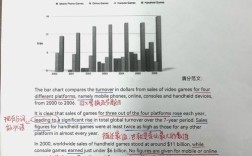
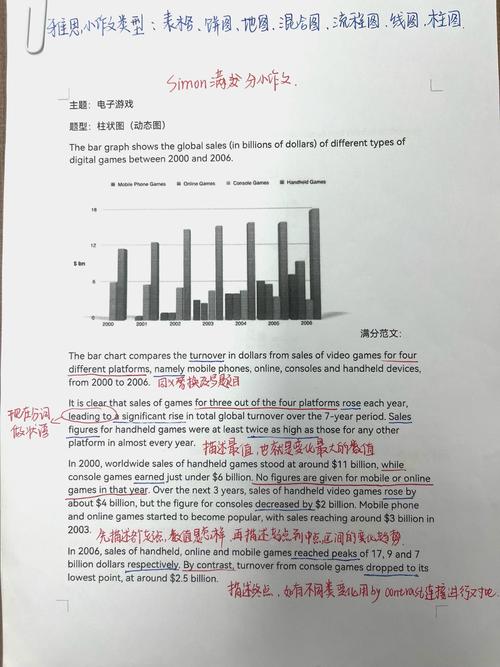
- 动态图(线图、柱状图):突出“趋势+关键点”(如“使用率从2000年的20%波动上升至2025年的50%,在2010年达到峰值35%”);
- 静态图(饼图、柱状图):对比“差异+占比”(如“2025年地铁占比最高(40%),而巴士仅占15%”);
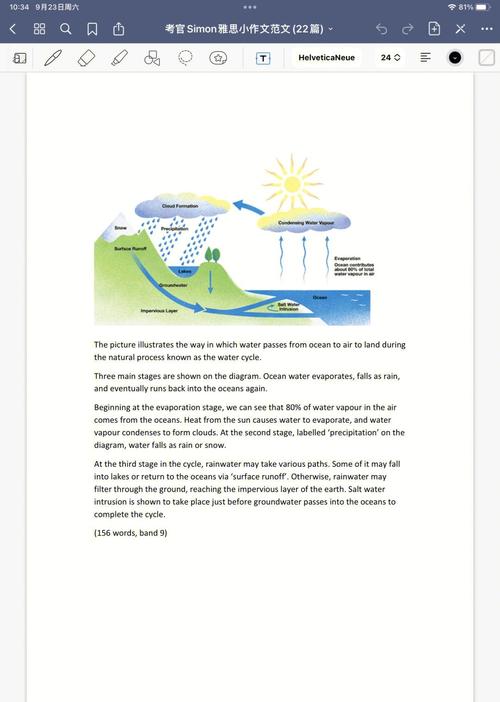
- 非数据图表(流程图、地图):按顺序描述步骤(流程图)或空间变化(地图),用“first, then, finally”或“north, south, east, west”衔接。
语言技巧:
- 避免重复:用“account for, constitute, make up”替代“占比”;用“increase, rise, grow, surge”替代“上升”;
- 数据取舍:选取3-5个核心数据(如最高值、最低值、显著变化点),忽略次要细节;
- 被动语态:适用于客观描述(如“Three new metro lines were added between 2000 and 2010”)。
第四步:检查与润色(1-2分钟)
核对:
- 数据准确性(单位、时间是否匹配);
- 语法错误(主谓一致、时态动态图用过去时/现在时,静态图用一般现在时);
- 字数控制(140-160词,避免超纲)。
常用表达与示例框架
(一)动态图趋势描述
- 上升:increase from...to..., rise steadily, grow significantly, surge to...
- 下降:decrease from...to..., decline gradually, drop sharply, fall to...
- 波动:fluctuate between...and..., vary slightly, peak at..., hit a low point of...
(二)静态图对比描述
- 占比:A accounted for 30%, while B constituted 20%.
- 差异:There was a significant difference between A (40%) and B (10%).
- 排序:Bus was the most popular mode (45%), followed by train (30%) and car (25%).
(三)非数据图表描述
- 流程图:First, raw materials are collected. Next, they are processed in a factory. Finally, the products are packaged and delivered.
- 地图:A new highway was constructed in the north, connecting City A and City B. Meanwhile, two bus stations were added near the city center.
(四)示例框架(以“线图+地图”为例)
开头段:The line chart illustrates the changes in the percentage of commuters using public transport in City X from 2000 to 2025, while the map displays the expansion of the public transport network during the same period.
主体段1(线图):Overall, the proportion of public transport users showed an upward trend. In 2000, only 15% of commuters chose public transport, which increased to 35% in 2010 and further rose to 55% in 2025. Notably, the growth rate accelerated after 2010, with a 10% increase in the last decade.
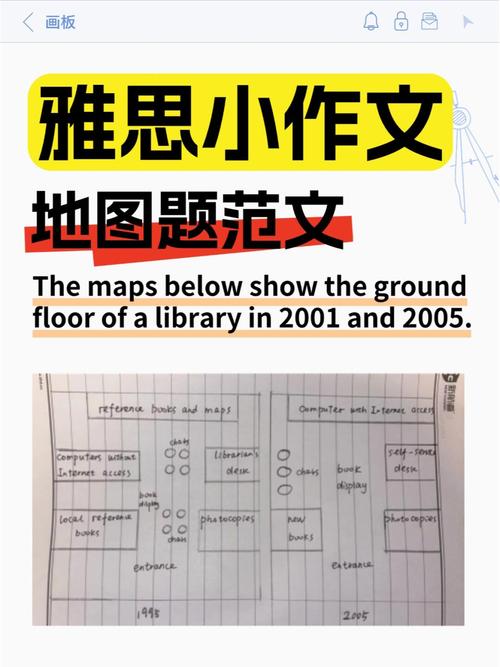
主体段2(地图):The map reveals that the transport network expanded significantly. In 2000, there were only two metro lines (red and blue) covering the city center and suburbs. By 2025, a new metro line (green) was added, connecting the northern residential area to the southern business district. Additionally, three bus stations were constructed along the new metro line, likely improving accessibility.
结尾段(关联解释):The correlation between the network expansion and rising usage suggests that improved infrastructure has encouraged more people to adopt public transport.
注意事项
- 避免“图表翻译”:不要逐字描述所有数据,而是提炼核心趋势(如“使用率翻倍”而非“2000年15%,2005年20%,2010年35%……”);
- 区分“描述”与“解释”:若题目未要求解释原因(如“Why did the number increase?”),仅基于数据客观描述,避免添加外部知识;
- 图表顺序灵活:按“从主到次”或“数据关联性”安排段落(如先描述“因”(网络扩展),再描述“果”(使用率上升))。
FAQs
Q1: 混合题中两个图表的字数如何分配?是否需要平均?
A1: 无需平均分配字数,应根据图表信息量和题目侧重调整,数据图表”(线图、柱状图)占60%-70%,因需描述具体数据;“非数据图表”(流程图、地图)占30%-40%,侧重步骤或空间变化,若题目明确要求“重点描述A图”,可适当增加A图篇幅,但需保持整体平衡。
Q2: 遇到不熟悉的图表类型(如流程图+地图组合),如何快速找到描述重点?
A2: 首先明确各图表的核心任务:流程图关注“步骤顺序”(用first, next, finally连接),地图关注“空间变化”(用方位词、新增/消失元素描述),优先提取“动态信息”(如“新增线路”“关闭工厂”),忽略静态细节(如“建筑颜色”),若时间紧张,可先用2-3句话概括流程/地图整体变化,再补充1个关键细节,确保任务完整。