2月23日的托福作文考试延续了近年来常考的“教育类”和“社会现象类”话题,题目聚焦于“学生在学习中犯错的价值”以及“技术对传统技能的影响”,这两类题目均考察考生对抽象概念的分析能力、逻辑论证深度以及现实例证的运用能力,以下从题目解析、思路展开、范文结构、语言亮点及备考建议五个方面进行详细阐述,帮助考生全面把握此类题目的应对策略。
题目解析与核心思路 类型:同意与否(Agree or Disagree) Some people believe that making mistakes is an essential part of learning, while others argue that students should avoid making mistakes as much as possible. Which view do you agree with? Use specific reasons and examples to support your answer.
核心考点
- 概念界定:明确“犯错”在学习中的定位——是“必要过程”还是“应避免的问题”。
- 逻辑分层:从认知发展、能力培养、心理建设三个维度论证“犯错的价值”,或从效率、准确性、习惯养成角度反驳“犯错必要论”。
- 例证选择:需结合教育场景(如课堂学习、技能训练)和现实生活(如语言习得、科学实验),避免空泛论述。
思路展开与论证框架
立场选择:同意“犯错是学习 essential part”
(注:该立场更易展开,且符合教育心理学理论,如“试错学习法”“建构主义学习理论”)
论证框架(总-分-总结构)
| 段落 | 核心观点 | 论证方向 | 例证方向 |
|---|---|---|---|
| 犯错是学习的必要环节,而非失败的标志 | 提出观点,反驳“避免犯错”的片面性 | 对比“完美主义”与“试错式学习”的效果 | |
| 主体段1 | 犯错深化认知理解,从被动接受到主动建构 | 认知心理学:错误暴露知识盲区,促使学生反思 | 数学解题:错误推导过程帮助理解公式逻辑;语言学习:语法错误纠正后记忆更深刻 |
| 主体段2 | 犯错培养高阶能力,如问题解决与抗挫折力 | 能力培养:面对错误时分析原因、寻找策略的过程 | 科学实验:爱迪生发明电灯的千次试错;职场新人:通过错误积累经验快速成长 |
| 主体段3 | 犯错促进个性化学习,避免“标准化陷阱” | 教育公平:错误反映个体差异,因材施教的基础 | 写作教学:教师通过批改作文中的个性化错误,针对性提升学生表达能力 |
| 重申犯错的核心价值,强调教育应包容错误 | 总结观点,提出“鼓励试错”的教育建议 | 芬兰教育模式:允许学生从错误中学习,培养创新思维 |
范文结构与语言示范
引言段
In the landscape of education, the role of mistakes in learning has long been a contentious topic. While some advocate for minimizing errors to ensure efficiency, others, including myself, contend that making mistakes is not merely inevitable but an indispensable component of genuine learning. To view mistakes as failures is to misunderstand the very essence of education: it is through grappling with errors that students move from passive recipients of information to active constructors of knowledge, developing not only academic proficiency but also the resilience and critical thinking skills essential for lifelong growth.
(解析:先引出争议,明确立场,用“indispensable component”“active constructors of knowledge”等术语提升学术性,结尾点明犯错对认知能力和心理素质的双重价值。)
主体段1:犯错深化认知理解
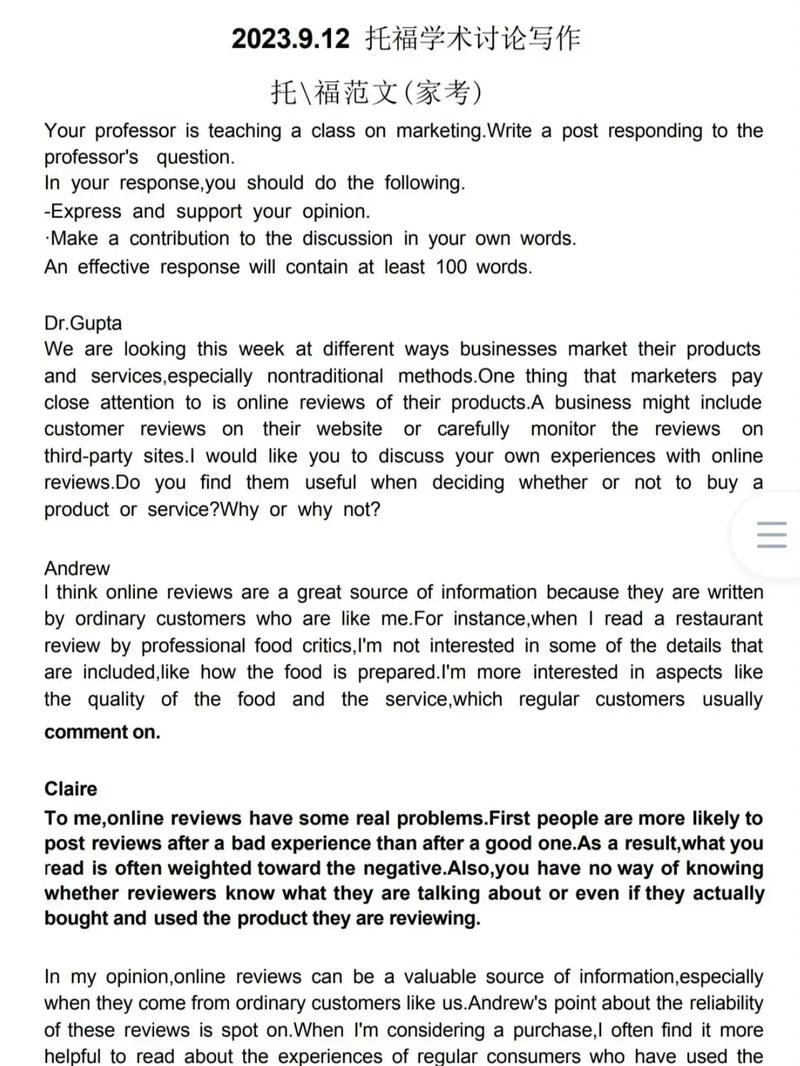
Cognitively, mistakes serve as catalysts for deeper comprehension by exposing the gaps between prior knowledge and new information. When students encounter an error—whether in solving a mathematical equation or analyzing a literary text—their initial understanding is disrupted, prompting a process of reflection and revision. This disruption is not a setback but an opportunity to re-examine assumptions and reconstruct knowledge more accurately. For instance, a student learning calculus might initially misunderstand the application of the chain rule, leading to incorrect solutions. However, upon identifying the mistake—perhaps through teacher feedback or self-check—they realize the need to break down the problem into smaller steps, a realization that solidifies their grasp of the concept far more effectively than rote memorization. Similarly, in language acquisition, a learner who repeatedly confuses “affect” and “effect” in writing is more likely to remember the distinction after correcting the error multiple times, as the mistake creates a memorable “teaching moment” that passive reading alone cannot achieve. In this sense, mistakes transform abstract knowledge into tangible, applicable understanding.
(解析:用“catalysts”“disruption”等词强调错误的积极作用,结合数学和语言学习的具体场景,体现“理论+例证”的论证逻辑。)
主体段2:犯错培养高阶能力
Beyond cognitive growth, mistakes cultivate higher-order skills such as problem-solving and resilience, which are invaluable in both academic and real-world contexts. When students face a mistake, they are forced to move beyond frustration and engage in analytical thinking: What went wrong? Why did it happen? How can I fix it? This metacognitive process is the foundation of effective problem-solving. Consider the example of Thomas Edison, whose invention of the light bulb was preceded by thousands of failed attempts. Rather than viewing these as failures, Edison famously stated, “I have not failed. I’ve just found 10,000 ways that won’t work.” Each mistake provided him with critical data that refined his approach, ultimately leading to success. In educational settings, this principle applies equally: a student who struggles with a science experiment and adjusts their hypothesis after an initial failure develops a deeper understanding of the scientific method than one who succeeds on the first try. Moreover, navigating mistakes builds emotional resilience, teaching students that setbacks are temporary and surmountable—a lesson that is far more impactful than any lecture on perseverance.
(解析:以爱迪生的经典案例为例,连接“试错”与“创新思维”,同时指出错误对“抗挫折力”的培养,体现论证的广度。)
主体段3:犯错促进个性化学习
Furthermore, embracing mistakes fosters personalized learning, allowing education to move beyond a one-size-fits-all model. In traditional classrooms, the fear of making mistakes often leads students to conform to standardized answers, stifling creativity and individual strengths. However, when mistakes are normalized as part of the learning process, teachers gain insight into each student’s unique thought patterns and can tailor instruction accordingly. For example, in a writing class, one student might consistently struggle with paragraph transitions, while another misuses evidence. If the teacher simply penalizes these errors without addressing their root causes, both students may fail to improve. By contrast, a teacher who analyzes these mistakes as diagnostic tools can provide targeted feedback: the first student might practice transition words through sentence-combining exercises, while the second learns to evaluate sources for relevance. This approach not only addresses specific weaknesses but also empowers students to take ownership of their learning, as they understand that mistakes are not signs of inadequacy but stepping stones to growth.
(解析:从“教育公平”和“个性化发展”角度切入,用写作教学的对比案例说明错误对“因材施教”的促进作用,体现论证的现实意义。)
结论段
In conclusion, the belief that students should avoid making mistakes is rooted in a misunderstanding of learning as a linear, error-free process. In reality, mistakes are the lifeblood of education, driving cognitive depth, fostering essential life skills, and enabling personalized growth. Rather than discouraging errors, educators and students should embrace them as opportunities for discovery. As the Finnish education system, renowned for its emphasis on student-centered learning, demonstrates, creating a classroom where mistakes are met with curiosity rather than judgment cultivates not only better learners but also more innovative, adaptable, and confident individuals. In the end, the most meaningful learning occurs not when we get everything right, but when we dare to get it wrong—and learn from it.
(解析:总结三个主体段观点,引用芬兰教育案例增强说服力,结尾用比喻“lifeblood of education”和排比句式升华主题。)
语言亮点与备考建议
语言亮点
- 学术词汇:indispensable, catalyst, metacognitive, surmountable, one-size-fits-all等,提升文本专业性。
- 句式多样性:插入语(“whether in solving… or analyzing…”)、非限定性定语从句(“which are invaluable…”)、对比结构(“Rather than…, …”)等,避免句式单调。
- 例证多样性:结合学科知识(数学、科学)、名人案例(爱迪生)、教育模式(芬兰教育),增强论证可信度。
备考建议
- 话题积累:重点关注教育、科技、文化等高频话题,整理“试错”“创新”“个性化学习”等核心观点库。
- 逻辑训练:学习“总-分-总”结构,掌握“观点-解释-例证-小结”的段落展开方式,确保论证链条完整。
- 语言打磨:背诵并仿写范文中的高级词汇和句式,注意段落间的过渡词(“Furthermore”, “In conclusion”)使用。
相关问答FAQs
Q1: 如何快速判断托福作文题目的立场是否容易展开?
A1: 可通过以下步骤判断:① 分析题目核心概念(如本题“犯错”是否具有积极/消极双重属性);② 思考自身知识储备中是否有对应例证(学科案例、社会现象、名人经历等);③ 评估论证维度(认知、能力、社会影响等是否可分层),若题目概念明确、例证丰富且可多角度论证,则选择该立场更易展开,例如本题“犯错的价值”可关联教育心理学、科学史、教育模式,论证素材充足,因此选择“同意”立场更稳妥。
Q2: 在托福作文中如何平衡“通用模板”和“个性化内容”?
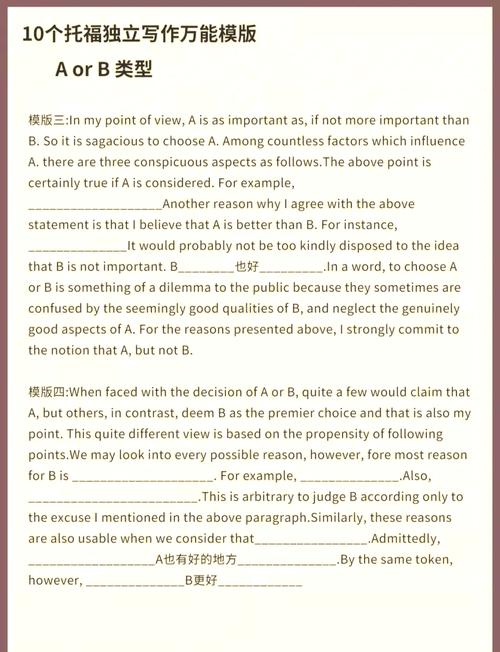
A2: 模板是结构框架,而非内容填充,建议:① 保留模板的“逻辑骨架”(如引言-观点-主体段-,但替换个性化表达(如将“Nowadays, technology plays an important role”改为“From artificial intelligence to blockchain, technological advancements have permeated every aspect of modern life”);② 在主体段融入具体例证,避免模板化句子(如“For example,…”后直接接具体案例,而非泛泛而谈);③ 根据题目调整论证逻辑,同意与否”题需明确反驳对立观点,“对比选择”题需侧重利弊分析,通过“模板结构+个性化内容”的结合,既能保证文章逻辑清晰,又能体现独立思考能力。