雅思饼图作文的结尾部分是整篇作文的点睛之笔,它不仅需要对图表数据进行概括总结,还要提炼核心趋势,甚至可以适当延伸意义或提出建议,从而体现考生对数据的深度分析和逻辑表达能力,与开头段引入主题、主体段详细描述不同,结尾段需要避免重复具体数据,而是站在更高维度进行归纳,同时注意语言的简洁性和准确性,以下将从结尾段的核心功能、常用结构、高分技巧、常见误区及实例分析等方面展开详细说明,帮助考生掌握结尾段的写作方法。
结尾段的核心功能
结尾段在雅思饼图作文中的作用可概括为以下三点:
- 总结核心趋势:用简洁的语言概括图表中最显著的数据特征,如占比最大的部分、最小的部分、或各部分之间的对比关系,避免陷入细节数据的罗列。
- 重申图表主旨:回应开头段中提到的图表主题,强调数据所反映的整体现象或问题,确保全文逻辑连贯。
- 适当延伸意义(可选):若题目允许或数据具有现实意义,可简要分析该现象背后的原因、影响或启示,体现批判性思维,但需注意控制篇幅,避免偏离图表主题。
结尾段的常用结构与句式
根据不同图表的复杂程度和题目要求,结尾段可采用以下两种常见结构:
简洁总结型(适用于数据对比明确、无需深入分析的图表)
结构:概括最大/最小占比 → 提及次要对比 → 重申主题。
常用句式:
- "In summary, the pie chart illustrates that [最大占比部分] accounted for the largest proportion at [百分比], while [最小占比部分] constituted the smallest share at [百分比]."
- "Overall, [核心主题] was dominated by [主要部分], which represented nearly [百分比] of the total, followed by [次要部分] and [其他部分] with relatively lower percentages."
- "To conclude, the data reveals a clear disparity between [A部分] and [B部分], with [A部分] being the most significant contributor to [整体主题]."
分析延伸型(适用于数据具有明显趋势或现实意义的图表)
结构:总结核心数据 → 分析原因/影响 → 提出建议/展望(可选)。
常用句式:
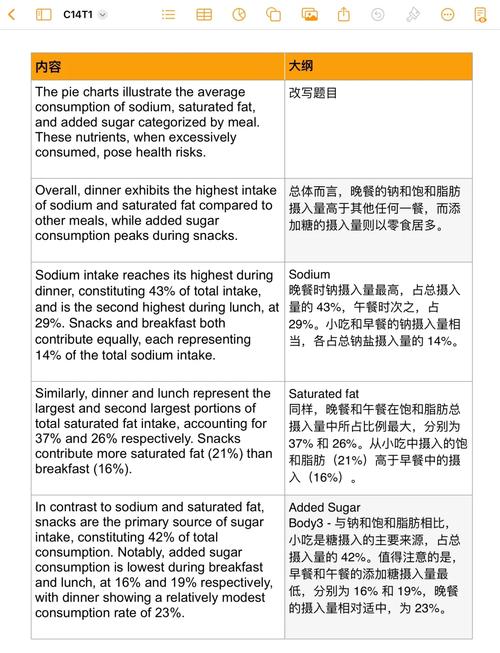
- "From the data, it is evident that [主要部分] was the primary element of [主题], accounting for [百分比]. This phenomenon can be attributed to [原因分析, 如社会趋势、政策影响等]."
- "In conclusion, the pie chart highlights that [核心趋势]. Such a distribution may reflect [影响分析, 如资源分配不均、消费偏好变化等], which warrants further attention."
- "Overall, [主题] was characterized by [主要特征]. Given this pattern, it is suggested that [建议措施, 如政策调整、个人选择等] to address [相关问题]."
结尾段的高分技巧
- 避免重复数据:结尾段不应再次列举具体数值(如“35%的人选择A,28%的人选择B”),而应提炼趋势(如“A是最受欢迎的选择,显著领先于其他选项”)。
- 使用多样表达:替换“show, illustrate, reveal”等常用词,尝试“demonstrate, indicate, highlight, reflect”等更丰富的词汇;避免多次使用“the pie chart shows”,可改用“the data suggests”“as can be seen from the chart”等。
- 逻辑连接自然:通过“Overall, In conclusion, To sum up”等过渡词引出结尾,确保与主体段衔接流畅,避免突兀转折。
- 控制字数:结尾段一般占全文的15%-20%,若全文约150-200词,结尾段建议40-50词,避免冗长或过于简略。
常见误区及避坑指南
-
引入新数据或信息
部分考生会为了“全面”而在结尾段补充图表中未提及的数据或个人观点,这会导致偏离图表主题,属于严重失分点。
避坑:严格基于图表已有信息进行分析,不添加主观臆断或外部数据。 -
简单重复主体段内容
例如主体段已详细描述A部分占40%,B部分占30%,结尾段再次写“A占40%,B占30%”,缺乏总结性。
避坑:对主体段数据进行“去细节化”处理,用“largest proportion, minority, significant gap”等词汇概括趋势。 -
语言过于口语化
使用“we can see that I think”等非正式表达,影响作文正式性。
避坑:采用客观、书面的学术语言,如“The data indicates that It is apparent that”。
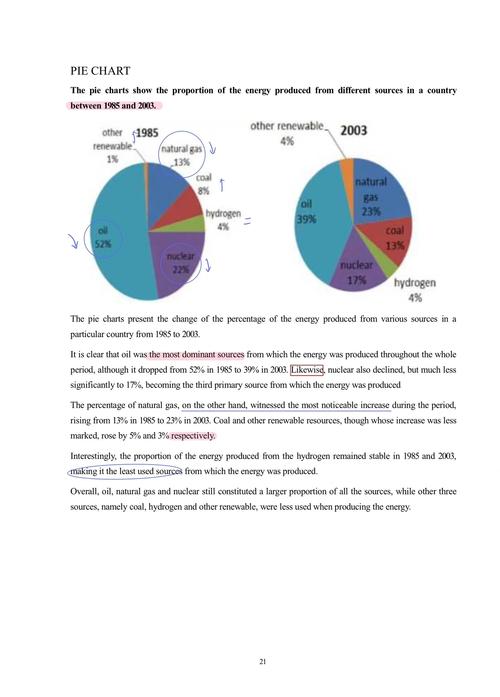
实例分析(以“某大学学生课余活动分布”饼图为例)
图表主题:University Students' Leisure Time Distribution (2025)
数据概览:学习(35%)、社交(25%)、运动(20%)、娱乐(15%)、其他(5%)
主体段简述:
The pie chart presents the distribution of leisure time activities among university students in 2025. Studying accounted for the largest proportion at 35%, reflecting the academic priority of students. Socializing followed with 25%, while sports and entertainment constituted 20% and 15% respectively. The smallest share was allocated to other activities, which made up only 5% of the total.
高分结尾段(简洁总结型):
Overall, the data reveals that academic pursuits dominated university students' leisure time, with studying occupying more than one-third of their time. Socializing was the second most common activity, while sports and entertainment played a relatively minor but notable role. This distribution suggests a balanced focus on both academic responsibilities and personal relaxation among students.
高分结尾段(分析延伸型):
In conclusion, the pie chart highlights that studying was the primary leisure activity for university students in 2025, accounting for 35% of their time, followed by socializing at 25%. Such a pattern may indicate the students' strong commitment to academic goals, while the significant proportion of time spent on socializing and sports reflects the importance of maintaining a healthy work-life balance. Educational institutions could consider supporting more diverse extracurricular activities to further enrich students' campus life.
相关问答FAQs
Q1: 饼图结尾段是否必须分析原因或影响?
A1: 不一定,是否分析原因或影响取决于题目要求和图表数据的复杂性,如果题目仅要求“describe the chart”(如雅思Task 1常见指令),结尾段以总结核心趋势为主;若题目涉及“discuss the implications”或数据具有明显的现实意义(如能源消耗、就业分布),可简要分析原因或影响,但需注意基于图表数据,避免过度延伸。
Q2: 如何避免结尾段与主体段内容重复?
A2: 可通过“数据抽象化”和“视角提升”避免重复,主体段写“A占40%,B占30%,C占20%”,结尾段可概括为“A was the dominant category, representing nearly two-fifths of the total, while B and C together accounted for just over half”,用“reflects, indicates, suggests”等词替代“shows, describes”,从“描述数据”转向“解读趋势”,体现逻辑层次。