
Liu Xiang, the name that once echoed with pride across China and the world, represents far more than just a track and field athlete. He is a symbol of perseverance, courage, and the relentless pursuit of excellence, qualities that have transcended sports and inspired millions. Born on July 13, 1983, in Shanghai, Liu Xiang rose to global fame when he became the first Chinese man to win an Olympic gold medal in the 110-meter hurdles at the 2004 Athens Olympics. His journey, however, was not without its challenges, and it was his response to adversity that truly defined his character and legacy.
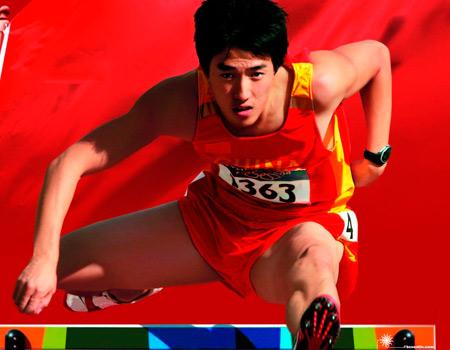
From a young age, Liu Xiang exhibited a natural talent for athletics. Discovered by a sports scout during primary school, he was initially trained in high jump before switching to hurdles, a decision that would shape his destiny. Under the guidance of coach Sun Haiping, Liu Xiang honed his skills with unwavering dedication. His early career was marked by rapid progress, culminating in a historic gold medal at the 2004 Olympics, where he equaled the world record of 12.91 seconds. This victory was not just a personal triumph but a milestone for Chinese sports, shattering stereotypes and proving that Asian athletes could compete at the highest level in sprint events traditionally dominated by Westerners.
What set Liu Xiang apart was not just his physical prowess but his mental fortitude. The 110-meter hurdles demands split-second precision, explosive power, and unshakable focus—qualities that Liu Xiang embodied. Training for this event grueling, often involving six to eight hours of daily practice, including running drills, weightlifting, and technique refinement. Liu Xiang’s commitment to his craft was legendary; he pushed his body to the limit, enduring pain and setbacks without complaint. His coach once remarked that Liu Xiang’s greatest strength was his "ability to transform pressure into motivation," a trait that would serve him well in the years to come.
After his Olympic triumph, Liu Xiang faced immense pressure to defend his title at the 2008 Beijing Olympics. As the host nation’s golden boy, he carried the weight of a nation’s hopes on his shoulders. Tragedy struck, however, when he was forced to withdraw from the race due to a Achilles tendon injury, a moment that left millions of heartbroken but also revealed his resilience. Rather than succumbing to despair, Liu Xiang underwent rigorous rehabilitation and returned to the track at the 2012 London Olympics. Though he fell at the first hurdle, his courage to compete, despite knowing his body was not fully recovered, was a testament to his never-say-die spirit. In a post-race interview, he tearfully apologized to his fans but emphasized, "I tried my best," a phrase that encapsulates his humility and determination.
Liu Xiang’s qualities extend beyond his athletic achievements. He was known for his humility and sportsmanship, often crediting his team and coaches for his success. Even in victory, he remained grounded, acknowledging the role of hard work and discipline. Off the track, he was a role model for young athletes, advocating for the importance of mental strength and perseverance. His ability to handle media scrutiny with grace, both in times of glory and adversity, earned him widespread respect. In a society where success is often glorified, Liu Xiang’s willingness to embrace failure and learn from it set a powerful example.

To better illustrate Liu Xiang’s key qualities and their impact, the following table provides a summary:
| Quality | Manifestation in Liu Xiang’s Career | Impact on Others |
|---|---|---|
| Perseverance | Overcoming multiple injuries, including Achilles tendon issues, to continue competing. | Inspired athletes to persist through setbacks and never give up on their dreams. |
| Courage | Competing at the 2012 London Olympics despite physical limitations, even though he knew he might not win. | Demonstrated that true courage is about facing challenges head-on, regardless of the outcome. |
| Humility | Regularly acknowledging his team’s role in his success and apologizing to fans when he underperformed. | Reminded the public that success is a collective effort and that humility is a virtue. |
| Resilience | Bouncing back from the disappointment of 2008 to return to competitive sports. | Showed that failure is not the end but an opportunity to grow and try again. |
Liu Xiang’s legacy is not confined to his medals or records. It lies in the intangible qualities he embodied—determination, integrity, and the unyielding pursuit of excellence. He broke barriers not just for himself but for a generation of Asian athletes, proving that with hard work and belief, one can overcome cultural and physical limitations. His story continues to resonate, serving as a source of inspiration for anyone striving to achieve their goals, regardless of the obstacles they face.
In conclusion, Liu Xiang’s life and career are a testament to the power of human spirit. His journey, marked by triumphs and tribulations, showcases the importance of perseverance, courage, and humility. As we reflect on his achievements, we are reminded that true greatness is not measured by gold medals but by the strength of character displayed in the face of adversity. Liu Xiang’s name will forever be synonymous with these qualities, and his legacy will continue to inspire generations to come.
FAQs
-
What were some of the major challenges Liu Xiang faced in his career?
Liu Xiang faced numerous challenges, including the immense pressure of being a national hero, recurring injuries such as the Achilles tendon problem that forced him to withdraw from the 2008 Beijing Olympics, and the disappointment of falling at the first hurdle in the 2012 London Olympics. Despite these setbacks, he demonstrated remarkable resilience by continuing to compete and inspiring others with his determination. -
How did Liu Xiang inspire athletes beyond China?
Liu Xiang inspired athletes worldwide by breaking the stereotype that Asian athletes could not excel in sprint events. His 2004 Olympic gold medal, where he equaled the world record, proved that talent and hard work transcend racial and cultural boundaries. His humility, courage in the face of adversity, and sportsmanship resonated with athletes globally, encouraging them to pursue their dreams regardless of societal expectations.