在雅思写作中,利弊题(Advantages and Disadvantages Essay)是常见题型之一,要求考生就某一社会现象、技术发展或政策选择等主题,分析其带来的积极影响和潜在问题,并最终给出个人观点或总结,这类题目不仅考察考生的逻辑思维能力,还检验其词汇多样性和论证的全面性,以下将从题目结构、写作框架、高分技巧及注意事项等方面展开详细分析,帮助考生掌握利弊题的写作方法。
利弊题的核心特征与解题步骤
利弊题通常以“Discuss the advantages and disadvantages of…”“Do the advantages outweigh the disadvantages?”或“Consider the benefits and drawbacks of…”等句型出现,核心要求是平衡呈现利弊双方,避免片面论述,解题时需遵循以下步骤:
- 审题定位:明确讨论主题(如远程办公、社交媒体使用),确定题目要求是仅分析利弊,还是需进一步判断利弊大小。
- 头脑风暴:从个人、社会、经济、环境等多角度发散思维,列出至少3-4个优点和3-4个缺点,确保论点具有代表性和深度。
- 筛选论点:选择最具说服力的2-3个优点和2-3个缺点,避免论点重复或过于宽泛。
- 搭建框架:采用“引言-主体段(利弊分述)-结构,主体段可采用“先利后弊”或“逐段对比”模式,后者适合要求对比的题目。
写作框架与段落展开
引言段(Introduction)
引言需包含背景介绍、主题重述和文章结构预告。
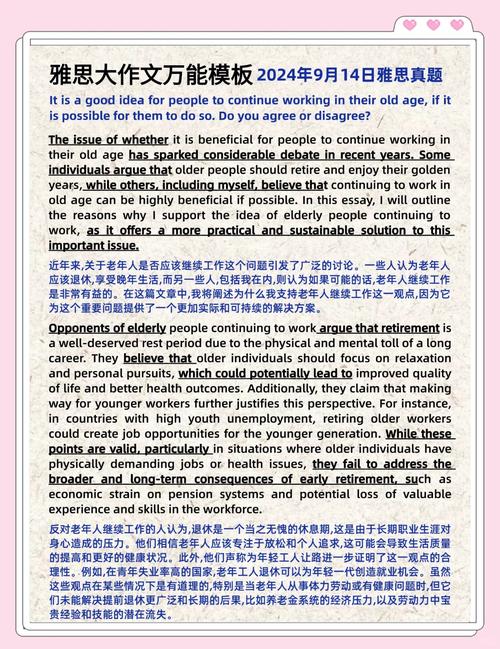
“In recent decades, the proliferation of online education has revolutionized traditional learning paradigms. While this trend offers unprecedented flexibility and accessibility, it also poses challenges to educational quality and social interaction. This essay will examine both the merits and drawbacks of online learning before offering a balanced conclusion.”
技巧:避免直接复制题目,用同义替换改写(如“advantages and disadvantages”替换为“merits and drawbacks”);结尾句明确预告下文内容,体现逻辑连贯性。
主体段(Body Paragraphs)
主体段是利弊题的核心,需分点论述,每个论点独立成段,并辅以具体例证或数据支持。
(1)优点段(Advantages Paragraphs)
- 主题句:明确点出核心优点,如“One primary advantage of remote work is the enhanced flexibility it offers employees.”
- 解释拓展:具体说明优点如何体现,Employees can schedule their work around personal commitments, such as childcare or medical appointments, thereby reducing stress and improving work-life balance.”
- 例证支撑:引用研究、数据或实例,增强说服力,如“A 2025 survey by Gallup revealed that 54% of remote workers reported higher job satisfaction due to flexible hours, compared to 33% of in-office staff.”
示例段落:
The most significant benefit of renewable energy is its potential to mitigate environmental degradation. Unlike fossil fuels, which release greenhouse gases and contribute to global warming, sources such as solar and wind power generate electricity with minimal carbon emissions. For instance, Denmark’s investment in wind energy has enabled it to produce over 50% of its electricity from wind farms, reducing its annual carbon footprint by approximately 3 million tons. This shift not only combats climate change but also improves public health by decreasing air pollution-related respiratory diseases.
(2)缺点段(Disadvantages Paragraphs)
- 主题句:清晰指出核心缺点,如“However, reliance on social media also triggers significant psychological and social issues.”
- 解释拓展:分析缺点的成因或影响,Excessive use of platforms like Instagram and TikTok fosters unrealistic social comparisons, particularly among adolescents, leading to anxiety and low self-esteem.”
- 例证支撑:引用权威报告或案例,如“A study published in The Lancet (2025) found that teenagers spending more than 7 hours daily on social media were 63% more likely to experience depression than those who spent less than an hour.”
示例段落:
Despite its convenience, e-commerce poses a threat to local businesses and traditional retail sectors. Online giants like Amazon often undercut prices due to economies of scale, forcing small brick-and-mortar stores to shut down. For example, between 2010 and 2025, over 10,000 independent bookstores in the United States closed down, largely due to competition from online retailers. This trend not only leads to job losses but also erodes the cultural fabric of communities, as local shops often serve as social hubs and reflect unique regional identities.
结论段(Conclusion)
结论需总结前文论点,回应引言中的问题,并给出个人观点(若题目要求),避免引入新论点,应重申核心观点并升华主题。
“In conclusion, while online education provides unparalleled convenience and learning opportunities, its drawbacks in terms of limited interpersonal interaction and technical barriers cannot be overlooked. Ultimately, the effectiveness of this mode depends on balancing technological innovation with traditional educational values to ensure holistic student development.”
高分技巧与注意事项
词汇与句式多样性
- 替换高频词:避免重复使用“advantage/disadvantage”,可用“merits/drawbacks”“benefits/shortcomings”“positives/negatives”等。
- 复杂句式:运用定语从句(“The rise of AI, which has transformed industries ranging from healthcare to finance, also raises ethical concerns.”)、状语从句(“While automation improves efficiency, it may exacerbate unemployment if not properly regulated.”)和倒装句(“Not only does remote work save commuting time, but it also reduces traffic congestion.”)提升语言层次。
逻辑衔接与连贯性
- 使用连接词明确段落关系:表转折(“however,” “nevertheless,” “on the flip side”)、表递进(“furthermore,” “moreover”)、表对比(“in contrast,” “conversely”)。
- 每段内部采用“主题句-解释-例证-小结”的结构,确保论证层层递进。
平衡性与客观性
- 即使个人倾向某一观点,也需充分论述另一方,避免“一边倒”论述,若认为“远程办公利大于弊”,仍需详细说明其缺点(如团队协作效率下降),再通过转折强调优点更突出。
- 数据和例证需权威可靠,避免使用模糊表述(如“some people say”),可改为“according to a study by…”或“statistics from X indicate that…”。
常见误区规避
- 论点空洞:避免泛泛而谈(如“Technology is very useful”),需具体说明“Technology facilitates instant global communication, enabling businesses to expand their markets across continents.”
- 忽略题目要求:若题目问“Do the advantages outweigh the disadvantages?”,结论必须明确表态,而非简单重复利弊。
- 文化偏见:尽量使用普适性例子,避免涉及特定国家或敏感话题,确保论述具有国际视野。
利弊分析对比表(以“人工智能发展”为例)
| 优点(Advantages) | 缺点(Disadvantages) |
|---|---|
| 提高生产效率:自动化重复性任务(如工厂流水线),减少人力成本。 | 失业风险:低技能岗位被取代,导致结构性失业。 |
| 推动医疗进步:AI辅助诊断(如影像识别)提高疾病检测准确率。 | 数据隐私泄露:AI系统依赖大量数据,易引发信息滥用。 |
| 优化生活体验:智能助手(如Siri、Alexa)提供个性化服务。 | 算法偏见:训练数据中的歧视性信息可能放大社会不平等。 |
相关问答FAQs
Q1: 利弊题是否必须给出个人观点?
A1: 取决于题目要求,若题目明确提问“Do the advantages outweigh the disadvantages?”或“Discuss both views and give your opinion”,结论段必须明确表态;若仅要求“Discuss the advantages and disadvantages”,则无需个人观点,只需平衡呈现利弊即可,但无论何种情况,论述过程需保持客观,避免情绪化表达。
Q2: 如何在有限时间内快速构思利弊论点?
A2: 可采用“4W分析法”快速发散思维:
- Who(对谁有利/有害?):个人、企业、政府、社会群体等;
- What(影响哪些方面?):经济、环境、健康、文化、教育等;
- Where(在什么场景下?):城市、农村、发达国家、发展中国家等;
- Why(原因是什么?):技术进步、政策变化、社会需求等。
针对“塑料袋禁令”,从“Who”角度可思考“消费者(减少便利性)、商家(增加成本)、环境(减少污染)”,从“What”角度可分析“经济(替代产业兴起)、生态(海洋生物保护)”,从而快速提取论点。
通过以上方法,考生可系统掌握利弊题的写作逻辑,确保结构清晰、论点充实、语言准确,在雅思写作中取得理想成绩。