一篇好的英语作文,结尾如同乐章的最后和弦,既要圆满收束,又要余音绕梁,给读者留下深刻印象,许多学习者在写作时,往往开头精心雕琢,中间奋力铺陈,到了结尾却仓促收笔,导致文章整体失色,掌握几种有效的结尾方法,能显著提升文章的完整性与感染力。
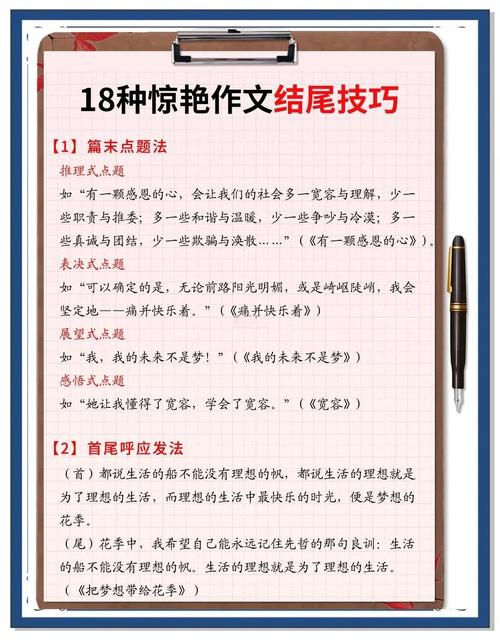
首尾呼应,构筑完整闭环
这是最经典且稳健的方法,在结尾处回顾引言中提出的核心观点或问题,形成一种圆合的结构,让文章显得严谨统一。
若文章以“The prevalence of social media has fundamentally altered interpersonal communication.”(社交媒体的普及从根本上改变了人际沟通。)开篇,在论述其利弊后,结尾可以这样写:
“In conclusion, while social media presents new challenges for genuine connection, it ultimately reflects the evolving, yet enduring, human need to communicate. The landscape has changed, but the fundamental desire to connect remains.”
(图片来源网络,侵删)

这种方法并非简单重复开头,而是用更深刻、更总结性的语言重新阐述,展现论证后的思想升华,它向读者清晰表明,文章已完成了预设的讨论路径。
总结升华,提炼核心价值
在较长的论述文或议论文中,结尾需要对前文分论点进行简洁概括,并点明其更深层的意义或普遍价值,避免机械罗列,重在提炼。
假设文章论述了阅读的三个好处:获取知识、提升想象力、减轻压力,结尾可以这样升华:

“Beyond the acquisition of knowledge, the stimulation of imagination, and the relief from stress, the true power of reading lies in its capacity to foster empathy. By stepping into diverse narratives, we learn to understand perspectives far removed from our own, building bridges of compassion in an increasingly fragmented world.”
这样,结尾就将具体论点提升到了人文关怀的高度,增加了文章的深度和分量。
引用点睛,借助权威共鸣
恰当地引用一句名言、谚语或诗词,能为结尾增添文采和说服力,引用的内容必须与文章主题紧密相关,自然衔接。
一篇关于坚持与毅力的文章可以这样结尾:
“The journey to achieving any significant goal is rarely linear. It is paved with setbacks and doubts. Yet, as the poet Robert Frost reminded us, ‘The best way out is always through.’ Persistent effort, not mere talent, is the true catalyst for breakthrough.”
引用就像请来一位权威的“证人”,为你的观点佐证,让结尾更具哲理性和启发性。
设问启思,留下开放余韵
在结尾提出一个引人深思的问题,将思考的主动权交给读者,能激发他们的共鸣与持续反思,这种方法特别适用于探讨社会现象或开放性话题的文章。
一篇探讨人工智能伦理的文章可以这样收尾:
“As we stand on the brink of an AI-driven era, we have mastered the ‘how’ of technological innovation. The pressing question that now demands our collective wisdom is: How will we ensure that these powerful tools amplify our humanity, rather than diminish it?”
这种结尾方式打破了文章的封闭性,邀请读者参与共同思考,使文章的影响力得以延续。
呼吁行动,激发实践动力
在 persuasive essay(说服性文章)或倡议文中,结尾直接发出呼吁,提出希望或号召行动,能有效增强文章的感召力。
一篇关于环境保护的作文可以这样结束:
“Understanding the environmental crisis is only the first step. Real change begins with individual commitment. Let us each pledge to reduce our plastic consumption, conserve energy, and make conscious choices that honor our planet. The future is not a distant concept—it is shaped by our actions today.”
这样的结尾充满力量,将文章的理念从认知层面推向实践层面。
展望未来,描绘积极图景
以乐观、充满希望的语气展望未来,描绘如果文章中的建议或观点被采纳后可能出现的积极景象,这能带给读者鼓舞和信心。
一篇关于教育改革的文章可以这样展望:
“Embracing these learner-centered approaches may require effort and adaptation, but the potential reward is immense. We can look forward to classrooms where curiosity is ignited, diversity of thought is celebrated, and every student is equipped not just with information, but with the wisdom to navigate an uncertain future.”
这种结尾赋予文章建设性和前瞻性的基调。
实践要点与常见误区
掌握方法后,还需注意实践细节。保持简洁,结尾段落通常不宜过长,力求精炼有力。确保语气一致,全文风格应和谐统一。避免引入全新观点,结尾是收束,而非开辟新战场。
常见的结尾误区包括:仓促草率、简单重复开头、过度道歉(如“I’m not an expert, but…”)、以及使用陈词滥调(如“In my humble opinion”),这些都会削弱文章的权威感和说服力。
在英语写作中,一个精心设计的结尾,是作者送给读者的最后一份礼物,也是展现思维深度与语言驾驭能力的最终舞台,它无需华丽辞藻的堆砌,而在于思想的凝聚与情感的共鸣,尝试在不同类型的文章中灵活运用这些方法,通过反复练习,找到最适合自己声音与风格的收尾之道,让每一篇作文都能掷地有声,回味悠长。