在雅思口语考试中,艺术品话题是Part 1和Part 2的高频考点,考生需要从描述个人经历、表达情感偏好到分析文化内涵等多维度展开,这类话题不仅考察语言表达能力,更考验对文化现象的理解和逻辑组织能力,以下将从常见艺术品类型、答题框架、实用表达及备考建议四方面详细解析,帮助考生系统掌握该话题。
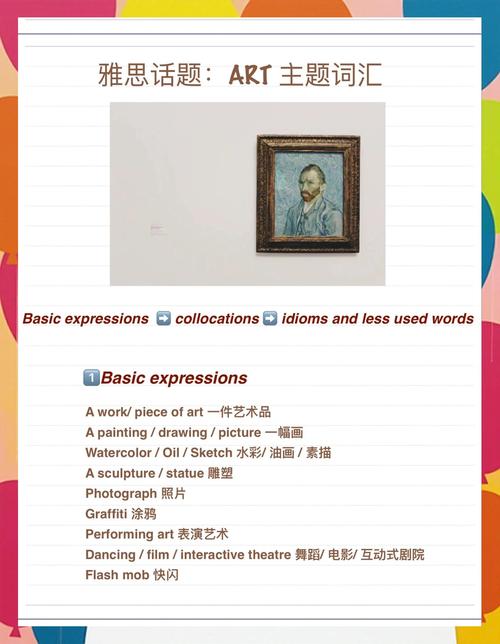
常见艺术品类型及核心考点
艺术品话题涵盖范围广泛,包括绘画、雕塑、手工艺品、建筑、摄影等,考生需熟悉不同类别的特点,并能结合自身经历展开描述,以下是高频类型及核心考点:
| 艺术品类型 | 描述重点 | 示例问题 |
|---|---|---|
| 绘画 | 画家背景、色彩运用、情感表达、个人印象 | Describe a painting you like. |
| 雕塑 | 材质、造型象征、文化意义、公众反应 | Describe a sculpture you have seen. |
| 手工艺品 | 制作工艺、材质特殊性、文化传承、赠送经历 | Describe a handmade object you own. |
| 建筑 | 建筑风格、历史背景、功能设计、个人体验 | Describe a historical building in your country. |
| 摄影作品 | 拍摄场景、光影效果、故事性、拍摄者意图 | Describe a photo that you like. |
答题框架:从“描述”到“深度表达”
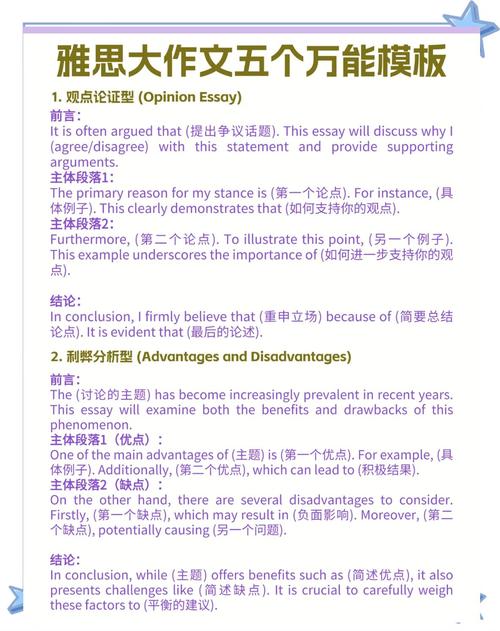
雅思口语答题需遵循“逻辑清晰、细节丰富、情感真挚”的原则,建议采用“总-分-总”结构,具体可分为四步:
开篇点题:明确对象与基本印象
直接说明描述的艺术品类型、名称(若知道)及总体感受,用1-2句话抓住考官注意力。
示例:
“I’d like to talk about a traditional Chinese painting called Along the River During the Qingming Festival that I saw at the National Museum of China last year. It’s not just a painting to me; it’s a time capsule that brings ancient Chinese life to life.”
主体展开:多维度细节描述
从“是什么-为什么-怎么样”三个层次展开,结合感官细节(视觉、听觉、触觉)和情感体验,避免泛泛而谈。
- 基本信息:创作者、年代、材质(如“painted on silk with mineral pigments”)。
- 视觉特征:色彩(“vibrant yet balanced colors”)、构图(“intricate brushstrokes showing crowded streets”)、核心元素(“boats, vendors, and families”)。
- 个人感受:首次看到时的反应(“I was stunned by the level of detail”)、引发的联想(“It made me imagine the hustle and bustle of ancient Bianjing”)。
深度挖掘:文化意义或个人关联
将艺术品与个人经历、文化背景或社会价值结合,体现思考深度。
示例:
“What fascinates me most is how it reflects the prosperity and harmony of Song Dynasty society. My grandfather, who loves history, explained the stories behind each scene, which made me appreciate our cultural heritage even more.”
总结升华:重申价值与情感
用1句话总结艺术品的重要性,或说明其对自己的长期影响。
示例:
“Even after a year, I still remember the warmth and liveliness in the painting—it’s a reminder of how art can bridge the gap between the past and present.”
实用表达与词汇积累
描述艺术品的形容词
- 视觉冲击:vibrant(鲜艳的)、subtle(细腻的)、stunning(令人惊艳的)、monochromatic(单色的)
- 情感共鸣:poignant(深刻的)、serene(宁静的)、dynamic(充满活力的)、nostalgic(怀旧的)
- 技艺精湛:exquisite(精致的)、masterful(技艺高超的)、intricate(复杂的)、realistic(逼真的)
动词与短语
- 描述创作:depict(描绘)、capture(捕捉)、convey(传达)、illustrate(说明)
- 表达感受:be fascinated by(对…着迷)、be immersed in(沉浸于)、be struck by(被…震撼)
- 分析意义:symbolize(象征)、represent(代表)、reflect(反映)、embody(体现)
句式结构
- 复杂句:What impressed me most was not just the technique, but the emotion the artist poured into it.
- 对比结构:Unlike modern abstract paintings, this traditional work focuses on realistic details.
- 倒装句:Never before had I seen a painting that tells such a vivid story.
备考建议:从“积累”到“输出”
积累个人素材库
准备2-3个与艺术品相关的真实经历(如参观博物馆、收藏的手工艺品、喜欢的建筑),避免编造不熟悉的内容。
- 一次参观故宫的经历,重点描述太和殿的建筑风格;
- 祖母传下来的手工刺绣,讲述其制作工艺和情感价值。
模拟练习与反馈
- Part 1:针对“Do you like art?”“What kind of art do you enjoy?”等简单问题,用1-2句话简洁回答,避免冗长。
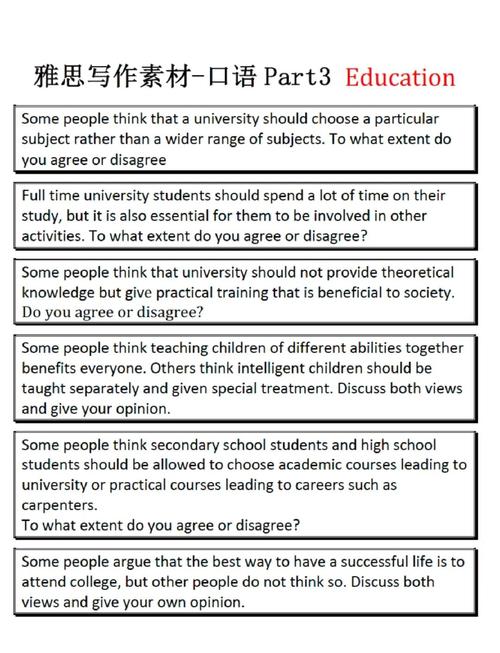
- Part 2:按“描述-细节-感受-意义”框架计时练习(2分钟准备,1-2分钟回答),录音后检查逻辑连贯性和语法错误。
- Part 3:延伸讨论“Art education should be mandatory in schools”等抽象话题,练习用“Firstly… Secondly… Moreover…”展开观点。
文化背景拓展
了解中外著名艺术品(如《蒙娜丽莎》《千里江山图》、大卫雕塑)的基本信息,避免在考试中因“不知道”而卡壳,同时关注“传统艺术与现代艺术的差异”“艺术在文化传承中的作用”等高频讨论点。
相关问答FAQs
Q1: 雅思口语中描述艺术品时,如果不知道具体名称或作者,会影响分数吗?
A1: 不会,考官更关注语言表达的准确性和逻辑性,而非知识的广度,若不知道名称,可用“a traditional Chinese ink painting”“a sculpture made of bronze”等模糊表达,重点描述其特征和感受。“It’s a landscape painting with mountains and rivers, created by an anonymous artist during the Ming Dynasty.” 避免因纠结细节而影响流利度。
Q2: 如何在回答中避免内容重复,让描述更生动?
A2: 可采用“多感官描写+具体场景+对比联想”的方法,例如描述雕塑时,不仅说“it’s tall and beautiful”,还可以加入:“When I touched its cool marble surface, I could feel the sculptor’s precision in the folds of the robe. Unlike the surrounding modern buildings, this classical sculpture felt like a whisper from the past.” 通过触觉细节、场景对比和拟人化表达,让内容更丰富立体。