雅思考试中的“写信”部分,即学术类(A类)的Task 1或培训类(G类)的Task 1,要求考生根据特定情境写一封书信,字数不少于150词(实际写作中建议控制在160-200词以保证内容完整且语言精炼),虽然题目要求1375字,但雅思书信写作本身篇幅有限,以下将从书信类型、结构、语言风格、高分技巧及常见误区等方面展开详细解析,帮助考生系统掌握写作方法,并在文末附上相关FAQs。
雅思书信写作的核心要素
雅思书信分为正式信函(如投诉信、建议信、申请信)和非正式信函(如感谢信、道歉信、邀请信),不同类型的信函在语气、措辞和结构上有所差异,但核心均需满足“明确目的、逻辑清晰、语言得体”三大要求。
(一)书信的基本结构
无论何种类型,雅思书信均需包含以下六个部分:
-
称呼(Salutation):根据收信人与写信人的关系选择。
- 正式信函:Dear Sir/Madam,(不知收件人姓名);Dear Mr./Ms. [Last Name],(已知姓名)
- 非正式信函:Dear [First Name],(如朋友、家人)
-
开场白(Opening):点明写信目的,简洁明了。
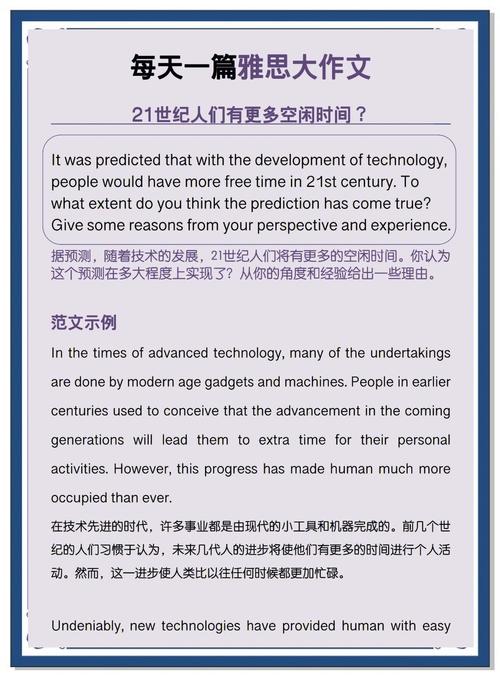 (图片来源网络,侵删)
- 正式:I am writing to express my concern regarding... / I am writing to apply for the position of...
- 非正式:I hope this letter finds you well. / I’m so sorry I haven’t written sooner, but...
-
主体段落(Body Paragraphs):围绕核心目的展开,分1-2段详细说明原因、细节或建议。
- 段落1:阐述背景/问题(如投诉信说明事件经过,建议信提出具体建议)。
- 段落2:补充细节/影响(如说明问题带来的困扰,或建议实施后的预期效果)。
-
结尾段落(Closing):表达期望或后续行动,如期待回复、感谢等。
- 正式:I would appreciate it if you could... / I look forward to your prompt reply.
- 非正式:Let me know what you think! / Can’t wait to hear from you soon.
-
祝福语(Complimentary Close):与称呼呼应。
- 正式:Yours faithfully,(不知姓名时);Yours sincerely,(知姓名时)
- 非正式:Best wishes, / Regards, / Yours,
-
署名(Signature):正式信函用“Li Ming”,非正式信函可用“[Your First Name]”。
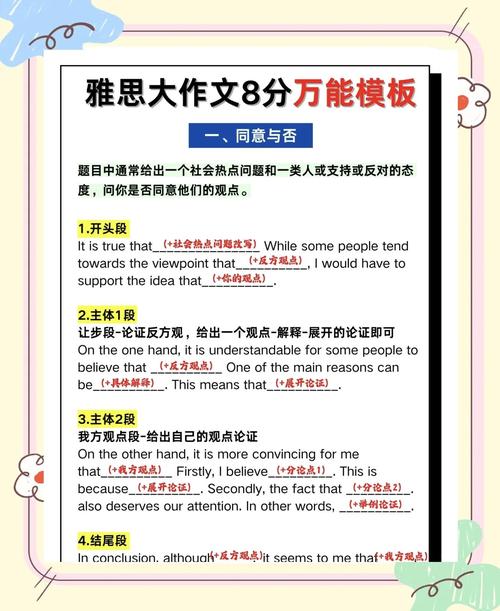 (图片来源网络,侵删)
(二)不同类型信函的写作要点
| 信函类型 | 常见场景 | 核心要点 |
|---|---|---|
| 投诉信 | 投诉产品质量、服务态度等 | 客观描述问题(时间、地点、事件);2. 说明造成的影响;3. 明确诉求(退款、道歉等)。 |
| 建议信 | 向机构/个人提出改进建议 | 肯定对方已有努力;2. 具体建议(分点列出,如“Firstly, Secondly”);3. 说明建议的益处。 |
| 道歉信 | 为迟到、失误等表达歉意 | 直接道歉;2. 解释原因(简洁,不找借口);3. 提出补救措施。 |
| 感谢信 | 感谢帮助、款待等 | 具体说明感谢的事由;2. 描述对方帮助带来的积极影响;3. 表达未来回报的意愿。 |
| 邀请信 | 邀请参加活动、聚会等 | 说明活动主题、时间、地点;2. 强调邀请的理由;3. 请求回复(如RSVP)。 |
高分技巧:从“达标”到“优秀”
(一)语言:准确性与得体性并重
-
词汇:避免口语化表达,使用正式或半正式词汇(如用“regret”代替“sorry”,用“assistance”代替“help”)。
- 错误:I’m really mad about the broken laptop.
- 正确:I am extremely dissatisfied with the defective laptop I purchased.
-
句式:混合使用简单句、复合句(如定语从句、状语从句)和复杂句,避免单调。
- 例:The package arrived three days late, which caused great inconvenience for my business trip.(非限制性定语从句)
- 例:If you could refund the shipping cost, I would greatly appreciate it.(条件状语从句)
-
连接词:使用逻辑连接词增强连贯性,如“However, Therefore, Furthermore, In addition”等。
细节决定成败
- 明确读者身份:根据收信人调整语气(如给经理写信需正式,给朋友写信需亲切)。
- 提供具体信息:避免空泛描述,用细节支撑观点(如投诉信需写明订单号、购买时间;邀请信需写明活动具体日期)。
- 解决核心问题:始终围绕“为什么写信”展开,不添加无关信息。
(三)格式:规范是基础
- 分段清晰:通常分3-4段(开场白1段,主体1-2段,结尾1段),每段3-4句。
- 首行缩进:每段开头空2-4个字母,或段段之间空一行(两种格式均可,但全文需统一)。
常见误区与避坑指南
-
混淆正式与非正式语气
- 错误示例(给学校校长写投诉信):Hey Mr. Smith, I’m super pissed about the broken chairs in the library...
- 正确修改:Dear Mr. Smith, I am writing to express my concern about the damaged chairs in the library...
-
目的不明确,内容冗长
部分考生因凑字数添加无关细节(如感谢信中详细描述自己的日常),导致核心信息模糊,需牢记“每句话都为服务写信目的”。
-
忽略文化差异
在西方文化中,投诉信需避免“威胁性”语言(如“否则我将起诉你”),宜用理性、客观的语气表达诉求。
实战演练:一封高分投诉信范文You bought a laptop online two weeks ago, but it has a serious problem. Write a letter to the customer service manager to complain.
要求:说明问题、说明影响、提出诉求。
Dear Sir/Madam,
I am writing to express my deep disappointment regarding the laptop (Order No.: LM20251015) I purchased from your website on October 5th. Despite your advertisement highlighting its “high performance and reliability”, the device has developed a critical issue within just two weeks of use.
The problem first appeared on October 18th when the laptop frequently crashed while I was working on essential documents, displaying a blue screen error message. I initially suspected a software issue, so I reinstalled the operating system. However, the problem persisted, and by October 20th, the laptop failed to start up at all. As a freelance graphic designer, this laptop is crucial for my daily work, and its malfunction has caused me to miss two deadlines, resulting in a potential loss of clients and income. I have attached the error logs and a video of the malfunction for your reference.
I kindly request that you arrange for a full refund of the purchase price (€1,200) as soon as possible, as the product clearly does not meet the quality standards advertised. Alternatively, if you can provide a replacement laptop that is in perfect working condition within three days, I would be willing to give it a try. I look forward to your prompt response and a resolution to this matter.
Yours sincerely,
Li Ming
相关FAQs
Q1:雅思书信写作中,如何判断应该用正式还是非正式语气?
A1:主要取决于收信人的身份和写信目的。
- 正式语气:用于与机构、上级或不熟悉的人沟通,如投诉信、申请信、建议信(给政府部门/公司),需使用“Dear Sir/Madam, Yours sincerely”等固定搭配,避免缩写(如用“do not”代替“don’t”)和口语词汇(如用“purchase”代替“buy”)。
- 非正式语气:用于与朋友、家人或熟人沟通,如感谢信、道歉信、邀请信,可使用“Dear [First Name], Best wishes”等,允许缩写和口语化表达(如用“Hey”代替“Dear”)。
Q2:如果写信时漏掉了一个重要信息,比如忘记写订单号,该怎么办?
A2:若在提交后发现漏掉信息,不必慌张——在雅思写作中,内容完整性比细节绝对重要 但若在写作过程中意识到遗漏,可在主体段落末尾补充,
“P.S. I forgot to mention that the order number is AB12345, which is printed on the receipt.”
(注:P.S.是“Postscript”的缩写,非正式信函中常用,正式信函中可改为“Additionally, the order number is...”),考官更关注整体逻辑和任务回应情况,单个细节遗漏不影响评分,但切忌因纠结细节而打乱写作节奏。