
Color is a fundamental element of human perception, influencing emotions, behaviors, and even communication. In the context of IELTS Speaking, discussing color effectively can enhance lexical resource and demonstrate nuanced language skills. This article explores the multifaceted role of color, its psychological impacts, cultural significance, and practical applications in everyday life, providing valuable insights for IELTS candidates aiming to excel in Part 1 and Part 3 discussions.
The Psychology of Color
Colors evoke distinct psychological responses, a phenomenon studied extensively in color psychology. Warm colors like red, orange, and yellow often stimulate energy and excitement. For instance, red is associated with passion and urgency, which is why it is frequently used in warning signs or sale advertisements. Conversely, cool colors such as blue, green, and purple tend to have a calming effect. Blue, in particular, is linked to trust and productivity, making it a popular choice for corporate logos and office spaces.
Research suggests that individual color preferences can also reflect personality traits. Those who favor blue may value stability and harmony, while lovers of green might prioritize growth and balance. Understanding these associations can help IELTS candidates articulate personal preferences more vividly. For example, instead of saying, "I like blue," one could explain, "I’m drawn to blue because it reminds me of tranquility, like the ocean on a clear day."
Cultural Significance of Color
Color meanings vary widely across cultures, a crucial consideration for global communication. In Western cultures, white symbolizes purity and is traditionally worn by brides, while in some Eastern cultures, it is associated with mourning. Red, on the other hand, represents luck and prosperity in China but can signify danger in many Western contexts.
Below is a table summarizing color symbolism in different cultures:
| Color | Western Culture | Eastern Culture (China) | Middle Eastern Culture |
|---|---|---|---|
| Red | Danger, passion | Luck, happiness | Sacrifice, courage |
| White | Purity, peace | Mourning, funerals | Purity, cleanliness |
| Green | Envy, inexperience | Harmony, growth | Fertility, paradise |
IELTS candidates can leverage such examples to demonstrate cultural awareness, especially in Part 3 questions about globalization or tradition. For instance, when asked about changing color preferences, one might note, "Globalization has made color meanings more fluid, but traditional associations persist in ceremonies like weddings or festivals."
Practical Applications of Color
Beyond psychology and culture, color plays a practical role in design, branding, and daily life. In urban planning, bright colors are used to distinguish traffic signs, enhancing safety. In marketing, brands strategically select colors to evoke specific emotions: Coca-Cola’s red creates excitement, while Tiffany’s blue exudes luxury.
For IELTS Speaking, candidates can discuss personal experiences with color in their environment. A question like "Do you notice colors in your daily life?" could be answered with: "Yes, my apartment is painted in soft pastels because they make the space feel larger and more relaxing. I also use color-coded folders to organize my work—blue for documents, green for tasks—to stay efficient."
Tips for Discussing Color in IELTS Speaking
- Use Adjectives and Phrases: Enrich descriptions with words like "vibrant," "muted," or "earthy tones."
- Provide Examples: Link colors to real-life scenarios, such as fashion, nature, or art.
- Compare and Contrast: Highlight differences in color preferences or meanings.
- Express Opinions: Justify choices with reasons, e.g., "I prefer minimalist designs with neutral colors because they feel timeless."
By mastering these strategies, candidates can deliver coherent and engaging responses, showcasing their ability to discuss abstract topics with precision.

FAQs
Q1: How can I expand my answer when asked about favorite colors in IELTS Speaking?
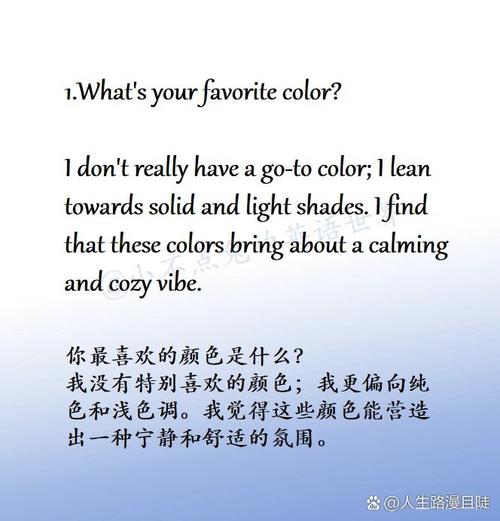
A1: To elaborate, connect the color to personal experiences, emotions, or symbolism. For example: "My favorite color is indigo because it reminds me of starry nights. It’s a deep, mysterious shade that makes me feel calm and introspective. I also associate it with creativity, as many artists use indigo in their paintings."
Q2: Are there common mistakes to avoid when discussing color in IELTS Speaking?
A2: Yes, avoid vague statements like "I like red" without context. Instead, provide details on why or how the color impacts you. Also, be cautious with generalizations about cultural meanings, as they can vary—acknowledge exceptions to demonstrate accuracy.