雅思口语考试中,当考官问及“a plan”相关话题时,许多考生会因缺乏清晰的结构或内容细节而失分。“a plan”类话题的核心在于展现逻辑性、细节描述和个人反思,通过合理的框架和具体案例,能够充分展示语言能力和思维深度,以下将从计划的重要性、常见话题类型、结构拆解、高分技巧及范例解析等方面,详细解析如何应对雅思口语中的“a plan”类题目。
计划在雅思口语中的重要性
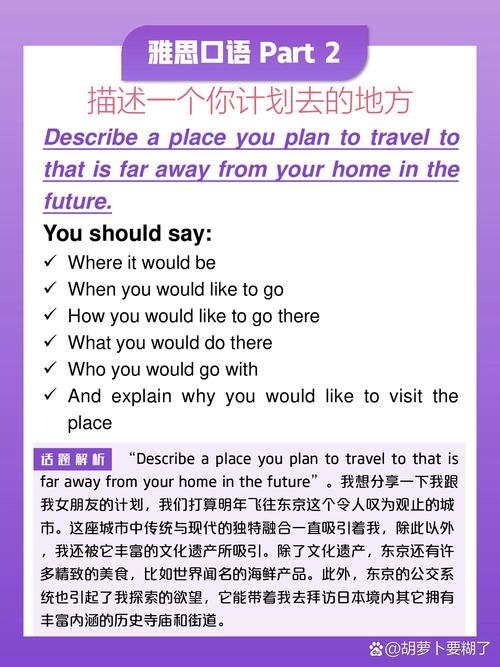
雅思口语评分标准中,“流畅性与连贯性”(Fluency and Coherence)占25%,而“计划”正是体现这一维度的重要载体,一个结构清晰的计划不仅能帮助考生组织语言,避免思维混乱,还能通过细节描述(如时间、步骤、目的等)展现词汇丰富度和语法准确性,当被问及“Describe a plan you made for your future”时,若能按“背景-目标-具体步骤-预期挑战-反思”的逻辑展开,内容会更充实,也更容易让考官抓住重点。
常见“a plan”类话题类型
雅思口语中的“a plan”话题通常围绕个人经历、学习、工作、生活等场景,常见类型包括:
- 个人发展计划:如“a plan to learn a new skill”“a plan for your career”
- 活动/旅行计划:如“a plan for a special trip”“a plan for a party”
- 学习/研究计划:如“a study plan for an exam”“a plan for a project”
- 长期目标规划:如“a plan to buy a house”“a retirement plan”
不同类型的计划需结合具体场景调整细节,但核心逻辑一致:“为什么做计划(目的)—计划是什么(内容)—如何执行(步骤)—结果/感受(反思)”。
“a plan”类话题的结构拆解
开场:明确计划主题与背景
用1-2句话点明计划的核心,并简要说明背景(如时间、起因),避免冗长,直接切入主题。
- 例:“I’d like to talk about a study plan I made last month to prepare for the IELTS exam. As I needed to improve my writing and speaking skills within three months, I decided to create a detailed schedule to stay organized.”
主体:分点阐述计划内容(核心部分)
这是回答的重点,需通过具体细节展现计划的合理性,建议分2-3个层次展开,每个层次用逻辑连接词(First of all, Additionally, Finally等)衔接。
| 层次 | 内容要点 | 示例(以“学习计划”为例) |
|---|---|---|
| 计划目的 | 为什么需要这个计划?解决什么问题? | “My main goal was to achieve a band 7.0, especially since my previous writing score was only 6.0. I realized I needed systematic practice instead of random studying.” |
| 具体步骤 | 计划包含哪些行动?时间如何分配?资源如何利用? | “First, I divided my study time into morning and evening sessions. In the morning, I focused on writing task 1—analyzing charts and practicing vocabulary for 1 hour daily. In the evening, I practiced speaking with a language partner, recording answers to identify mistakes.” |
| 执行细节 | 有哪些具体的工具、方法或支持系统? | “I used apps like ‘IELTS Liz’ for writing samples and ‘HelloTalk’ to connect with native speakers. Also, I set weekly mini-goals, like finishing 3 essays in a week, to track progress.” |
计划的结果与反思
总结计划的执行情况(是否成功?遇到哪些困难?),并分享个人感受或启示,体现批判性思维,避免只说“计划很成功”。
- 例:“In the end, I improved my writing score to 7.5, though speaking only reached 6.5. The biggest challenge was staying motivated—some days I felt too tired to follow the schedule. But this experience taught me that flexibility is key: instead of giving up, I adjusted the plan by reducing study hours on weekends and adding fun activities. Now I believe a good plan should be detailed but not rigid.”
高分技巧:让计划类回答更出彩
用具体数据和时间节点增强真实感
模糊的描述(“I studied every day”)不如具体细节(“I studied from 7-9 AM on weekdays, focusing on 2 writing tasks and 1 speaking test daily”),数据能让计划更可信,也展示词汇能力(如“allocate 90 minutes to…”“bi-weekly review sessions”)。
加入情感与个人经历,避免模板化
考官希望听到“你的”计划,而非通用模板,分享个人感受(如“Initially, I struggled to wake up early, so I started preparing my clothes the night before”),或计划中的小插曲(如“Once my language partner canceled, so I practiced by recording myself and comparing to sample answers”),能让回答更生动。
使用复杂句式连接逻辑,展示语法多样性
- 因果:“Since I wanted to balance work and study, I decided to dedicate weekends to intensive practice.”
- 让步:“Although the plan was strict, I allowed myself 30 minutes of break time every 2 hours to stay focused.”
- 条件:“If I fell behind schedule, I would catch up by shortening my lunch break the next day.”
结合“过去-未来”时态,展现语言灵活性
描述过去的计划用一般过去时(“I created a plan in January”),当前执行情况用现在完成时/现在进行时(“I have followed it for 2 months and seen progress”),未来展望用一般将来时/情态动词(“I hope to achieve my goal by June”)。
范例解析:Describe a plan you made with others
开场
“Let me tell you about a plan I made with my college friends last year to organize a charity flea market. We wanted to raise money for stray animals, and since none of us had experience with event planning, we spent a week creating a detailed roadmap.”
主体
First, our main goal was to collect at least 5,000 RMB, so we calculated costs: renting a venue would take 2,000 RMB, so we needed to sell enough second-hand books, clothes, and crafts to cover that and make a profit.
Then, we divided tasks based on everyone’s strengths. My friend Lily is good at design, so she made posters and social media posts. Tom handled logistics—he contacted the campus to get permission and negotiated with a local store to borrow tables. I was in charge of promotion: I created a WeChat group and shared the event in student communities, offering a 10% discount for those who shared our poster.
To ensure everything went smoothly, we set deadlines: two weeks for promotion, one week for collecting donations, and a day before the event for setup. We also had a backup plan—if it rained, we would move to the indoor cafeteria.
“The flea market was a success! We raised over 6,000 RMB and even got a local newspaper to cover our story. The biggest challenge was persuading people to donate items—some were worried about quality, so we promised to check everything carefully. This experience taught me that teamwork and clear communication are key to making a plan work. Now, whenever I work on a group project, I remember to assign specific roles and set small deadlines to avoid last-minute stress.”
FAQs
Q1: 如何在回答中避免计划内容过于笼统?
A: 避免使用“study hard”“exercise more”等模糊表述,而是加入具体行动、时间和工具,不说“我计划减肥”,而是说“I created a plan to lose 5kg in 3 months: I went to the gym 4 times a week (Monday, Wednesday, Friday evenings, and Saturday mornings), focusing on 30 minutes of cardio and 20 minutes of weight training each time. I also used a calorie-tracking app to limit my daily intake to 1,500 calories, avoiding sugary drinks and processed snacks.” 具体的数据、频率和工具能让计划更真实可信。
Q2: 如果计划没有成功,应该如何描述?
A: 承认失败并分析原因,展现反思能力,这比只说“成功”更打动考官,结构可以是:“计划目标—执行过程—失败原因—学到的教训”。“I once made a plan to learn coding in a month, starting with 2 hours daily. However, after two weeks, I struggled to understand Python syntax and felt frustrated. The problem was that I set an unrealistic deadline—coding requires more practice time. Later, I adjusted the plan to 3 months, joined an online course, and joined a study group. Although I didn’t achieve the initial goal, I learned that patience and seeking help are crucial when learning new skills.” 这样的回答不仅诚实,还体现了成长思维。