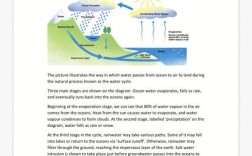
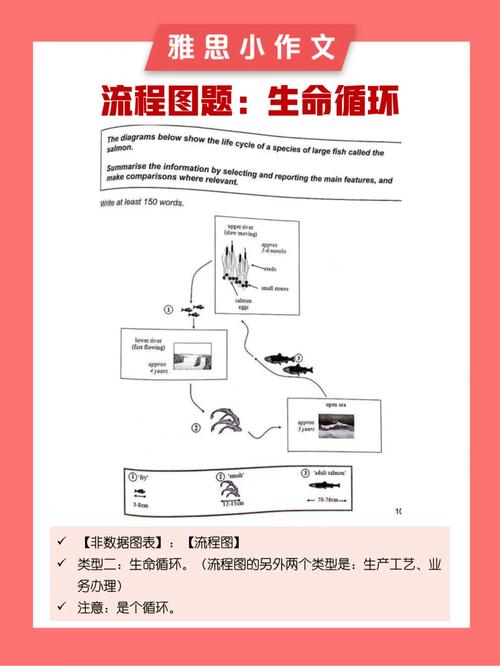
在备考雅思写作时,许多考生对流程图题型感到格外棘手,与数据图表不同,它不涉及趋势比较或数据描述,而是要求考生清晰、有序地描述一个过程或周期,掌握这类题目的写作方法,不仅能有效应对考试,更能系统提升逻辑思维与信息组织能力,这正是学术英语写作的核心。
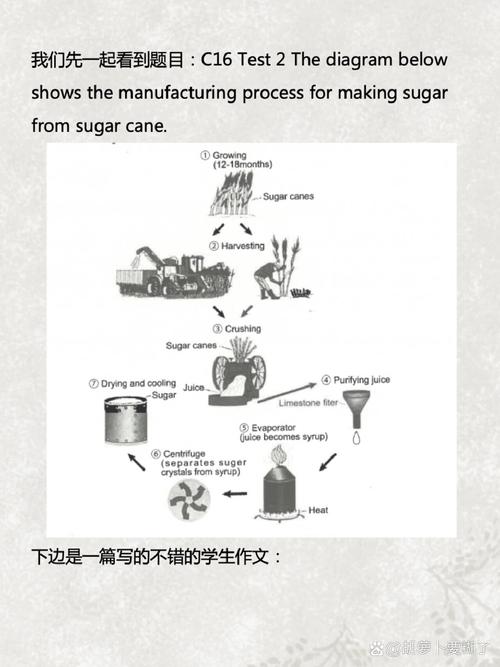
理解本质:流程图考察的是逻辑与连贯 通常展示一个自然、工业或社会过程的步骤,考生面临的挑战在于,如何将视觉信息转化为文字,并确保描述既完整又流畅,其评分关键点与所有雅思小作文一致:任务完成度、连贯与衔接、词汇丰富度及语法多样性,写作重点并非使用高深词汇,而在于能否用准确、清晰的语言,将过程步骤有机串联。
核心策略:四步构建高分描述
一篇优秀的流程图描述,通常遵循以下结构:
- 引言开篇: 用自己语言改写题目说明,清晰指出该流程展示的是什么过程,始于何物,终于何物,避免照抄题目原文。
- 总览概述: 这是得分关键段落,需在描述细节前,用一两句话概括流程的核心阶段或最显著特征,指出整个过程可分为几个主要阶段,或这是一个循环往复的周期,或流程的起点与终点分别是什么。
- 主体分段描述: 按照流程的天然阶段或步骤顺序,将过程分成两到三个段落进行描述,每一步都应明确写出该步骤的行为(动词)、主体(什么被处理)及结果(变成什么或去向哪里)。
- 自然收尾: 主体部分描述完最后一步,文章即可自然结束,无需另起段落进行总结或评价,确保整个流程描述完整,终点明确。
语言工具箱:掌握过程描述的专用表达
-
表示顺序与步骤:
- 基础连接词:First, Firstly, To begin with, Initially, After that, Then, Next, Subsequently, Finally.
- 进阶衔接:Following this, Once... is completed, Prior to..., During this stage, Concurrently.
- 表示循环:The cycle then repeats itself, returning to the first stage of...
-
核心动词的精准使用: 避免重复使用“go to”或“make”,根据过程性质灵活选择:
- 物理变化:is transported/delivered to, is transferred into, flows/moves to.
- 形态变化:is crushed into powder, is melted into liquid, solidifies into, is filtered to remove...
- 加工处理:is processed/treated with, is heated/cooled, is collected, is stored, is packaged.
-
被动语态的灵活运用: 流程图常描述客观过程,动作执行者不重要,因此被动语态(be + 过去分词)使用频率极高。“The raw materials are collected.” “The liquid is then heated to 100°C.” 这能使描述更客观、简洁。
-
词汇的多样性: 注意同义转换。“end product” 可替换为 “final product” 或 “finished material”;“method” 可替换为 “process” 或 “procedure”。
实战演练:以“水泥生产”为例 展示水泥制造及混凝土生产流程。
引言段: The diagrams illustrate the stages and equipment involved in the production of cement, and how cement is subsequently used to manufacture concrete for construction purposes.
总览段: Overall, cement manufacturing is a linear process which involves mixing and heating various raw materials, whereas concrete production is a simpler single-step mixing process.
主体段一(水泥生产): To produce cement, limestone and clay are first crushed by a crusher into a fine powder. This powder is then mixed thoroughly before being fed into a rotating heater. Inside the heater, the mixture is subjected to intense heat. Following heating, the resulting material passes through a grinder, where it is ground into the final product, cement. The cement is eventually packaged in bags for distribution.
主体段二(混凝土生产): In the second stage, concrete is made by combining four ingredients in a concrete mixer. These components are cement (15%), water (10%), sand (25%), and gravel, which constitutes exactly half of the mixture. All materials are poured into the mixer, which rotates continuously to blend them into concrete.
常见误区与提升要点
- 避免机械罗列: 不要写成“第一步是...第二步是...”的清单,使用丰富的连接词,体现步骤间的逻辑关系。
- 切忌主观臆断: 仅描述图表所见信息,不要添加原因分析或个人判断。
- 控制时态: 描述客观流程,主要使用一般现在时,如果流程是历史性的或明确发生在过去,则用过去时。
- 合理分配篇幅: 确保流程的每个阶段都得到恰当描述,避免对开头步骤过度描述而压缩了后面步骤的篇幅。
- 检查逻辑闭环: 对于循环图,务必描述清楚流程如何回到起点,形成完整闭环。
攻克流程图,实质是训练一种将视觉信息转化为线性文字的逻辑能力,这种能力对于未来的学术报告、实验说明乃至职场中的流程阐述都至关重要,备考时,建议寻找历年真题中的流程图,进行限时练习,并对照范文,分析其段落划分与衔接逻辑,通过针对性训练,流程图将从难点转化为稳定的得分点,更能为学术英语写作打下坚实基础,写作能力的提升,终究源于对逻辑的清晰把握和对语言的准确驾驭。