
雅思大作文写作中,合理的模板结构能够帮助考生快速搭建文章框架,确保逻辑清晰、内容完整,但需注意模板需灵活运用,避免生搬硬套,结合具体题目进行个性化调整,以下从模板结构、各部分写作要点及示例展开详细说明,并提供常见问题解答。
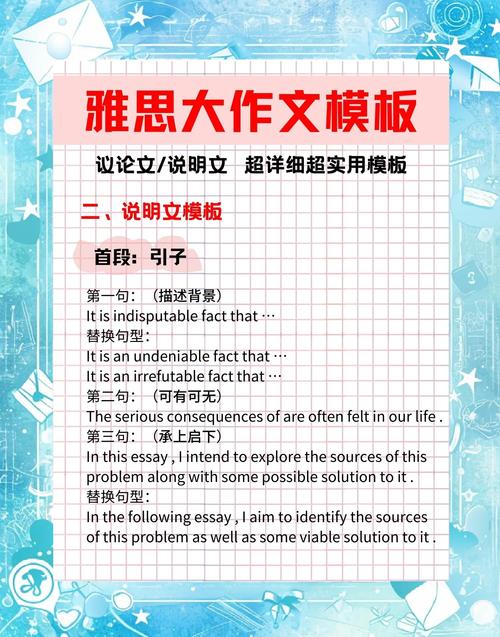
雅思大作文模板结构与写作要点
雅思大作文常见题型包括同意与否、讨论双方观点、利弊分析、报告类问题等,但核心结构均可分为引言段、主体段和结论段,总字数建议250-300词,以下以通用模板为基础,结合不同题型进行细化。
(一)引言段(Introduction):50-70词
功能:背景引入+话题重述+观点明确(或 thesis statement)。
结构公式:
- 通用背景句:用宏观现象或普遍认知引出话题,避免直接重复题目原句。
- 话题重述:同义替换题目关键词,重新表述问题核心。
- 观点/立场:明确回答题目要求(如同意与否、讨论重点等),为下文铺垫。
示例(以“科技发展是否利大于弊”为例):
In contemporary society, technological advancement has permeated every aspect of human life, sparking debates about its overall impact. While some argue that innovations like artificial intelligence and automation bring unprecedented convenience, others contend they pose potential risks to employment and social stability. From my perspective, the benefits of technological development outweigh its drawbacks, as it drives productivity growth and enhances quality of life.
(二)主体段(Body Paragraphs):150-200词(通常2-3段)
核心原则:每段围绕一个分论点展开,遵循“观点句+解释句+举例句+小结句”的结构,确保逻辑连贯、论据充分。
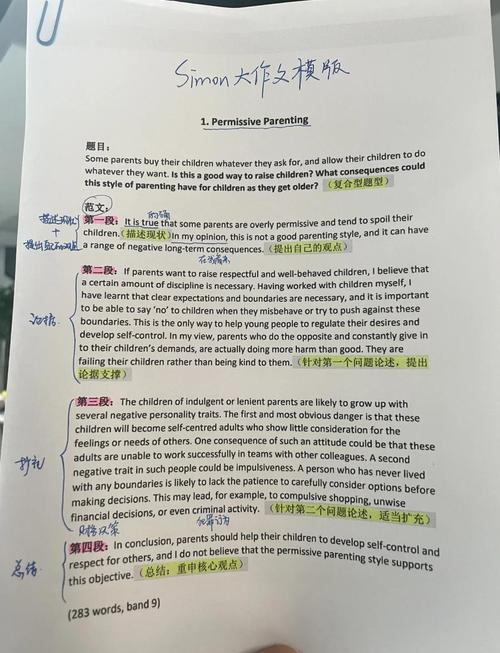
主体段一:分论点1 + 论证
结构:
- 观点句(Topic Sentence):明确本段核心论点,与引言段观点呼应。
- 解释句(Explanation):用1-2句话解释观点句,说明原因或影响。
- 举例句(Example):具体事例、数据或个人经历支撑观点,增强说服力。
- 小结句(Concluding Sentence):重申本段观点,过渡到下一段。
示例(继续“科技发展利大于弊”):
First and foremost, technological progress significantly boosts global productivity and economic growth. The advent of automation and digital tools has streamlined production processes in various industries, reducing human error and operational costs. For instance, in manufacturing, robotic assembly lines can work 24/7 with high precision, enabling companies to produce goods at a scale unattainable by manual labor. According to a 2025 report by the World Economic Forum, industries adopting advanced technologies have seen a 40% increase in output efficiency. This surge in productivity not only fuels economic expansion but also creates new job opportunities in tech-related sectors, offsetting concerns about employment displacement.
主体段二:分论点2 + 论证(或让步段)
结构:
- 若为“同意与否”题型,可写第二个正面分论点;若需平衡讨论,可先写让步段(承认对立观点合理性),再转折反驳。
示例(让步+反驳结构):
Admittedly, some people worry that rapid technological development may lead to job losses as machines replace human workers in routine tasks. This concern is valid, as seen in the decline of traditional roles like cashiers or data entry clerks due to self-service kiosks and automated software. However, such technological shifts also generate demand for new skills, prompting educational institutions and governments to invest in training programs for emerging fields. For example, the rise of artificial intelligence has created a surge in demand for AI trainers, data analysts, and ethical tech specialists. Thus, rather than causing permanent unemployment, technology drives workforce evolution and promotes long-term career development.

主体段三(可选):补充论点或深化论证 要求“讨论双方观点”,可单独一段写对立论点,再一段写自身立场;若为利弊分析,可一段写利,一段写弊,最后在结论段表明立场。
(三)结论段(Conclusion):50-70词
功能:总结观点+重申立场+提出建议/展望(可选)。
结构公式:
- 总结论点:用简洁语言概括主体段分论点,避免重复原句。
- 重申立场:再次明确观点,与引言段呼应。
- 建议/展望:基于讨论结果,提出解决方案或未来趋势(可选,根据题目灵活调整)。
示例(继续“科技发展利大于弊”):
In conclusion, technological advancement serves as a cornerstone of modern civilization, enhancing productivity, creating new career opportunities, and improving overall quality of life. While it presents temporary challenges like workforce displacement, its long-term benefits far outweigh the drawbacks. To maximize its potential, societies should focus on education reform and social policies that help individuals adapt to technological changes, ensuring that progress remains inclusive and sustainable for all.
不同题型模板调整要点
| 题型 | 关键调整方向 | 示例(引言段观点句) |
|---|---|---|
| 同意与否(Do you agree or disagree?) | 明确单边立场(完全同意/不同意)或双边立场(有条件同意),主体段重点论证自身立场。 | I firmly agree that renewable energy should replace fossil fuels as the primary power source, given its environmental and economic benefits. |
| 讨论双方观点(Discuss both views) | 引言段需平衡提及双方观点,主体段分别论述,结论段表明个人倾向。 | Some people believe that online education is superior to traditional schooling, while others argue that in-person interaction remains irreplaceable. Both perspectives have merits. |
| 利弊分析(Advantages and Disadvantages) | 引言段说明讨论对象,主体段一段写利、一段写弊,结论段总结利弊或给出建议。 | The increasing popularity of remote work offers flexibility but may also lead to social isolation and reduced teamwork efficiency. |
使用模板的注意事项
- 避免模板化痕迹:替换模板中的高频词汇(如“Firstly, Secondly”),改用“Initially, Furthermore”或“From a societal perspective, On an individual level”等表达。
- 结合题目个性化:模板是框架,具体论点和例子必须根据题目调整,科技发展”需替换为题目中的具体技术(如AI、5G)。
- 控制字数与时间:引言和结论各约1分钟,主体段每段3-4分钟,确保25分钟内完成,避免某段过长导致结构失衡。
相关问答FAQs
Q1:使用模板会不会被判为“套句”,影响分数?
A:雅思官方并未禁止使用模板,但关键在于“灵活运用”,若模板中的句子(如连接词、结构框架)能与题目内容紧密结合,且论点、例子均为个性化内容,不会扣分;反之,若全文生搬硬套模板句,论点空洞,则可能因“缺乏连贯性”或“任务回应不足”被扣分,建议考生掌握模板的逻辑结构,而非固定句式,同时通过练习积累不同话题的词汇和论据。
Q2:如何快速根据不同题目调整模板内容?
A:可遵循“三步法”:第一步,审题划出核心话题(如“教育”“环境”)和任务要求(如“同意与否”“利弊分析”);第二步,根据题型选择对应的模板结构(如双边讨论题需平衡双方观点);第三步,用话题关键词替换模板中的通用表述,并快速联想相关论据(例子、数据、原因),遇到“是否应禁止一次性塑料”的利弊题,可快速确定“环境利(减少污染)”和“经济弊(行业失业)”两个分论点,填充到主体段结构中。