托福口语独立口语部分是许多考生备考时的重点和难点,如何在短时间内清晰、有条理地表达观点,成为拿高分的关键,一个实用的模板可以帮助考生快速构建思路,避免无话可说或逻辑混乱的情况,以下将从模板结构、核心逻辑、语言表达技巧及实战示例等方面,详细解析托福独立口语模板的使用方法,帮助考生高效备考。
独立口语模板的核心结构与逻辑框架
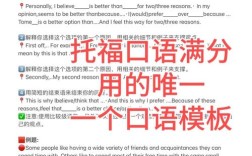
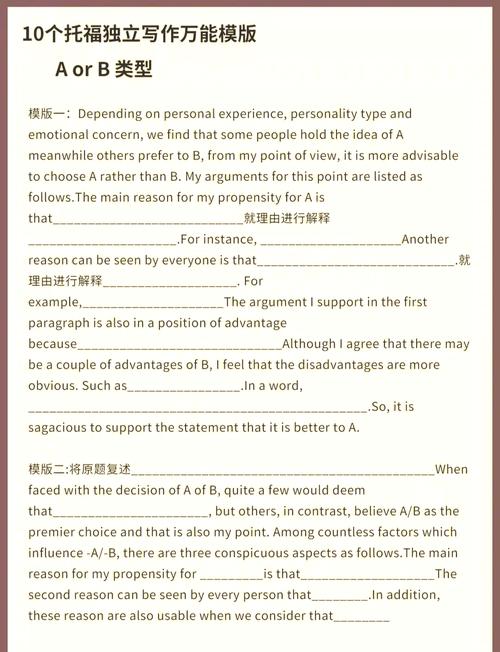
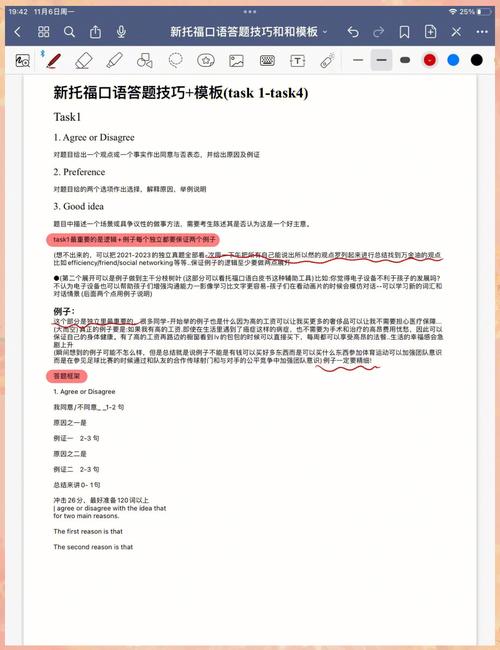
托福独立口语通常要求考生根据题目陈述个人观点,并用具体理由和细节支撑,标准的模板结构可分为“引入观点-展开理由-举例说明-总结升华”四部分,每个部分对应不同的功能,确保内容完整且有层次。
引入观点(10-15秒)
开头需直接回应题目,明确表达立场或选择,避免模糊表述,常用句式包括:
- "When it comes to [题目话题], I firmly believe that [个人观点]."
- "Some people prefer [A选项], while others choose [B选项]. From my perspective, [选择A/B的理由]."
- "The question of [题目核心] is quite thought-provoking. In my opinion, [核心观点]."
关键点:开门见山,不绕弯子,让考官快速抓住你的立场,题目问“大学应该更注重理论还是实践?”,可直接回答:“In my opinion, universities should focus more on practical skills because they better prepare students for future careers.”
展开理由(30-40秒)
这是回答的主体部分,需给出2-3个分论点支撑观点,每个分论点独立成句,逻辑清晰,常用逻辑关系包括“重要性-便利性-影响性”或“个人-社会-长远”,句式参考:
- "First and foremost, [分论点1]. This is because [解释理由]."
- "In addition, [分论点2]. For instance, [具体例子]."
- "Lastly, [分论点3]. As a result, [带来的结果]."
关键点:分论点需具体,避免空泛,若观点是“大学应注重实践”,理由可以是:“First, practical courses help students apply theoretical knowledge to real problems, which deepens understanding.” “Second, internships or project-based learning allow students to build professional networks, crucial for job hunting.”
举例说明(30-40秒)
抽象理由需结合具体例子增强说服力,例子可以是个人经历、社会现象或普遍事实,常用句式:
- "A compelling example is [例子场景]. For example, [具体细节]."
- "Take myself as an illustration. Last year, [个人经历], which clearly shows [例子如何支撑理由]."
- "According to a survey/research, [数据或普遍现象], indicating [例子的说服力]."
关键点:例子需简洁,与理由直接关联,支撑“实践帮助建立人脉”时,可以说:“For example, during my internship at a tech company, I collaborated with senior engineers on a project, and their guidance not only improved my technical skills but also led to a job offer after graduation.”
总结升华(10-15秒)
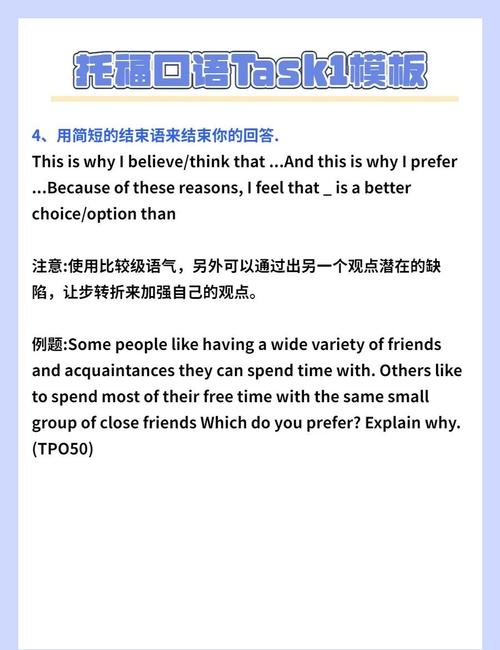
结尾需重申观点,并简要总结理由,强化逻辑闭环,常用句式:
- "In conclusion, [重申观点]. The reasons mentioned above, namely [理由1] and [理由2], fully demonstrate its importance."
- "To sum up, [核心观点]. Without [理由], it would be difficult to [积极结果]."
关键点:避免引入新信息,只需概括前文。“In conclusion, universities should prioritize practical skills because they enhance application abilities and career prospects, which are essential for students' success in the real world.”
模板语言表达技巧:地道与简洁并重
托福口语注重“有效沟通”,而非复杂句式,因此模板语言需兼顾准确性和自然度。
连接词的灵活运用
连接词是逻辑的“润滑剂”,合理使用能让回答更流畅,常用分类如下:
- 表并列/递进:First, Additionally, Moreover, Furthermore, Not only...but also...
- 表因果:Because of, Due to, As a result, Consequently, Therefore
- 表转折:However, Nevertheless, On the contrary, While
- 表举例:For example, For instance, Such as, Take...as an example
注意:避免重复使用同一连接词,可替换使用(如“First”替换为“To begin with”,“Additionally”替换为“What’s more”)。
句式的多样化
虽然模板有固定结构,但句式需灵活变化,避免单调。
- 简单句与复合句结合:主句用简单句,解释部分用从句(如定语从句、状语从句)。“Practical courses, which help students apply theories, are more beneficial than pure lectures.”
- 主动与被动语态结合:强调动作承受者时用被动语态。“New skills can be learned through hands-on practice.”
- 非谓语动词简化句子:“Having participated in an internship, I realized the importance of practical experience.”(替代状语从句)
口语化表达与避免错误
- 避免书面化词汇:用“show”代替“demonstrate”,用“help”代替“assist”,用“big”代替“significant”(除非强调程度)。
- 减少语法错误:主谓一致(“The number of students are increasing”→“is increasing”)、时态统一(叙述经历用过去时,观点用现在时)、冠词使用(“a university” vs. “the university”)。
- 自然填充词:适当使用“well”“you know”“I mean”等,但不宜过多,以免显得不专业。
实战模板应用示例(以“是否应该禁止学生使用手机”为例)
"Do you agree or disagree with the following statement? Students should be banned from using mobile phones at school."
模板应用:
引入观点(10秒)
"When it comes to the use of mobile phones in schools, I strongly agree with the idea that students should be banned from using them during school hours. This policy helps maintain focus, reduces distractions, and promotes face-to-face communication."
展开理由(35秒)
"First and foremost, banning mobile phones can significantly improve students' learning efficiency. With phones put away, students are less likely to check social media or play games, allowing them to concentrate fully on class discussions and teacher instructions. In addition, the prohibition encourages more real-life interactions among peers. Instead of texting or scrolling through phones during breaks, students are more likely to talk to each other, which helps develop social skills. Lastly, phones can sometimes lead to cheating during exams. Banning them ensures academic integrity and creates a fair environment for all students."
举例说明(35秒)
"A compelling example is my own experience in high school. During my sophomore year, our school implemented a no-phone policy. Initially, many students complained, but within a month, I noticed a significant change: class participation increased, and even lunchtime conversations became more lively. For instance, my classmates and I used to sit silently in the cafeteria, each absorbed in our phones. After the policy, we started discussing homework, sharing stories, and even forming study groups, which strengthened our friendships and improved our academic performance."
总结升华(10秒)
"In conclusion, banning mobile phones at school is a necessary measure. It not only enhances learning concentration and social skills but also upholds academic honesty. Therefore, schools should enforce this policy to create a better learning environment for students."
模板使用的注意事项
- 灵活调整,避免僵化:模板是“框架”,而非“公式”,需根据题目类型(如“选择类”“对比类”“建议类”)调整内容侧重,选择类”需明确A/B,“建议类”需说明“为什么该建议可行”。
- 控制时间,分配合理:独立口语仅45秒,需提前练习,确保每个部分时间达标(引入15秒+理由35秒+例子35秒+总结10秒,总计约95秒,实际考试需精简至45秒,因此例子和理由需更简洁)。
- 结合个人经历,增强真实感:模板化的例子易显得空洞,尽量用自身经历(如学习、旅行、活动)让回答更具个性。
- 模拟练习,强化逻辑:每天用模板练习2-3道题目,录音后回听,检查逻辑连贯性、语言准确性和时间控制,及时调整。
相关问答FAQs
Q1:使用模板会不会让回答显得不自然,影响得分?
A:不会,模板的核心是“逻辑框架”,而非“固定内容”,托福口语评分看重的是“观点清晰度”“逻辑连贯性”和“语言准确性”,只要在模板基础上填充具体、个性化的内容(如真实例子、个性化理由),反而能让回答更有条理,建议考生在掌握模板结构后,逐渐减少对句式的依赖,形成自然表达习惯。
Q2:独立口语需要准备多少个理由?如果时间不够,只说一个理由可以吗?
A:理想情况下准备2个理由,每个理由配1-2句解释,既能展示逻辑广度,又不会超时,若时间紧张(如语速较慢),1个详细理由+1个简单理由也可,但避免只说1个理由,否则可能被扣分(因“论证不充分”)。“First, [理由1+详细解释]. Additionally, [理由2+一句话解释].” 这样既体现逻辑层次,又确保内容完整。