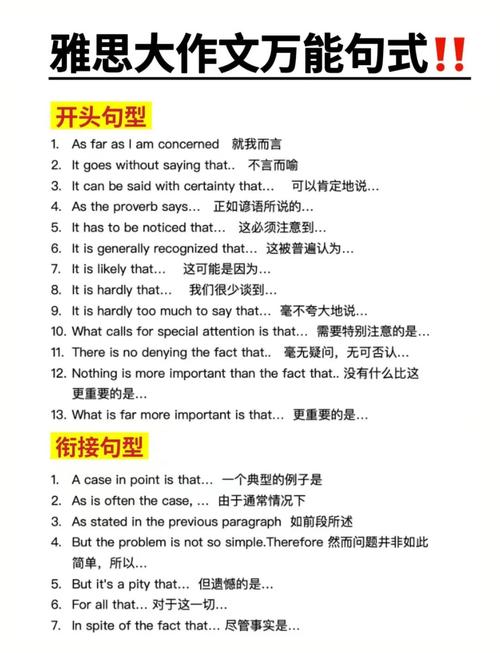
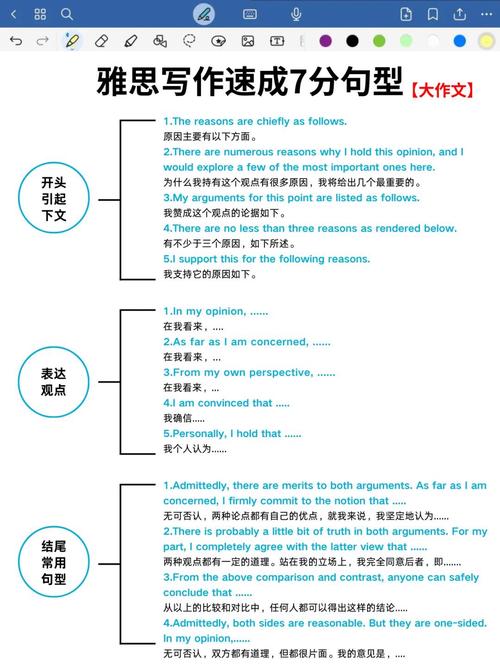
雅思作文结尾句是整篇文章的点睛之笔,其核心功能在于总结全文观点、强化论证逻辑、给读者留下深刻印象,同时避免引入新信息,一个高质量的结尾句需要简洁有力、逻辑清晰,并能与开头段形成呼应,体现文章结构的完整性,以下从结尾句的作用、常见类型、写作技巧及注意事项等方面展开详细分析,并通过表格对比不同类型结尾句的特点,最后附相关FAQs。
雅思作文结尾句的核心作用
结尾句在雅思写作中承担着“收束全文”的关键使命,具体作用可归纳为三点:
- 总结核心观点:对主体段落的论证进行提炼,重申作者立场或主要发现,避免读者对文章核心产生误解,针对“是否应该禁止塑料袋”的议论文,结尾句需明确表达“支持/反对禁止”的核心态度,并概括环境、经济等方面的理由。
- 强化论证逻辑:通过将分论点与总论点关联,展示论证的连贯性,若主体段分别从“健康影响”“经济成本”“社会公平”三个角度论证“免费医疗的必要性”,结尾句可总结为“免费医疗不仅保障个体健康,还能通过减轻经济负担促进社会公平,因此是必要的”。
- 提升文章深度:在总结基础上适当延伸,引发读者思考,但需避免过度发挥,讨论“远程办公的利弊”时,结尾句可指出“远程办公重塑了工作模式,未来需通过政策优化平衡效率与员工福祉”,既总结观点,又提出前瞻性视角。
雅思作文结尾句的常见类型及示例
根据文章体裁(议论文/报告类)和论证逻辑,结尾句可分为以下四类,每类均有其适用场景和表达特点:
重申观点型(适用于议论文)问题,用简洁语言再次明确立场,与开头段“thesis statement”形成首尾呼应。
- 特点:观点鲜明,避免模糊表述,常用“in conclusion”“to sum up”等过渡词引出。
- 示例: “Some people think that universities should provide graduates with the knowledge and skills needed in the workplace. Others believe that the true function of a university is to give access to knowledge for its own sake. Discuss both views and give your own opinion.”
结尾句:“In conclusion, while the practical skills provided by universities are valuable for employability, the primary role of higher education should be to foster intellectual curiosity and knowledge acquisition, as this lays the foundation for long-term career adaptability and societal progress.”
总结归纳型(适用于报告类或多观点议论文)
对主体段落的分论点进行概括,强调论证的整体性和逻辑性,不引入新观点。
- 特点:涵盖分论点关键词,用“firstly... secondly... finally”或“not only... but also”等结构串联。
- 示例: “Describe the main problems associated with urbanization and suggest possible solutions.”
结尾句:“To address urbanization challenges, governments must prioritize affordable housing construction to reduce living costs, invest in public transportation to alleviate traffic congestion, and create green spaces to improve environmental quality. These measures, combined with careful urban planning, can mitigate the negative impacts of urban growth.”
建议展望型(适用于问题解决型或利弊分析型议论文)
在总结观点的基础上,提出解决方案、未来趋势或行动呼吁,体现文章的现实意义。
- 特点:使用“should”“it is recommended that”“future efforts should focus on”等情态动词或表达,语气客观且具有建设性。
- 示例: “Many children are spending more time on smartphones and tablets. What are the causes of this problem and what solutions can you suggest?”
结尾句:“To reduce children’s over-reliance on electronic devices, parents should set daily screen time limits and encourage outdoor activities, while schools can organize digital literacy workshops. With collective efforts from families and educational institutions, children can develop a healthier balance between technology use and real-world interactions.”
对比权衡型(适用于讨论双方观点的议论文)
在分析双方利弊后,指出某一观点更合理或需结合两者优势,体现辩证思维。
- 特点:用“while... nevertheless”“on the one hand... on the other hand”等对比结构,避免绝对化表述。
- 示例: “Some people argue that technology has made life more complex, while others believe it has simplified life. Discuss both views and give your opinion.”
结尾句:“While technology has undoubtedly introduced new complexities such as information overload and privacy concerns, its ability to enhance communication, accessibility, and efficiency ultimately simplifies life. Therefore, the key lies in leveraging technology mindfully rather than rejecting it entirely.”
不同类型结尾句的特点对比
为更直观展示各类结尾句的差异,以下从适用场景、结构特点、语言风格及示例四个维度进行对比:
| 类型 | 适用场景 | 结构特点 | 语言风格 | 示例片段 |
|---|---|---|---|---|
| 重申观点型 | 议论文(明确立场) | 过渡词+核心观点重申 | 简洁、明确 | “In conclusion, free education is essential for promoting social equity and economic growth.” |
| 总结归纳型 | 报告类、多观点议论文 | 分论点概括+逻辑连接词 | 全面、客观 | “In summary, the main causes of air pollution are industrial emissions and vehicle exhaust, which can be addressed through stricter regulations and renewable energy adoption.” |
| 建议展望型 | 问题解决型、利弊分析型议论文 | 总结问题+解决方案/未来展望 | 建设性、前瞻性 | “Therefore, governments should implement policies to promote sustainable agriculture to ensure food security for future generations.” |
| 对比权衡型 | 讨论双方观点的议论文 | 对比双方观点+辩证结论 | 辩证、客观 | “While both traditional and online education have merits, a blended approach offers the most effective learning experience.” |
写作结尾句的实用技巧
- 避免重复开头段原句:结尾句需对开头段进行“同义改写”或“深化”,而非简单复制,开头段“Online education has revolutionized learning”,结尾句可改为“The transformation of education through online platforms has not only expanded access to knowledge but also redefined the way people learn.”
- 控制句子长度和复杂度:结尾句宜简洁有力,避免使用过多从句导致逻辑混乱,通常1-2个句子即可,若内容较多可用分号连接并列分句。
- 避免绝对化表述:雅思写作强调客观理性,结尾句中避免使用“all”“never”“the only”等绝对化词汇,改用“many”“some”“can help”等委婉表达。
- 检查与主体段的一致性:结尾句的观点需与主体段论证完全一致,避免出现“主体段支持A,结尾句支持B”的逻辑矛盾,若主体段论证“远程办公降低效率”,结尾句不能突然转向“远程办公提升效率”。
常见错误及注意事项
- 引入新信息:结尾句不应提出主体段未涉及的新观点或论据,讨论“大学学费是否该上涨”时,结尾句突然提及“中小学教育经费不足”属于偏离主题。
- 过于笼统:避免使用“Everything has two sides”等缺乏实质内容的套话,需结合文章具体内容展开。
- 情感化表达:雅思写作要求客观中立,结尾句中避免使用“I think”“in my opinion”等主观性过强的短语(若题目明确要求“give your opinion”,则需明确表达立场)。
- 语法和拼写错误:结尾句是文章的最后印象,需仔细检查时态一致、主谓搭配等语法问题,避免低级错误。
相关问答FAQs
Q1: 雅思作文结尾句是否必须使用“in conclusion”等过渡词?
A: 不一定,虽然“in conclusion”“to sum up”等过渡词能明确提示结尾,但过度使用会显得机械,若段落逻辑清晰,也可通过自然过渡(如“Thus”“Therefore”)或直接总结观点来引出结尾句。“Thus, the combination of government regulation and individual responsibility is crucial to solving the plastic waste problem.” 避免使用“in a nutshell”“to wrap up”等过于口语化的表达。
Q2: 如果作文时间紧张,结尾句可以简单写吗?
A: 不建议,结尾句占作文评分的“结构连贯性”和“任务回应”分数,过于简单的结尾(如“Nothing is more important than...”或仅重复题目)会被视为未完成任务,导致分数降低,即使时间紧张,也需用1-2句话总结核心观点,确保文章完整性,针对“是否应该禁止吸烟”的题目,即使时间不足,也应写“Banning smoking in public places is a necessary measure to protect people’s health and reduce healthcare costs”而非草草结束。
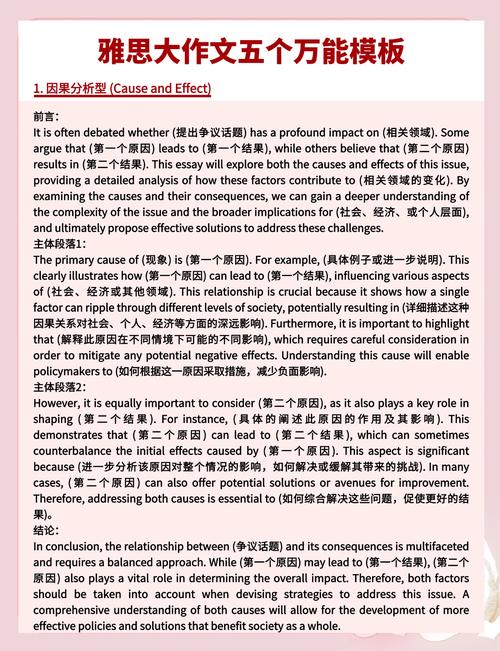
雅思作文结尾句是决定文章整体质量的关键环节,通过明确其作用、掌握不同类型的写作方法、遵循实用技巧并避免常见错误,可以有效提升结尾句的质量,从而在考试中获得更高的分数。