雅思科技类作文的写作策略与解析
在雅思考试中,科技类作文是常见的高频题型,主要探讨科技对社会、环境、教育或日常生活的影响,这类题目要求考生具备清晰的逻辑思维、辩证的分析能力以及丰富的词汇储备,本文将从题型特点、结构框架、论证方法和语言表达四个方面,系统解析如何写出一篇高质量的雅思科技类作文。
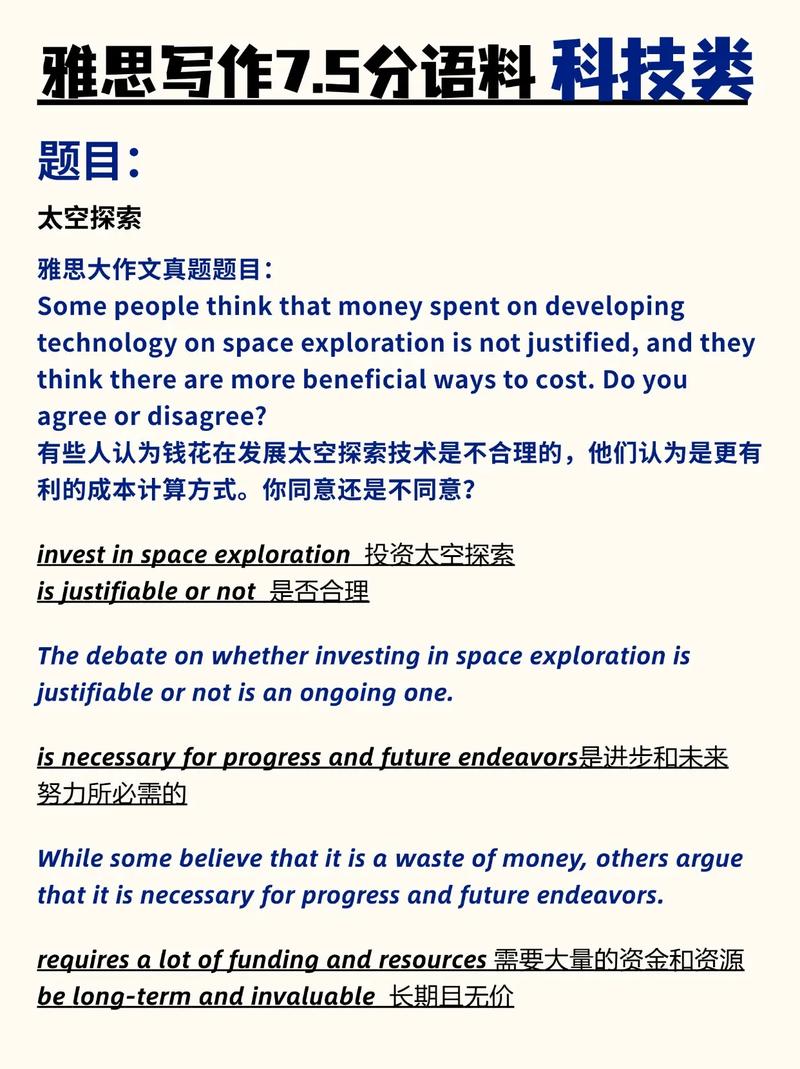
科技类作文的常见题型与特点
雅思科技类作文通常分为两种类型:单边论证和双边讨论。
-
单边论证:题目要求考生明确支持或反对某一科技观点。“Some people believe that technology has made life more complex, while others disagree. Discuss both views and give your own opinion.” 这类题目需要考生在文中明确立场,并通过论据支撑观点。
-
双边讨论:题目要求考生分析科技现象的利弊,并给出个人看法。“Do the benefits of technology outweigh its drawbacks?” 这类题目需要考生平衡正反两方面的论点,最后给出结论。
无论是哪种题型,考生都需要注意避免极端化表述,同时确保论据具有说服力和现实相关性。
科技类作文的结构框架
一篇结构清晰的雅思科技类作文通常包含引言(Introduction)、主体段落(Body Paragraphs)和结论(Conclusion)三部分。
-
- 背景引入:简要描述科技现象的普遍性或重要性。
- 题目重述:用同义替换改写题目,避免直接复制。
- thesis statement:明确文章立场或讨论方向。
示例:
“In the digital age, technology has permeated every aspect of human life, revolutionizing communication, work, and education. While some argue that technological advancements have simplified daily routines, others contend that they have introduced new complexities. This essay will examine both perspectives before asserting that the benefits of technology generally outweigh its drawbacks.”
-
主体段落
 (图片来源网络,侵删)
- 每段一个核心论点,采用“主题句+解释+举例+结论”的结构。
- 正反论证:若为双边讨论,可分别用2-3段分析利弊。
示例(正面论点):
“Firstly, technology has significantly enhanced efficiency in various sectors. For instance, telemedicine allows patients in remote areas to consult doctors via video calls, reducing the need for travel and saving time. This demonstrates how technology bridges geographical gaps and improves access to essential services.”
示例(反面论点):
“On the other hand, excessive reliance on technology has led to social isolation. A study by the University of Chicago revealed that teenagers who spend over seven hours daily on social media are 63% more likely to experience anxiety than their peers. This highlights the psychological toll of unchecked tech usage.”
-
- 总结论点:简要重申主体段落的观点。
- 重申立场:呼应引言中的 thesis statement。
- 展望未来(可选):提出建议或预测科技发展趋势。
示例:
“In conclusion, while technology presents challenges such as social isolation and privacy concerns, its advantages in efficiency, accessibility, and innovation are undeniable. To harness its full potential, societies must implement balanced regulations and promote digital literacy.”
科技类作文的论证方法与词汇运用
-
论证方法
- 数据支撑:引用研究数据或调查结果增强说服力。
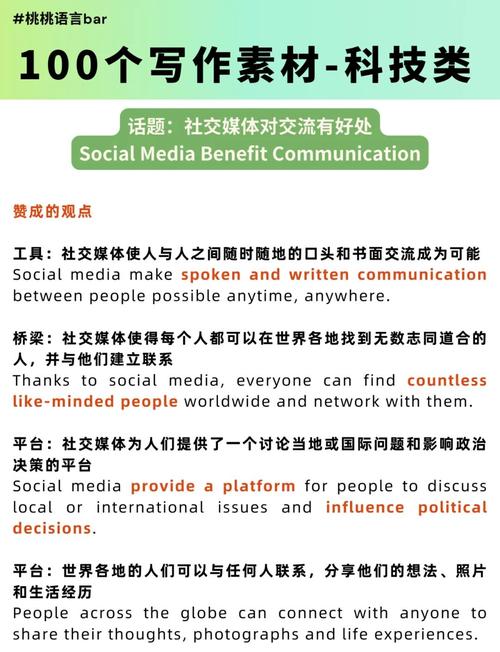
- 举例法:使用具体案例(如智能手机、人工智能)说明抽象观点。
- 对比法:对比科技普及前后的生活变化。
-
核心词汇与表达
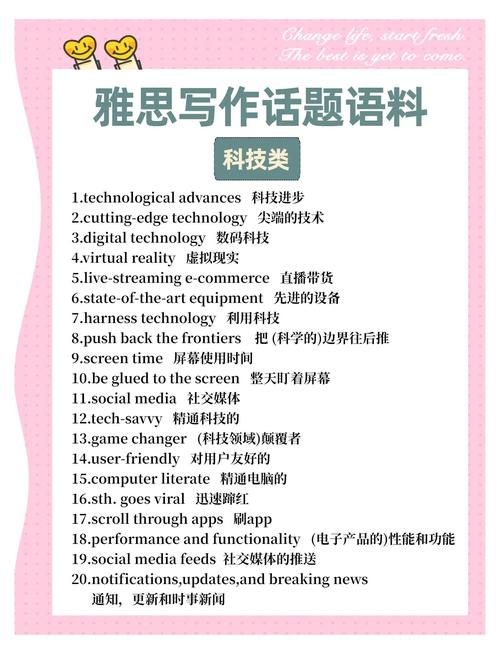
- 积极影响:enhance efficiency, facilitate communication, bridge gaps, promote innovation.
- 消极影响:lead to addiction, exacerbate inequality, pose privacy risks.
- 过渡词:However, Nevertheless, Consequently, On the contrary.
词汇表达对比表:
| 普通表达 | 学术表达 |
|---|---|
| Good for life | Enhance quality of life |
| Bad effects | Adverse consequences |
| New technology | Cutting-edge advancements |
| Use too much | Excessive reliance on |
常见误区与写作技巧
- 避免泛泛而谈:具体说明科技如何影响某一领域(如教育、医疗),而非笼统讨论“科技”。
- 逻辑连贯:使用连接词(如Furthermore, In addition)确保段落过渡自然。
- 字数控制:雅思作文建议250-300词,需合理分配各部分篇幅,避免头重脚轻。
FAQs
Q1: 雅思科技类作文是否需要包含个人经历?
A1: 不需要,雅思作文要求客观、学术化的论证,个人经历(如“我使用手机感觉很方便”)会降低文章的正式性,应优先使用数据、研究或社会现象作为论据。
Q2: 如何应对科技类作文中的抽象题目(如“科技是否改变人性”)?
A2: 将抽象概念具体化,将“改变人性”转化为“科技如何影响人类社交习惯或道德观念”,并举例说明(如社交媒体对同理心的影响),通过具体案例和逻辑分析,使论证更清晰。