掌握高级词汇替换技巧
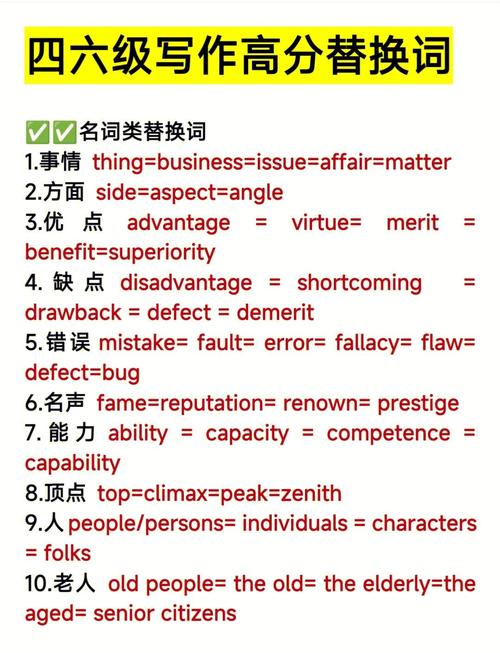
英语写作能力提升不仅需要扎实的语法基础,更离不开词汇的丰富运用,许多学习者在表达相似概念时,反复使用相同词汇,导致文章显得单调乏味,掌握恰当的词汇替换技巧,能够显著提升文章的表现力、精确度和学术感。
常见基础词汇的高级替换方案
表达“重要”的多种方式
基础词汇“important”在文章中频繁出现时,可以考虑以下替换选择:
-
Crucial(至关重要的):强调某事物对成功或发展的关键作用
例句:Time management is crucial for academic success.
-
Vital(必不可少的):表示对生命、功能或存在极为必要
 (图片来源网络,侵删)
例句:Clean water is vital for human survival.
-
Significant(有重大意义的):强调具有重要影响或价值
例句:The research yielded significant findings for cancer treatment.
-
Essential(根本的):表示构成事物核心的、不可或缺的元素
 (图片来源网络,侵删)
例句:Effective communication is essential in leadership.
表达“好”的丰富词汇
过度使用“good”会削弱文章表现力,这些替代词能提供更精确的描述:
-
Beneficial(有益的):强调产生积极效果或优势
例句:Regular exercise is beneficial for mental health.
-
Superior(优越的):表示在质量、性能上更出色
例句:This method offers superior accuracy compared to traditional approaches.
-
Admirable(令人钦佩的):强调值得称赞或欣赏的特质
例句:Her dedication to community service is truly admirable.
-
Exemplary(典范的):表示可作为榜样或标准
例句:The student’s work ethic is exemplary.
表达“坏”或“负面”的精确词汇
当需要描述负面情况时,这些词汇比简单的“bad”更具表现力:
-
Detrimental(有害的):强调造成损害或不利影响
例句:Smoking is detrimental to lung health.
-
Inadequate(不足的):表示不够充分或不满足要求
例句:The current safety measures are inadequate for such risks.
-
Problematic(有问题的):强调存在困难或引发问题
例句:The proposed solution presents problematic implications.
-
Undesirable(不受欢迎的):表示不符合期望或需求
例句:Such outcomes are undesirable for long-term development.
提升写作连贯性的过渡词替换
表达“的转折词汇
除了常见的“but”,这些词汇能使转折更自然:
-
However(:较为正式的转折,常用于书面语
例句:The data seems promising; however, further verification is needed.
-
Nevertheless(尽管如此):承认前述内容后引出相反观点
例句:The task was challenging; nevertheless, they completed it on time.
-
Nonetheless(:与nevertheless相似,但语气稍弱
例句:The costs are high; nonetheless, the investment is justified.
-
Conversely(相反地):表示直接对立的观点或情况
例句:Some plants thrive in sunlight; conversely, others prefer shade.
表达“的结果词汇
避免重复使用“so”,这些词汇能丰富表达:
-
Consequently(:强调前因导致的必然结果
例句:The regulations were ignored; consequently, penalties were applied.
-
Thus(因而):较为正式的因果关系表达
例句:The evidence was inconclusive; thus, no definitive conclusion could be drawn.
-
Hence(:特别用于逻辑推导或论证过程
例句:All premises are true; hence, the conclusion must be accepted.
-
Therefore(:广泛用于学术和正式写作中的因果连接
例句:The samples were contaminated; therefore, the experiment was repeated.
学术写作中的高级替换策略
表达“显示”或“表明”的动词
在学术写作中,这些词汇比“show”更精确:
-
Demonstrate(证明):强调通过证据或逻辑明确显示
例句:The experiment demonstrates the relationship between variables.
-
Indicate(指示):表示有迹象或证据指向特定结论
例句:The data indicates a correlation between the two phenomena.
-
Reveal(揭示):强调披露原本不明显或未知的信息
例句:Further analysis revealed unexpected patterns in the results.
-
Illustrate(阐明):通过例子或解释使事物更清晰
例句:The case study illustrates the practical application of the theory.
表达“很多”或“大量”的量化词汇
避免过度使用“many”或“a lot of”,这些词汇更具体:
-
Numerous(许多的):强调数量多,较为正式
例句:Numerous studies have confirmed this hypothesis.
-
Considerable(相当多的):表示数量或程度值得注意
例句:The project requires considerable resources.
-
Substantial(大量的):强调数量大且具有实质意义
例句:Substantial evidence supports this interpretation.
-
Ample(充足的):表示完全足够且可能有富余
例句:There is ample time to complete the assignment properly.
形容词与副词的精炼升级
强化程度的副词替换
避免反复使用“very”,这些副词能提供更细腻的描述:
-
Extremely(极其):表示达到极高程度
例句:The results were extremely accurate.
-
Remarkably(显著地):强调值得注意的突出程度
例句:The system is remarkably efficient.
-
Exceptionally(异常地):表示超出一般水平或预期
例句:She performed exceptionally well under pressure.
-
Particularly(特别地):强调在特定方面或情况下
例句:This method is particularly useful for complex problems.
描述程度的形容词替换
这些词汇比简单添加“very”更具表现力:
-
Extensive(广泛的):表示范围大、覆盖广
例句:The research involved extensive data collection.
-
Profound(深刻的):强调深度和重大影响
例句:The discovery had profound implications for the field.
-
Comprehensive(全面的):表示包含所有必要方面
例句:The report provides a comprehensive analysis of the issue.
-
Thorough(彻底的):强调细致和完整无遗漏
例句:A thorough investigation was conducted before drawing conclusions.
实践应用与注意事项
词汇替换并非简单寻找同义词,而是根据语境选择最恰当的词汇,在实际应用中,需要考虑以下因素:
语境适宜性:不同场合需要不同语域的词汇,学术论文与日常邮件对词汇正式程度的要求截然不同。
精确含义:许多所谓“同义词”在含义上存在细微差别。“famous”与“notorious”都表示知名,但后者带有负面含义。
搭配习惯:英语词汇有固定搭配习惯。“make a decision”是正确搭配,而“do a decision”则不符合表达习惯。
多样性平衡:过度追求词汇变化可能导致文章不自然,合理做法是在关键概念和重复表达处进行替换,而非盲目替换每一个常见词。
学习建议:建立个人词汇替换表,按照主题分类整理,阅读高质量英文作品时,注意观察作者如何避免重复表达,定期练习将常见句子用不同词汇重新表达,逐渐培养词汇选择的敏感度。
英语写作能力的提升是一个渐进过程,通过有意识地积累和应用高级词汇替换技巧,写作者能够更准确、更生动地表达思想,使文章更具说服力和专业感,真正的写作艺术不在于使用最生僻的词汇,而在于为每个思想找到最恰当的表达方式。
写作的本质是思想的清晰传递,恰当运用词汇替换技巧,实际上是对思维精确性的训练,当词汇选择更加精准时,思考过程也会变得更加严谨,这种语言与思维的相互促进,才是提升英语写作能力的核心价值所在。