旅游计划口语对话英语
在全球化日益加深的今天,英语作为国际通用语言,在旅游计划中扮演着至关重要的角色,无论是预订机票、酒店,还是与当地人交流,流利的英语口语都能让旅行更加顺利,本文将围绕“旅游计划”这一主题,提供实用的英语口语对话示例、常用表达及注意事项,帮助旅行者自信应对各种场景。
旅游计划前的准备
在制定旅行计划时,英语对话常涉及目的地选择、预算规划和行程安排,以下是一段关于讨论旅行计划的口语对话示例:
A: "Hey, I’m planning a trip to Japan next month. Do you have any recommendations?"
B: "That’s great! Tokyo and Kyoto are must-visits. Have you booked your flights yet?"
A: "Not yet. I’m looking for a budget-friendly option. Any tips?"
B: "Try comparing prices on Skyscanner or Google Flights. Also, consider flying into Narita instead of Haneda—it’s often cheaper."
常用表达:
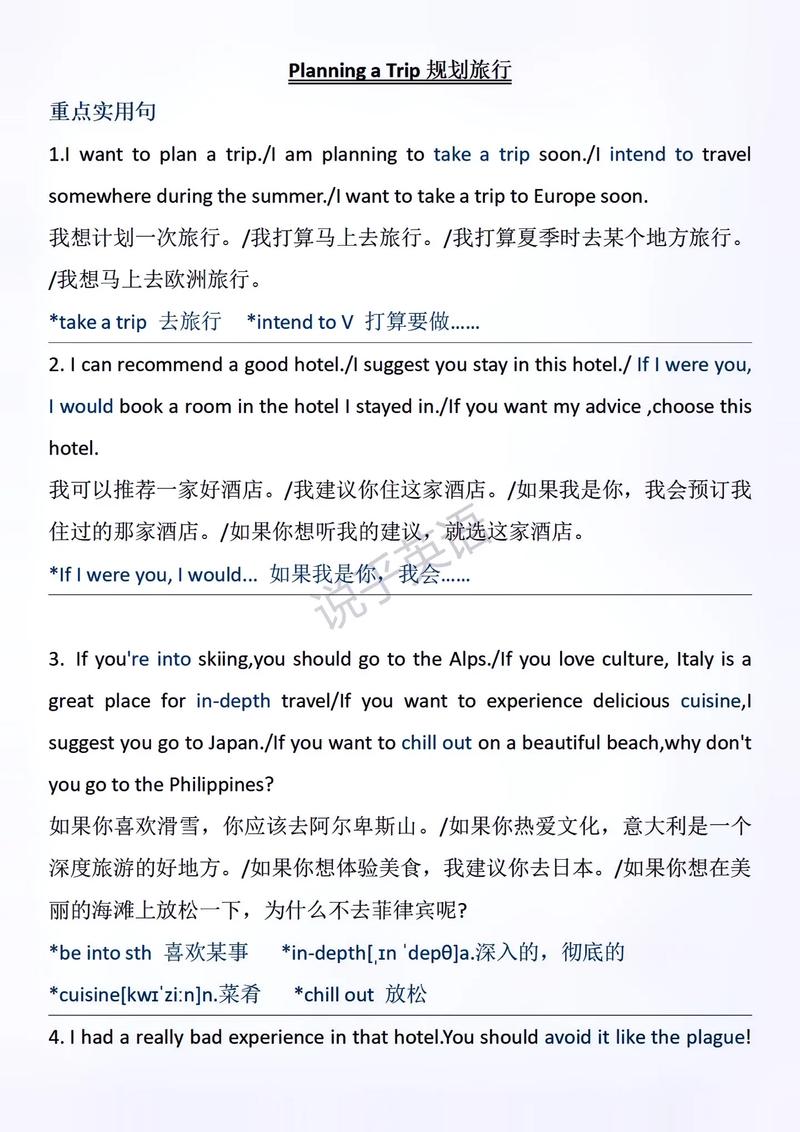
- "I’m planning a trip to..."(我计划去……旅行)
- "Do you have any recommendations?"(你有什么推荐吗?)
- "I’m looking for a budget-friendly option."(我在找性价比高的选择。)
- "Compare prices on..."(在……上比较价格)
预订机票与酒店
预订阶段需要清晰表达需求,以下是对话示例:
Agent: "Good morning! How may I help you with your booking?"
Traveler: "I’d like to book a round-trip flight from Beijing to London, departing on June 1st and returning on June 15th."
Agent: "Certainly. Would you prefer economy or business class?"
Traveler: "Economy, please. Also, I need a hotel near the city center."
Agent: "I can recommend the Grand Hotel. It’s highly rated and offers free breakfast."
常用表达:
- "I’d like to book a round-trip flight..."(我想预订往返机票……)
- "Departing on... and returning on..."(出发日期……,返回日期……)
- "Prefer economy or business class?"(偏好经济舱还是商务舱?)
- "A hotel near the city center."(市中心的酒店。)
机场与交通场景
抵达目的地后,交通是关键环节,以下对话适用于机场问询或租车:
A: "Excuse me, where can I catch the airport shuttle to the city?"
B: "It’s right outside Exit B. The shuttle runs every 30 minutes."
A: "Great! Do you know how much it costs?"
B: "It’s about 15 euros per person."
租车场景:
Agent: "Would you like to add insurance to your rental car?"
Traveler: "Yes, please. Full coverage is better for peace of mind."
常用表达:
- "Where can I catch the...?"(我在哪里可以搭乘……?)
- "How much does it cost?"(多少钱?)
- "Add insurance to your rental car."(为租车添加保险。)
景点与当地活动
与当地人交流或参加旅行团时,以下对话非常实用:
Tour Guide: "Welcome to the Louvre! Today, we’ll explore the Mona Lisa and Venus de Milo."
Tourist: "How long does the tour last?"
Tour Guide: "Approximately two hours. Feel free to ask questions anytime!"
问路场景:
A: "Sorry, could you tell me how to get to the Eiffel Tower?"
B: "Sure! Take the Metro Line 6 to Trocadéro Station. It’s a 10-minute walk from there."
常用表达:
- "How long does the tour last?"(游览持续多久?)
- "Could you tell me how to get to...?"(你能告诉我怎么去……吗?)
- "Take the Metro Line... to... Station."(乘坐地铁……线到……站。)
餐饮与购物
点餐和购物时,英语对话能帮助更好地体验当地文化:
At a Restaurant:
Waiter: "Are you ready to order?"
Customer: "Yes, I’d like the grilled salmon, please."
Waiter: "Would you like anything to drink?"
Customer: "A glass of red wine, thank you."
Shopping Scenario:
Shopkeeper: "Can I help you find something?"
Customer: "I’m looking for a souvenir. Do you have any local crafts?"
Shopkeeper: "Absolutely! These handcrafted ceramics are very popular."
常用表达:
- "I’d like the..., please."(我想要……。)
- "Are you ready to order?"(您准备好点餐了吗?)
- "I’m looking for a souvenir."(我在找纪念品。)
应对紧急情况
旅行中可能遇到突发状况,以下对话可用于求助:
Lost Passport:
A: "I think I lost my passport. What should I do?"
B: "Contact your embassy immediately. They can assist with a replacement."
Medical Issue:
Patient: "I have a stomach ache. Is there a pharmacy nearby?"
Local: "Yes, it’s across the street. They have English-speaking staff."
常用表达:
- "I lost my passport."(我的护照丢了。)
- "Contact your embassy."(联系你的大使馆。)
- "Is there a pharmacy nearby?"(附近有药店吗?)
实用英语口语总结表
以下表格总结了旅游计划中常用的英语口语表达:
| 场景 | 常用表达 |
|---|---|
| 讨论计划 | "I’m planning a trip to..." / "Do you have any recommendations?" |
| 预订交通 | "Book a round-trip flight" / "Prefer economy or business class?" |
| 问路 | "How to get to...?" / "Take the Metro Line... to..." |
| 点餐 | "I’d like the..." / "Would you like anything to drink?" |
| 紧急求助 | "I lost my passport." / "Is there a hospital nearby?" |
相关问答FAQs
如何在旅行中提高英语口语流利度?
答:可以通过以下方式提升:
- 提前练习:模拟旅行场景(如点餐、问路)进行对话练习。
- 使用语言交换APP:与母语者交流,如Tandem或HelloTalk。
- 随身携带短语手册:记录常用表达,方便随时查阅。
如果英语不好,旅行时如何沟通?
答:
- 学习基础短语:如“谢谢”“对不起”“多少钱”等核心词汇。
- 借助翻译工具:使用Google Translate或拍照翻译功能。
- 肢体语言辅助:结合手势和表情,帮助对方理解你的需求。
通过以上方法和对话示例,旅行者可以更自信地用英语应对各种场景,享受顺畅的旅程。