
国外的食物是雅思口语考试中常见的话题,涵盖文化、习惯、个人经历等多个维度,这一话题不仅能考察考生的语言表达能力,还能反映其对不同文化的理解与包容性,以下从多个角度展开分析,帮助考生全面掌握相关表达和思路。
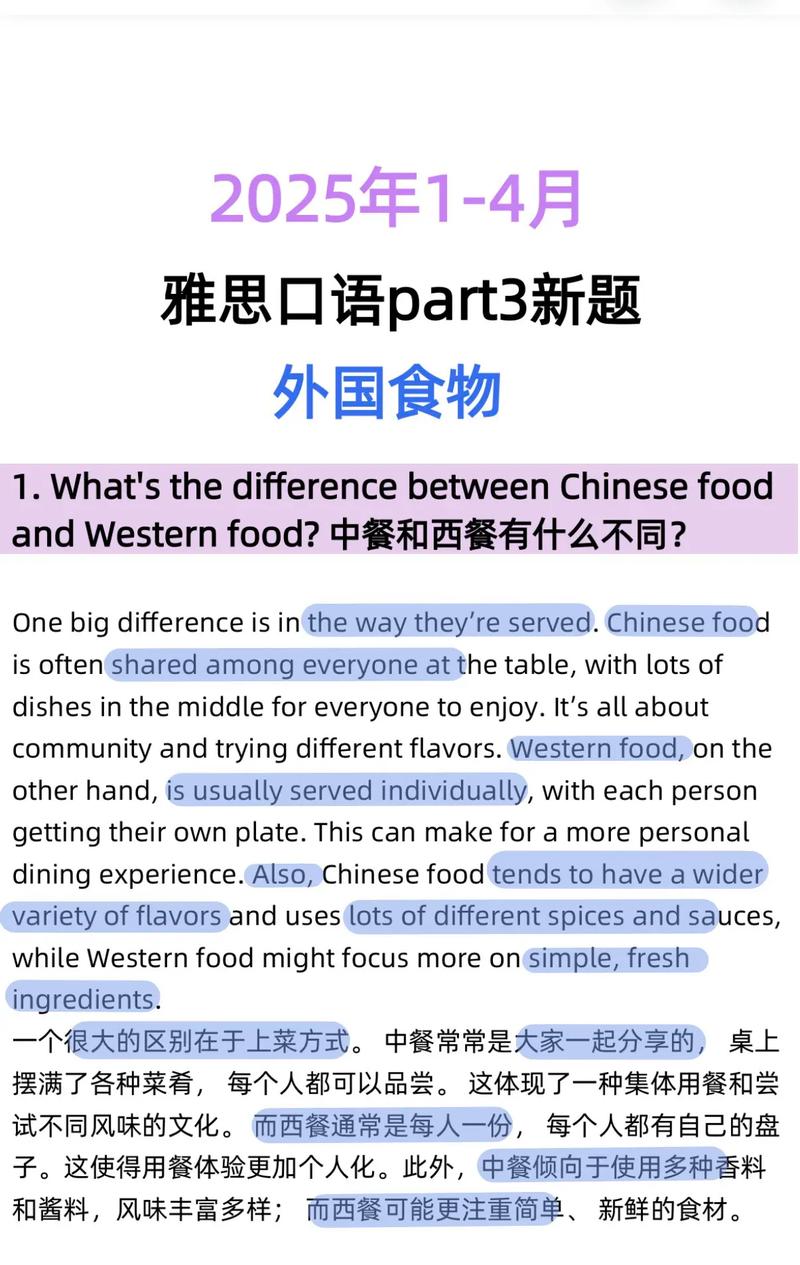
国外食物的多样性
国外食物的丰富性是其最显著的特点之一,不同国家和地区因地理环境、气候条件、历史背景和民族文化的差异,形成了独具特色的饮食文化,意大利的披萨和意面以橄榄油、番茄和奶酪为核心,强调食材的原味;日本的寿司和刺身则注重海鲜的新鲜度和刀工的精细;墨西哥的玉米饼和辣椒酱展现了拉丁美洲的热情与奔放;印度的咖喱和香料 blend 则体现了复杂的风味层次,这种多样性不仅满足了不同口味需求,也成为文化交流的重要载体。
在雅思口语中,考生可以列举具体国家的代表性食物,并描述其特点。
- 意大利:手工披萨,薄底或厚底,配料丰富(如玛格丽特披萨、四季披萨)。
- 日本:寿司(握寿司、卷寿司)、拉面(豚骨、酱油、味噌口味)。
- 墨西哥:塔可(Taco)、玉米片配莎莎酱。
- 印度:咖喱鸡、烤饼(Naan)、马德拉斯咖喱。
国外食物的文化意义
食物不仅是生存需求,更是文化的象征,在国外,许多食物与节日、仪式或社会习俗紧密相关,感恩节的火鸡、圣诞节的布丁、德国慕尼黑的啤酒节香肠等,都承载着特定的文化记忆,饮食方式也反映了社会价值观,如法国人的慢餐文化(强调用餐的仪式感和社交功能),或北欧人的简朴健康饮食(注重有机食材和营养均衡)。
考生在回答时,可以结合个人经历,
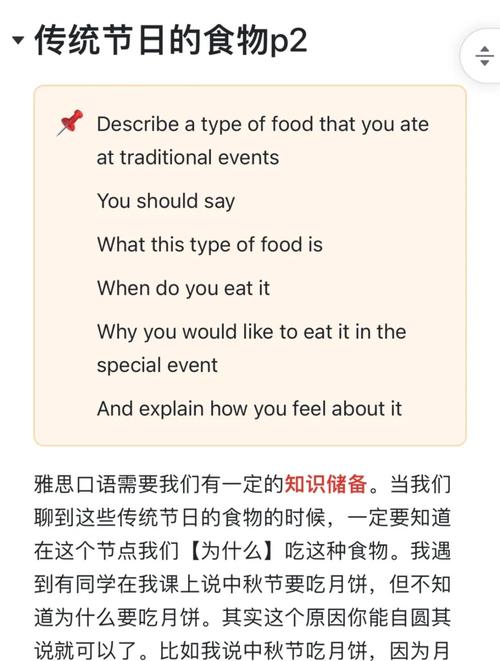
“In my experience, trying foreign food is like a cultural journey. For instance, when I had Japanese ramen in Tokyo, I noticed how the presentation and even the slurping sound are part of the etiquette. It taught me that food is not just about taste but also about respect for tradition.”
国外食物的健康与挑战
国外食物的健康性因地区和饮食结构而异,地中海饮食(以橄榄油、鱼类、蔬菜为主)被公认为健康模式,而一些快餐文化(如美式汉堡、炸鸡)则可能引发高热量、高脂肪的健康问题,国外食物的口味差异也可能带来挑战,例如东南亚的酸辣、欧洲的奶酪发酵风味,可能需要时间适应。
以下为部分国家饮食特点的对比:
| 国家 | 代表食物 | 健康特点 | 潜在挑战 |
|----------|--------------------|----------------------------------|----------------------------|
| 法国 | 法棍面包、鹅肝 | 适量红酒、新鲜蔬果 | 高脂肪(如奶油、黄油) |
| 泰国 | 冬阴功汤、芒果糯米饭| 香料促进消化、低脂 | 辛辣刺激,肠胃敏感者需谨慎 |
| 美国 | 汉堡、热狗 | 部分快餐高热量 | 糖分和盐分较高 |
雅思口语中的实用表达
在雅思口语考试中,考生需灵活运用词汇和句型,清晰表达观点,以下为常用表达:

- 描述食物:
- “It has a unique blend of spices.”(它有独特的香料混合风味。)
- “The texture is crispy on the outside and tender inside.”(外酥里嫩。)
- 表达偏好:
- “I’m a big fan of Italian cuisine because of its simplicity and freshness.”(我喜欢意大利菜,因其简单和新鲜。)
- “I’m not used to spicy food, so Thai cuisine was a bit challenging for me.”(我不习惯辣食,所以泰国菜对我来说有点挑战。)
- 文化对比:
“Unlike Chinese cuisine which emphasizes stir-frying, Western cuisine often relies on baking or grilling.”(与中餐的炒菜不同,西餐常依赖烘焙或烧烤。)
个人经历与观点分享
在雅思口语中,结合个人经历能让回答更生动。
“Last year, I tried Ethiopian food for the first time. The injera (发酵饼) served with various stews was fascinating. It’s eaten with hands, which is different from using chopsticks or forks. This experience made me realize how food habits reflect cultural identity.”
相关问答FAQs
Q1: How can you describe your favorite foreign food in Part 2 of IELTS Speaking?
A1: To describe your favorite foreign food, follow the structure:
- Introduction: Name the food and its origin (e.g., “My favorite foreign food is paella, a Spanish dish”).
- Appearance/Ingredients: Describe its look and key ingredients (e.g., “It’s rice-based with saffron, shrimp, and chicken”).
- Taste/Texture: Use sensory words (e.g., “Saffron gives it a golden color and unique aroma; the rice is slightly chewy”).
- Personal Experience: Share when/where you tried it and why you like it (e.g., “I had it in Barcelona, and the combination of flavors was unforgettable”).
Q2: What are some common vocabulary mistakes when talking about foreign food?
A2: Common mistakes include:
- Confusing similar terms: E.g., “cooking” vs. “cuisine” (cuisine refers to a style of cooking, like “Italian cuisine”).
- Overusing “delicious”: Replace with specific adjectives (e.g., “savory,” “tangy,” “rich”).
- Incorrect collocations: E.g., “eat soup” (correct) vs. “drink soup” (incorrect for most cultures).
通过以上分析,考生可以更自信地围绕“国外的食物”这一话题展开讨论,展现语言能力和文化理解,结合具体例子、清晰表达观点,并适当加入个人感受,是取得高分的关键。