
雅思写作Task 1中的图表题类型多样,其中关于“疾病”主题的小作文在近年考试中频繁出现,要求考生具备数据提取、对比分析及规范描述的能力,本文将围绕雅思疾病类小作文的常见图表类型、核心写作结构、高频表达及注意事项展开,帮助考生系统掌握此类题型的解题思路。

疾病类小作文常见图表类型
疾病类小作文通常以数据图表形式呈现,主要分为静态图(如单一时间点的数据对比)和动态图(如随时间变化的数据趋势),具体包括以下四类:
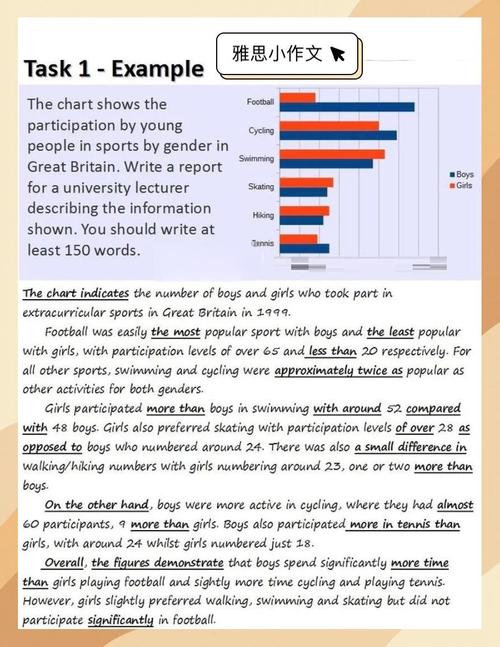
柱状图(Bar Chart)
通过柱子高度展示不同疾病、地区或人群的发病率、死亡率等数据对比,比较不同国家糖尿病患病率的差异,或同一疾病在不同年龄段的分布情况。
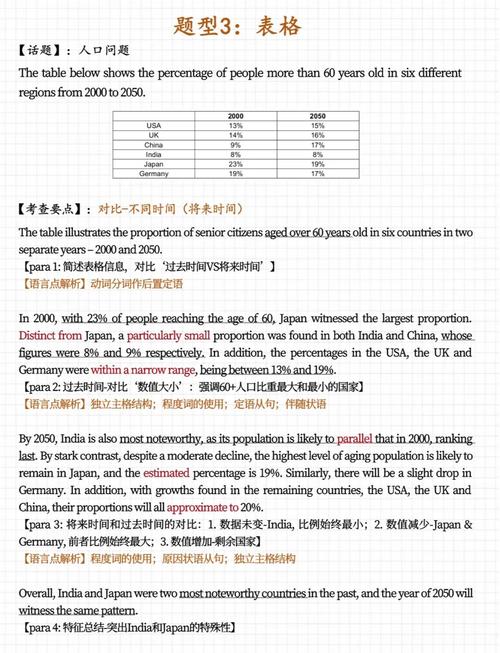
表格(Table)
以行列形式呈现精确数据,需横向(不同疾病/地区)和纵向(不同指标)对比,列出2010年与2025年全球五种传染病的感染人数和死亡人数。
饼图(Pie Chart)
展示整体中各部分的占比,如某疾病的不同传播途径占比,或医疗费用在治疗、康复等环节的分配比例。
线形图(Line Graph)
侧重数据随时间的变化趋势,如某地区近20年流感发病率的波动,或疫苗接种率与疾病发病率的相关性变化。
疾病类小作文核心写作结构
无论何种图表类型,雅思小作文均需遵循“三段式”结构,确保逻辑清晰、内容完整。
开头段:概述图表信息
- 核心任务:简要说明图表反映的主题、时间范围及核心内容(如最高/最低值、主要趋势)。
- 写作公式:图表类型+主题+时间/范围+核心对比/趋势。
- 示例:
The bar chart illustrates the proportion of four chronic diseases (heart disease, stroke, diabetes, and cancer) in total deaths across five countries (the USA, the UK, Japan, India, and Brazil) in the year 2025. Overall, heart disease was the leading cause of mortality in most nations, while cancer showed the smallest variation in death rates among the countries.
主体段:分点描述与对比分析
根据图表数据复杂度分2-3段,每段聚焦1-2个核心对比点,避免简单罗列数据。
- 静态图(柱状图/表格/饼图):按数据大小排序或分组对比,突出差异。
- 示例(柱状图对比):
In the USA and Brazil, heart disease accounted for the highest death rates, at 35% and 32% respectively, significantly exceeding the proportion of other diseases. In contrast, Japan reported the lowest heart disease-related mortality (18%), while stroke was the second leading cause of death in this country (25%), higher than in the USA (20%) and Brazil (15%).
- 示例(柱状图对比):
- 动态图(线形图):按时间阶段描述趋势(上升/下降/波动),并说明关键节点(峰值、谷值)。
- 示例(线形图趋势):
Between 2000 and 2010, the incidence of influenza in Country A experienced a sharp increase from 50 to 120 cases per 100,000 people, peaking at 135 in 2025. Subsequently, it declined steadily to 80 by 2025, coinciding with the nationwide vaccination program launched in 2012.
- 示例(线形图趋势):
结尾段:总结核心发现
- 核心任务:重申图表最主要的特点(如最突出的疾病类型、最显著的趋势),不引入新数据。
- 示例:
In conclusion, heart disease emerged as the predominant cause of death across most countries in 2025, with notable disparities observed between developed nations (e.g., the USA) and Asian countries (e.g., Japan, where stroke was more prevalent).
高频表达与词汇积累
数据描述类
- 占比:account for/constitute/make up X%
- 对比:be significantly higher/lower than... / outnumber/...by X times
- 趋势:increase/decline sharply/steadily / fluctuate between...and... / reach a peak/ hit a low
疾病主题类
- 疾病名称:chronic disease (慢性病), infectious disease (传染病), prevalence (患病率), mortality (死亡率), incidence (发病率)
- 医疗相关:vaccination (疫苗接种), treatment (治疗), prevention (预防), healthcare system (医疗体系)
数据精确性
- 避免绝对化:approximately/around/nearly X%
- 数据范围:ranging from X to Y / from X up to Y
注意事项与避坑指南
- 不发表个人观点:仅客观描述图表数据,避免提及“应如何预防疾病”等主观内容。
- 数据取舍有逻辑:选取最具代表性的数据(如最高、最低、变化显著的数据),而非所有数据。
- 句式多样化:避免频繁使用“...is X%”,可替换为“The figure for...reached X%”或“...stood at X%”。
- 单位与时间准确性:图表中的单位(如per 100,000 people)和时间范围(如2000-2025)需在文中明确体现。
疾病类小作文高频数据对比示例(表格)
以下为假设的“2025年全球主要地区传染病死亡率(每10万人)”数据,供参考:
| 地区 | 疟疾 | 结核病 | 艾滋病 |
|---|---|---|---|
| 撒哈拉以南非洲 | 120 | 85 | 45 |
| 东南亚 | 35 | 42 | 12 |
| 欧洲 | 2 | 5 | 8 |
| 北美 | 1 | 3 | 15 |
描述参考:
The table presents the mortality rates of three infectious diseases per 100,000 people across four global regions in 2025. Notably, malaria posed the most severe threat in sub-Saharan Africa, with a mortality rate of 120, far exceeding other regions. In contrast, Europe reported the lowest rates for all three diseases, with malaria at merely 1 per 100,000. While tuberculosis was the leading cause of death in Southeast Asia (42), HIV/AIDS had a higher mortality rate in North America (15) than in any other listed region.
FAQs
Q1: 疾病类小作文中,如果数据过多(如表格有10行数据),如何选择关键信息?
A1: 优先选择“最极端数据”(最高/最低)、“最具对比性数据”(如不同地区差异显著)以及“数据趋势”(如某疾病占比持续上升),次要数据可通过“其他地区/疾病占比相对较低”等概括性描述带过,避免冗余。
Q2: 写作时如何避免重复使用“show/illustrate”等词汇?
A2: 可替换为以下表达:demonstrate, present, reveal, depict, summarize, compare, contrast,将“The chart shows...”改为“The data reveals...”或“The diagram compares...”,提升语言多样性。