
music 雅思口语
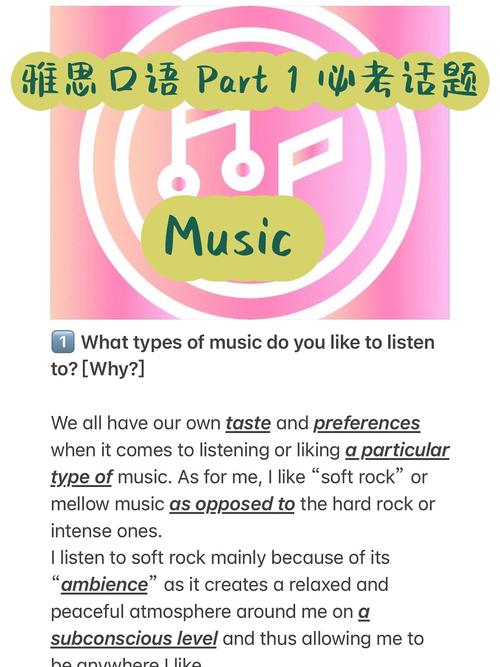
在雅思口语考试中,"music"是一个高频且贴近生活的话题,几乎在每个考试季都会出现,无论是谈论个人喜好、音乐类型,还是音乐对生活的影响,考生都需要具备丰富的词汇、清晰的结构和自然的表达,本文将从多个角度解析如何在雅思口语中深入探讨"music"这一主题,并提供实用技巧和范例,帮助考生提升答题质量。
music在雅思口语中的常见话题方向
雅思口语考试通常分为三个部分,每个部分对"music"的考察侧重点不同:
Part 1:日常对话
Part 1以简单问题为主,旨在了解考生的基本背景和日常习惯,常见问题包括:
- Do you like music?
- What kind of music do you usually listen to?
- When do you listen to music?
- Is there a type of music you don’t like?
答题技巧:用简短句子直接回应,结合个人经历增加细节。
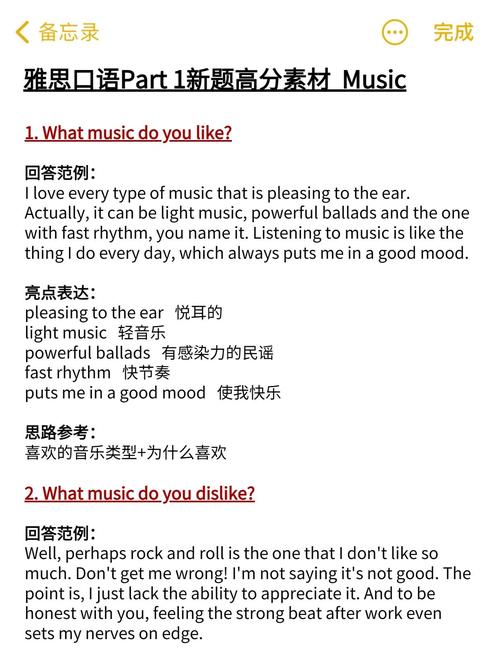
"Yes, I’m a huge fan of music. I listen to it almost every day, especially when I’m studying or commuting. It helps me relax and focus."
Part 2:个人陈述
Part 2要求考生就特定话题进行1-2分钟的独白,常涉及"describe a song/artist/music festival"等。
- Describe a song that is important to you.
- Talk about a music festival you have attended or would like to attend.
答题结构建议:
- Introduction:简要介绍歌曲/艺术家/音乐节(名称、类型)。
- Body:
- 何时/如何接触到它;
- 喜欢的原因(歌词、旋律、情感共鸣等);
- 相关故事或影响。
- Conclusion:总结其意义或难忘之处。
范例(以"Describe a song that is important to you"为例):
"The song that holds a special place in my heart is ‘Bohemian Rhapsody’ by Queen. I first heard it when I was 12, during a school talent show, and the performer’s powerful vocals and dramatic arrangement left me speechless. What makes this song important to me is its ability to evoke a range of emotions—from the haunting ballad section to the explosive guitar solo. It also taught me to embrace creativity and think outside the box, as the song defies traditional pop structure. Even now, whenever I feel down, listening to this song reminds me of the beauty of artistic expression."
Part 3:深入讨论
Part 3围绕Part 2的话题展开抽象讨论,考察考生的分析能力和观点深度,常见问题包括:
- Why do you think music is important in society?
- How has technology changed the way people access music?
- Do you think traditional music will disappear with modern music trends?
答题技巧:提出观点后,用逻辑连接词(如"However", "Moreover", "For instance")展开论证,结合社会现象或例子。
"Music plays a crucial role in society as it serves as a universal language that transcends cultural barriers. For instance, traditional folk music often preserves a community’s history and values, passing them down to younger generations. However, with the rise of streaming platforms like Spotify, modern music has become more accessible but also more commercialized. This shift might dilute the cultural significance of some traditional genres, yet it also provides a platform for artists to blend traditional and modern styles, creating new forms of music that appeal to global audiences."
谈论music的核心词汇与表达
丰富且准确的词汇能显著提升口语表达的流畅度和说服力,以下是分类整理的实用词汇:
音乐类型(Music Genres)
| 类型 | 英文 |
|---|---|
| 流行音乐 | pop music |
| 古典音乐 | classical music |
| 摇滚 | rock |
| 爵士 | jazz |
| 电子音乐 | electronic music |
| 民谣 | folk music |
| 说唱 | hip-hop/rap |
| 蓝调 | blues |
音乐相关动词与短语
- 创作:compose(作曲)、write lyrics(写歌词)、produce(制作)
- 演奏:play an instrument(演奏乐器)、perform(表演)、jam即兴演奏)
- 聆听:listen to、enjoy、appreciate、be into(对…着迷)
- 感受:move(感动)、energize(使充满活力)、relax(放松)
描述音乐的形容词
- 旋律:catchy(朗朗上口的)、melodious(悦耳的)、haunting(萦绕不散的)
- 节奏:upbeat(欢快的)、slow-paced(节奏缓慢的)、rhythmic(有节奏的)
- 情感:emotional(情感丰富的)、inspiring(鼓舞人心的)、soothing(抚慰人心的)
高分策略:如何让回答更生动?
结合个人经历
避免泛泛而谈,用具体故事让回答更具说服力。
"I’ve been learning the piano since I was seven, so classical music has a special meaning for me. I still remember the first time I played Beethoven’s ‘Für Elise’ flawlessly—my teacher cried, and I felt an overwhelming sense of achievement."
使用对比与转折
通过对比不同音乐类型或观点,展示辩证思维。
"I prefer upbeat pop music when I’m exercising because it keeps me motivated, but when I need to concentrate on work, I opt for instrumental jazz, which has no lyrics to distract me."
引用数据或现象
在Part 3中提及社会趋势或数据,增强回答的深度。
"According to a recent survey, over 70% of young people worldwide use streaming services to discover new music, which has reduced the sales of physical albums but increased the diversity of music genres they listen to."
常见误区与注意事项
- 避免重复:不要频繁使用"like"或"love",可用"enjoy", "be fond of", "be passionate about"等替换。
- 语法准确:注意时态一致性(如描述过去经历用一般过去时,谈论普遍喜好用一般现在时)。
- 自然表达:避免背诵模板,用口语化的短句和连接词(如"you know", "well")让对话更流畅。
FAQs
Q1: 在Part 2中描述一首歌时,是否需要提及歌手的背景?
A1: 不一定,提及歌手背景可以作为加分项,但并非必须,重点应放在歌曲本身(如旋律、歌词、情感)及其对你的影响上,如果歌手背景与歌曲重要性直接相关(如歌手的励志故事),可以简要提及,否则不必强行展开。
Q2: 如何回答“Do you think traditional music is still important today?”这类问题?
A2: 建议采用“观点+理由+例子”结构。
"Yes, traditional music is still important today because it preserves cultural identity. For example, in China, traditional opera like Peking Opera combines music, dance, and storytelling, helping younger generations understand historical values. Even though modern music is popular, traditional music serves as a living link to the past, fostering a sense of belonging and heritage."