在雅思口语考试中,“tourist”(游客)是一个高频且贴近生活的话题,它不仅考察考生对旅游相关词汇的掌握,更考验其描述经历、表达观点和组织语言的能力,无论是谈论个人旅行体验、分析旅游现象,还是探讨旅游业的影响,考生都需要构建清晰、有逻辑的回答,本文将从雅思口语角度出发,系统梳理与“tourist”相关的话题方向、核心词汇、实用句型及备考策略,帮助考生从容应对这一主题。
雅思口语中的“tourist”话题方向
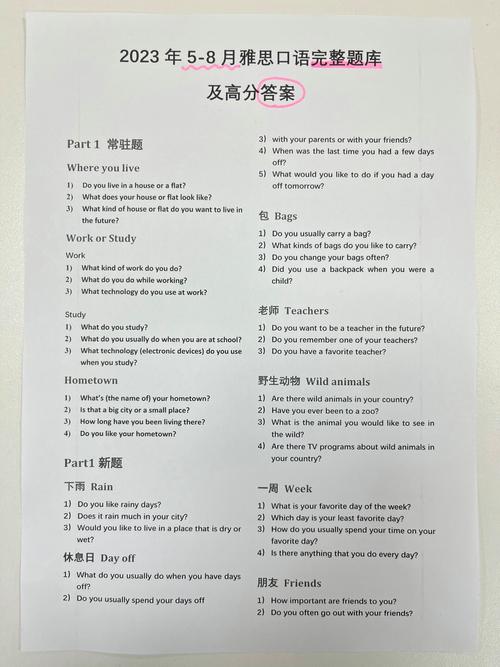
雅思口语Part 1通常围绕个人经历展开,考官可能会问:“Do you like being a tourist?”或“Is it popular to be a tourist in your country?”这类问题旨在考察考生的基础表达能力,Part 2则会要求考生进行个人陈述,Describe a tourist attraction you visited”,需涵盖地点、经历、感受等细节,Part 3则更深入,可能涉及旅游对当地文化、环境的影响,或未来旅游趋势的讨论,考生需从个人体验、社会现象、未来展望三个维度准备内容。
核心词汇与表达积累
旅游类型
- 城市观光(city tour)
- 生态旅游(eco-tourism)
- 文化旅游(cultural tourism)
- 自由行(independent travel)
- 跟团游(package tour)
旅游设施与服务
- 景点(attraction/scenic spot)
- 导游(tour guide)
- 住宿(accommodation)
- 交通工具(transportation)
- 旅行保险(travel insurance)
常用动词与短语
- 探索(explore)
- 体验(experience)
- 沉浸(immerse oneself in)
- 推荐(recommend)
- 收获(gain/learn from)
描述性词汇
- 壮观的(spectacular)
- 宁静的(serene)
- 独特的(unique)
- 便利的(convenient)
- 令人难忘的(unforgettable)
实用句型与结构建议
表达个人观点
- “From my perspective, traveling as a tourist is not just about visiting places, but also about broadening horizons.”
- “I believe that responsible tourism is crucial to preserving cultural heritage.”
描述经历(Part 2结构)
- Introduction: 介绍景点名称、位置及首次到访时间。
- Body: 描述景点特色、活动安排及个人感受(可加入细节,如人群、天气、互动)。
- Conclusion: 总结体验的意义或推荐理由。
分析影响(Part 3结构)
- 正面影响: “Tourism can boost local economy by creating jobs and promoting small businesses.”
- 负面影响: “Overtourism may lead to environmental damage and cultural homogenization.”
- 平衡观点: “While tourism brings benefits, it is essential to implement sustainable practices to mitigate its drawbacks.”
高频话题与答题思路
描述一次难忘的旅行经历
思路:选择具体目的地(如长城),突出独特体验(如徒步历史遗迹),结合感官描写(视觉、听觉),最后升华感受(文化认同感)。
示例:
“I’d like to talk about my visit to the Great Wall of China last year. What impressed me most was not just its spectacular scale, but the sense of history as I walked along the ancient stones. The view of the mountains stretching into the distance was breathtaking, and hearing the stories from our guide made me feel connected to the past. It was more than a tourist trip; it was a journey through time.”
讨论旅游业的影响
思路:从经济、文化、环境三方面展开,用数据或实例支撑观点(如“旅游业占泰国GDP的20%”),最后提出解决方案(如限制游客数量、推广环保项目)。
示例:
“Tourism has a dual impact on destinations. Economically, it generates revenue and employment, as seen in countries like Thailand where it contributes significantly to GDP. Culturally, however, it can lead to the commercialization of traditions, such as local festivals being adapted for tourist appeal. Environmentally, popular sites like Venice suffer from overtourism, causing pollution and infrastructure strain. To address this, governments should enforce sustainable tourism policies, such as limiting visitor numbers and promoting eco-friendly practices.”
备考策略与注意事项
- 积累个性化素材:避免使用通用模板,结合自身真实经历(如家乡景点、特殊旅行故事)让回答更生动。
- 练习逻辑衔接:使用“However,” “Furthermore,” “As a result”等连接词,确保回答条理清晰。
- 模拟真实场景:与伙伴进行口语对练,或录音自查流利度、语法错误及发音问题。
- 关注时事动态:了解全球旅游趋势(如后疫情时代的健康旅游、科技在旅游中的应用),丰富Part 3的讨论深度。
相关问答FAQs
Q1: 雅思口语中描述旅游景点时,如何避免内容过于笼统?
A1: 可以通过加入具体细节来增强画面感,例如描述景点的地理位置(“located in the heart of Kyoto”)、特色活动(“participated in a traditional tea ceremony”)、个人互动(“talked to a local artist about his craft”)或独特感受(“the scent of cherry blossoms filled the air”),使用数据(“built in the 14th century”)或对比(“quieter than other famous temples”)让描述更可信。
Q2: 如何在Part 3中就“旅游业的影响”给出有深度的回答?
A2: 明确多角度分析框架(经济、社会、环境),每个角度给出正反两面论证,引用具体案例(如“Maldives’ overwater resorts boost tourism but threaten marine ecosystems”)或政策实例(“Bhutan’s high-value, low-impact tourism model”),提出创新性解决方案,如“利用虚拟现实技术减少实地游客数量”或“鼓励游客参与当地社区项目”,展现批判性思维和全球视野。