
雅思口语Part 3是许多考生感到最具挑战性的部分,因为它不仅考察语言表达能力,更注重逻辑思维、观点深度和临场反应能力,与Part 1的日常话题不同,Part 3通常围绕Part 2的话题进行延伸探讨,涉及社会、文化、教育、科技等抽象议题,需要考生具备分析问题、提出观点并论证的能力,以下将从核心技巧、范例解析和备考建议三个方面,帮助考生更好地应对这一部分。
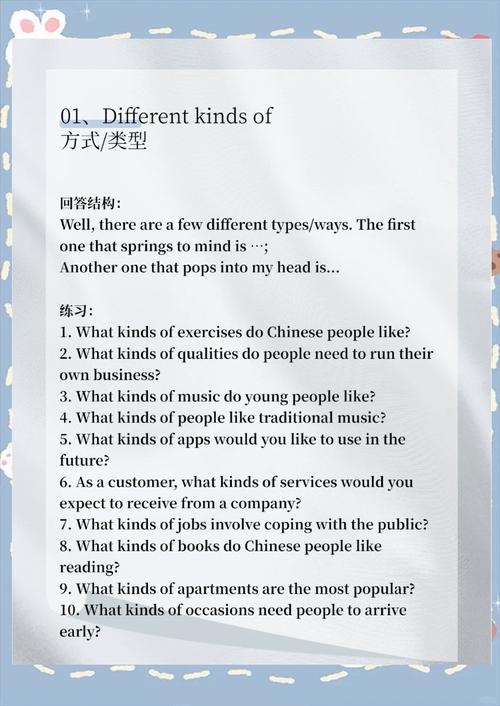
Part 3 核心应试技巧
Part 3的成功关键在于“有逻辑、有细节、有观点”,具体可从以下三点入手:
结构化表达:清晰展开观点
考官更关注“如何说”而非“说什么”,采用“观点+解释+举例”的结构,能让回答更有条理。
- 观点:In my opinion, technology has revolutionized education.
- 解释:It provides students with access to unlimited resources, breaking the geographical barriers.
- 举例:For instance, online platforms like Coursera allow learners from remote areas to attend courses from top universities.
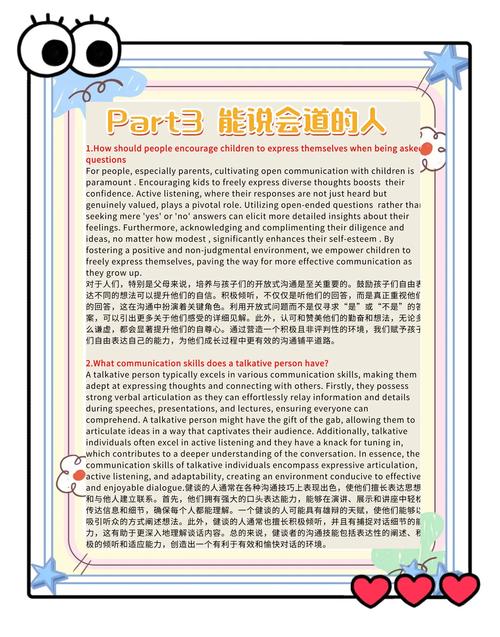
辩证思维:展示多角度分析
Part 3常涉及“利弊”“影响”“变化”等议题,需避免绝对化回答,可通过“However” “On the other hand”等转折词,呈现平衡视角。
“While social media enhances communication, it may also lead to addiction and reduced face-to-face interaction.”
(图片来源网络,侵删)
高级词汇与句式:提升语言质量
适当使用学术化词汇(如“dilemma” “phenomenon”)和复杂句式(如虚拟语气、定语从句),能体现语言水平,但需注意自然流畅,避免堆砌。
Part 3 范例解析
以下以“科技对人际关系的影响”为例,展示高分回答思路:
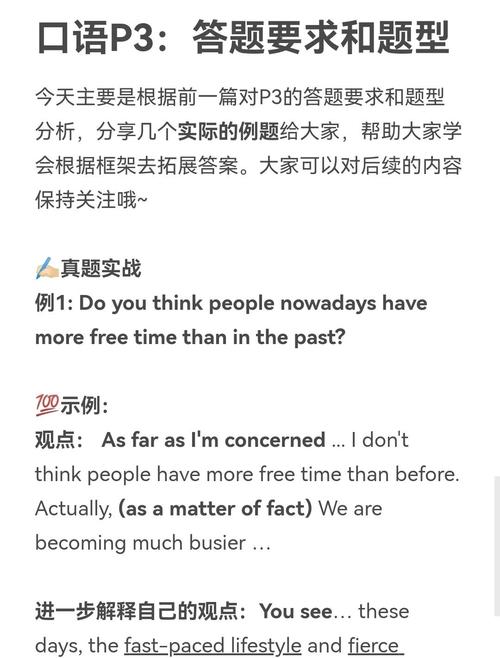
问题1:Do you think technology has improved communication between people?
回答范例:
“Undoubtedly, technology has significantly enhanced communication in terms of convenience and reach. In the past, people relied on letters or landlines, which were limited by time and distance. Now, with instant messaging apps and video calls, we can connect with others globally in real time. For example, I can have a face-to-face conversation with my cousin studying abroad without spending a fortune on international calls.
However, this improvement comes with drawbacks. While technology makes communication faster, it often lacks the emotional depth of face-to-face interactions. Emojis and text messages cannot fully convey tone or body language, leading to misunderstandings. Moreover, over-reliance on digital communication may reduce the quality of in-person relationships, as people might prioritize virtual chats over real-life gatherings.”
解析:
- 结构:先肯定观点(convenience and reach),再举例(instant messaging, video calls),转折后分析弊端(lack emotional depth, reduce in-person quality)。
- 词汇:enhanced, instant messaging, convey, misunderstandings, over-reliance。
- 句式:对比过去与现在(In the past... Now...),转折逻辑(However... Moreover...)。
问题2:What are the potential negative effects of excessive use of social media on relationships?
回答范例:
“Excessive social media use can harm relationships in several ways. Firstly, it may create unrealistic expectations. People often showcase idealized versions of their lives on platforms like Instagram, leading others to compare their own relationships to these curated images, which can cause dissatisfaction.
Secondly, social media can distract from real interactions. For instance, during a family dinner, if everyone is scrolling through their phones instead of talking, it weakens emotional bonds. This phenomenon, often called ‘phubbing,’ has been linked to increased conflicts in relationships.
Finally, privacy concerns may arise. Sharing personal details online without a partner’s consent can breach trust, especially if it involves sensitive information or interactions with others.”
解析:
- 结构:分点论述(Firstly, Secondly, Finally),每点结合具体影响(unrealistic expectations, distraction, privacy)。
- 词汇:curated images, phubbing, breach trust, sensitive information。
- 逻辑:从个人心理(expectations)到互动质量(distraction),再到关系信任(privacy),层层递进。
备考建议
- 积累话题素材:针对高频话题(教育、环境、科技、文化等),整理观点和例子,避免临场无话可说。
- 模拟练习:找语伴或使用录音设备,模拟Part 3问答,重点练习逻辑衔接和自然度。
- 学习考官范文:分析官方高分答案,提炼其结构和表达方式,而非死记硬背。
相关问答(FAQs)
Q1: Part 3 回答是否需要“标准答案”?
A1: 不需要,Part 3 开放性较强,考官更关注观点的逻辑性、语言的自然度以及论证的充分性,只要观点合理、表达清晰,即使与考官预期不同,也能获得高分,避免追求“标准答案”,而是培养独立思考能力。
Q2: 如何在Part 3 中延长回答时间?
A2: 可通过“细节扩展”和“逻辑连接”来延长回答。
- 举例:具体说明个人经历或社会现象。
- 解释原因:用“because” “since”阐述观点背后的逻辑。
- 对比分析:从不同角度(如年轻人vs老年人、城市vs农村)展开讨论。
但需注意避免冗余,确保每个扩展都有实质内容。