雅思口语Part 2旅游:如何流利讲述你的旅行经历
在雅思口语考试中,Part 2是考生展示个人表达能力和组织结构的关键部分,题目通常要求考生描述一段个人经历,而“旅游”是最常见的话题之一,本文将从话题解析、结构拆解、实用词汇和备考建议四个方面,帮助你全面准备“旅游”类话题,提升口语表达的流畅度和丰富性。
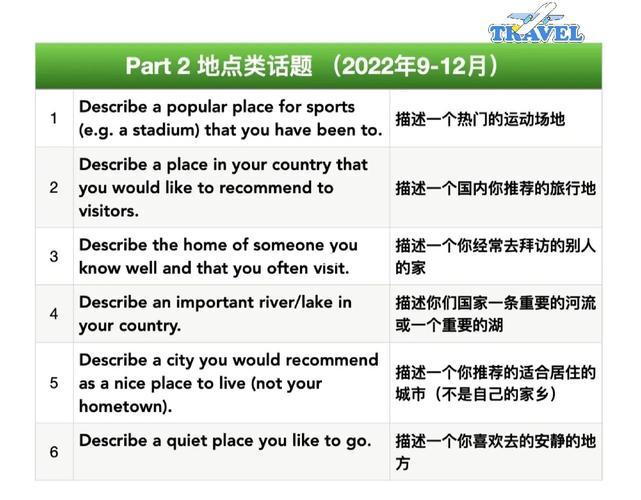
话题解析:Part 2旅游类题目的常见形式
雅思口语Part 2的旅游类题目通常以“Describe a trip you enjoyed”或“Describe a place you visited”等形式出现,考生需要根据提示卡(cue card)的内容,在1分钟内准备思路,然后进行1-2分钟的独白,题目可能涉及以下要素:
- 旅行目的地:城市、国家、自然景观等。
- 旅行时间:季节、时长(如“a weekend trip”或“a summer vacation”)。
- 同行人员:家人、朋友或独自旅行。
- 旅行活动:观光、美食体验、冒险活动等。
- 个人感受:为何难忘、有何收获。
考生需围绕这些要素展开叙述,确保内容具体、有细节,避免泛泛而谈。
结构拆解:如何组织你的回答
一篇优秀的口语回答应具备清晰的结构,以下推荐“四段式”框架,帮助你在有限时间内逻辑连贯地表达:
-
开头(Introduction)
 (图片来源网络,侵删)
- 直接点明主题:明确描述的旅行目的地和时间。
- 简述背景:如“Last summer, I traveled to Kyoto with my family during the cherry blossom season.”
-
主体(Body Paragraph 1-2)
- 细节描述:具体说明旅行的活动和见闻,例如参观的景点、尝试的美食或有趣的文化体验。
- 感官描写:加入视觉、听觉或味觉的细节,如“The golden temple glittered under the sunlight, and the sound of temple bells created a peaceful atmosphere.”
- 情感表达:穿插个人感受,如“I felt a sense of tranquility walking through the bamboo forest.”
-
Conclusion)
- 总结旅行的意义:强调为何难忘或学到了什么。
- 升华主题:如“This trip not only broadened my horizons but also taught me the importance of embracing different cultures.”
实用词汇与表达
丰富的词汇能显著提升回答的质量,以下是旅游类话题的高频词汇和短语:
| 类别 | 词汇/短语 |
|---|---|
| 地点 | landmark, scenic spot, off-the-beaten-path, bustling city |
| 活动 | sightseeing, hiking, immerse in local culture, try local cuisine |
| 感受 | breathtaking, unforgettable, rejuvenating, cultural shock |
| 连接词 | What impressed me most was..., Not only...but also..., As a result... |
在描述旅行时可以这样运用:“What impressed me most was the vibrant street food in Bangkok. Not only did it taste delicious, but it also offered a glimpse into the local lifestyle.”
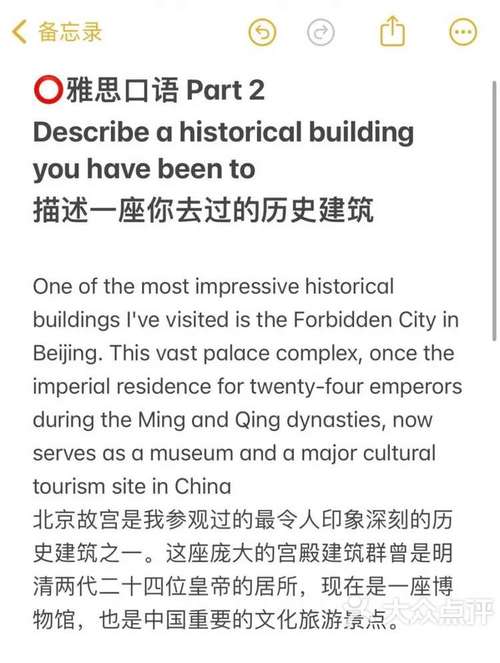
备考建议:如何高效练习
- 积累素材:准备3-5个个人旅行经历,涵盖不同主题(如城市游、自然探索、文化体验)。
- 计时训练:严格遵循1分钟准备+2分钟表达的规则,避免超时或内容不足。
- 录音复盘:录制自己的回答,注意语法错误、发音流畅度和逻辑连贯性。
- 模拟练习:与伙伴互考或使用雅思口语APP模拟真实考试场景。
FAQs
Q1: 如何在回答中避免内容重复?
A1: 可以通过切换描述角度来丰富内容,描述巴黎时,先讲埃菲尔铁塔的外观(视觉),再提及塞纳河的游船体验(听觉和触觉),最后总结法式美食带来的味觉享受,使用多样化的连接词(如“Additionally,” “On top of that”)也能使表达更连贯。
Q2: 如果没有特别的旅行经历,如何虚构内容而不显生硬?
A2: 可以基于真实见闻合理虚构,例如结合纪录片、书籍或他人经历,关键在于加入具体细节,如地名、活动名称和感官描写,使故事可信。“I watched a documentary about Iceland’s glaciers and imagined myself hiking there, describing the icy wind and the sound of cracking ice to make it vivid.”